
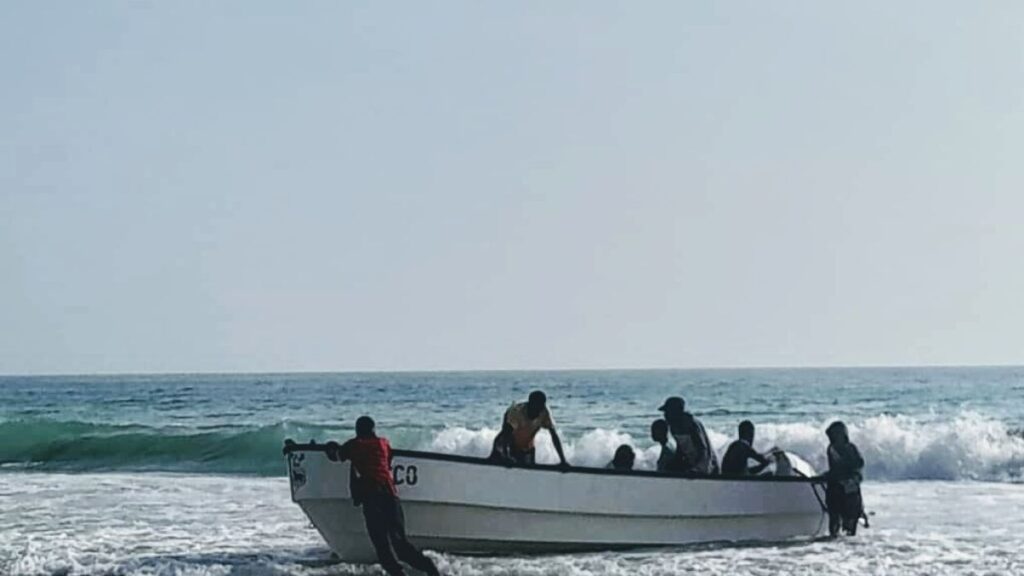
Somali Coast Town Grapples with Resurgent Piracy and Tightened Surveillance
The fishing community of Bander Beyla on Somalia’s Puntland coast is feeling the strain of a revived piracy wave. Beyond the hijackings and foreign naval patrols, locals are confronting new fishing bans, arrests and heightened monitoring that are reshaping everyday life.
Abdifatah Mohamed has spent two decades working the waters off Somalia. He started at fifteen, but now, at thirty‑five, he says catches have dwindled and foreign trawlers have made it harder to feed his family. “I don’t catch as much fish anymore, and the prospects for catching lobsters have become rare,” he told Al Jazeera. “Foreign trawlers are emptying out the seas,” he added.
Since the collapse of the central government in 1991, maritime oversight has been weak, leaving Somalia’s waters open to illegal fishing. Some fishermen, angry at foreign vessels exploiting the resources, have turned to piracy. “We’re fishermen, no match for the foreign trawlers, who possess capabilities far greater than us, which impacts the livelihoods of our families on land,” Mohamed said. He noted that a few from his community have taken up arms at sea, but he believes it ultimately harms the town.
Piracy incidents have risen sharply since late April 2026. The tally of hijackings varies depending on whether commercial ships, fishing boats and dhows are counted, but several seized vessels have been held near Bander Beyla, bringing the crisis close to home.
In late August, authorities barred fishermen from heading out to sea, fearing that pirates were disguising themselves as local fishers. “The local authorities gave an order the last week of August preventing us from going out at sea, which would remain in effect for two months,” Mohamed explained. “Our families depend on what we catch at sea. Even though our catches have gone down in recent years, it helped provide for our families at home. But it’s like we were being punished for crimes we have nothing to do with, and our families have suffered for it.”
For Mohamed, the sea now poses a double risk. If officials learn a fisherman has gone out, they may be accused of piracy or of supplying hijacked ships. At the same time, international navies may arrest or even use force against them, mistaking them for pirates and sending them to foreign jails. “It’s happened to a lot of men from this town,” he said.
Abdirizak Said, a fifteen‑year veteran fisherman, said the crackdown has deepened local hardship. “Dozens have been arrested, most of them after they brought food or khat to the pirates, when the ships were anchored near Bander Bayla,” he said. He added that the local government ordered shops not to sell anything to pirates, warning that sellers would be treated as pirates themselves.
Some of those involved in the hijackings come from Bander Bayla itself. “Some of the pirates involved in the hijackings are from Bander Bayla and hail from this community,” Said noted.
Jethro Norman, senior researcher at the Danish Institute for International Studies, said piracy cannot be seen only as a crime at sea. He emphasized the role of land‑based networks that supply money, equipment, manpower and protection. “Kinship networks can effectively function as a form of financial and social infrastructure, and for piracy, this is no different,” he explained. “Pirate groups have historically been able to mobilise credit, and get equipment, manpower and protection.” He added that understanding these clan relationships is essential for any effective counter‑piracy strategy.
The reach of these networks extends beyond fishing. Said observed that boats carrying supplies from Yemen to Somalia have stopped arriving because of pirate attacks. “The boats that used to bring supplies from Yemen have also ceased, because of these pirate attacks,” he said.
Despite the turmoil, some residents are trying to stop young men from joining the violence. Mohamed recounted a recent incident where local youths armed with guns tried to set out to sea, but community members intervened. “It was civilians that took the initiative to stop them and not the government because it’s the civilians in this town that will suffer the blowback if they launch attacks from here,” he said.
Two local officials, who spoke on condition of anonymity, confirmed that the restrictions were intended to weaken the support networks that sustain pirates. “The security restrictions were lifted on October 1 after successful anti‑piracy operations led to the release of three ships,” one official said.
The International Maritime Organization confirmed on October 2 that three hijacked vessels, including the Honour, had been recovered following the operations.