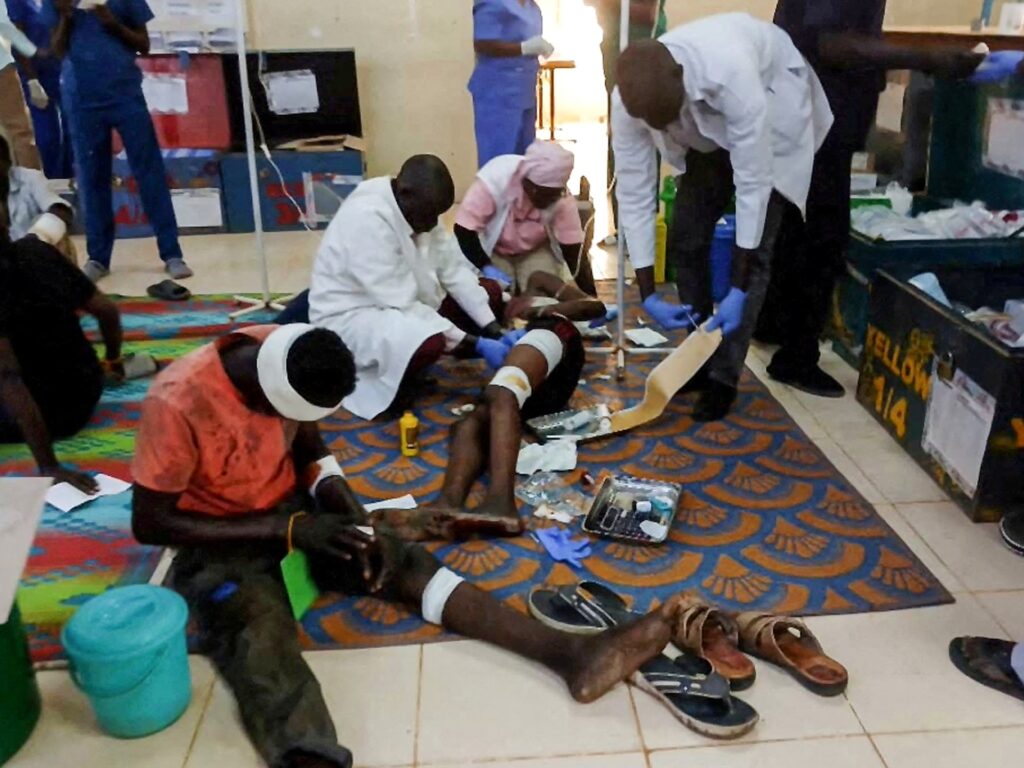
Drone strike on Abyei market kills at least 153 people
A drone hit the Amiet Market north of Abyei town on October 19, killing a minimum of 153 people, according to officials in South Sudan. The caretaker minister of information for the Abyei administration, Yohanna Akol Ngor, said the attack was carried out by Sudan’s military and that flames were still burning at the site, with the death toll expected to increase as some bodies were reduced to ash.
South Sudan’s Ministry of Foreign Affairs and International Cooperation summoned the Sudanese ambassador and urged the northern neighbour to refrain from actions that endanger civilians and property. Sudan’s armed forces have not responded to requests for comment.
A senior Sudanese officer, speaking on condition of anonymity to the Associated Press, claimed the army was targeting fuel tankers traveling from South Sudan to the Rapid Support Forces (RSF). He said those killed were RSF fighters and fuel smugglers and insisted the military does not aim at civilians. Unnamed diplomats told Reuters that the strike struck a fuel depot in the market that the RSF has previously used to supply its fighters. The RSF has not issued a statement on the incident.
The United Nations secretary‑general’s spokesperson, Stephane Dujarric, condemned the drone attacks near Amiet Market and nearby Todach, noting that dozens of civilians, including women and children, were killed and many more injured. The UN did not assign responsibility for the strikes. UN officials said numerous people remain missing and that the death toll could rise as the UN Interim Security Force for Abyei (UNISFA) continues to verify casualties.
Doctors Without Borders (MSF) reported treating more than 20 injured individuals, some of whom suffered severe burns. The attack comes amid the ongoing war between Sudan’s army and the RSF, which began in April 2023 and has created a severe humanitarian crisis across the region.
South Sudan maintains a neutral stance in the conflict, but diplomats note that Abyei, a disputed oil‑rich area claimed by both Sudan and South Sudan and jointly administered, has become a crucial route for RSF fuel supplies. The region borders Sudan’s Kordofan province, a major battleground in the war.