Iran Takes the AI War to the UN as US Strikes Hit 2,000 Targets in Four Days
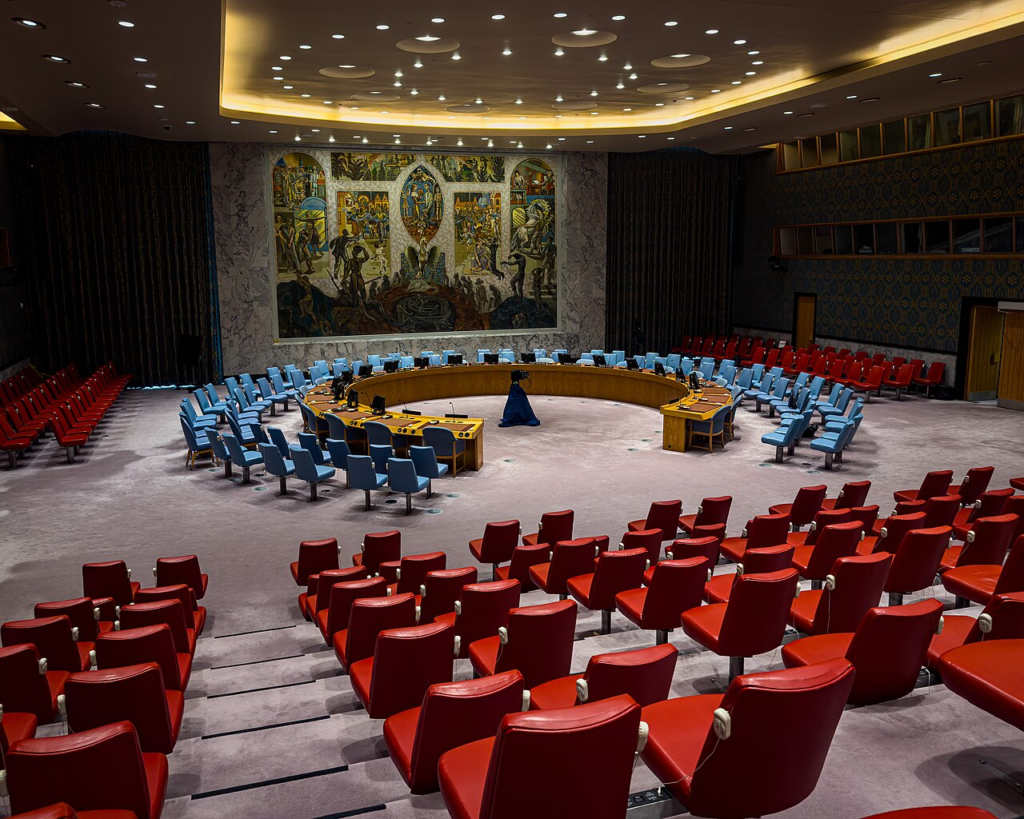
Tehran has opened a new front in its war with Washington, and it is not on a battlefield. At the United Nations Security Council on Tuesday, Iran’s ambassador accused the American military of using artificial intelligence to plan and carry out strikes, and named the private companies whose software he says did the work. The complaint turns a bombing campaign into a legal argument about accountability.
What Tehran is claiming
Iran’s UN ambassador, Gholamhossein Darzi, told the Security Council that US forces used AI systems to deploy more than 2,000 munitions against 2,000 distinct targets within 96 hours. He named two systems, Palantir’s Maven and Anthropic’s Claude, saying they were used to analyse intelligence, rank targets and supply strike coordinates. Darzi argued that neither advanced technology nor the involvement of private companies shields the United States from accountability, and he called for individual criminal accountability for attacks on civilians. Washington has not confirmed the numbers or the systems. But the venue is itself the news: Iran is now fighting on legal ground.
What Washington has actually admitted
The Pentagon has not denied using AI. In March 2026, the commander of US Central Command, Admiral Brad Cooper, confirmed that American forces had used a range of advanced AI tools to cut through the noise and make smarter decisions faster than the enemy could react. Retired Navy Admiral Mark Montgomery, speaking to CBS News, described the scale: the military is now processing roughly a thousand potential targets a day and striking the majority of them, with the next strike under four hours away. A human is still in the loop, he said, but AI is doing work that used to take days of analysis. Neither side has published evidence that would settle the argument.
Why the company names matter
Naming Palantir and Anthropic drags Silicon Valley into a war crimes debate. If targeting software counts as a weapon, its makers face questions that generals and presidents usually face alone: who is responsible when an algorithm picks the wrong building? International humanitarian law was written for human decisions, with commanders answerable for what they order. It has little to say about a commercial product that ranks a thousand targets before breakfast. That ambiguity is exactly why Tehran named the companies.
The war is widening while the argument plays out
The Security Council session did not happen in a vacuum. On the same day, Israel’s defence minister, Israel Katz, accused Iran of developing chemical weapons and left open the possibility of a preemptive strike, a claim Tehran denies. The Iran-backed Houthis claimed attacks on Saudi ports and the financial district of Riyadh, while Saudi forces said they had intercepted missiles and a drone. Treasury Secretary Scott Bessent called the Iranian regime a sinking ship and said Tehran has not loaded a single oil tanker since the Treasury’s Operation Economic Outcast began in August. The AI debate is therefore not a sideshow. It is the legal shadow of a regional war.
What happens next
The Security Council is unlikely to act against the United States, which holds a veto. But Darzi’s complaint builds a record. Watch whether the Pentagon answers the specific claims about Maven and Claude, or sticks to general language, and whether other states pick up the AI weapons argument at the UN. When the time between spotting a target and striking it falls from days to hours, the law of war, written for human judgment, is being tested in real time. Tehran has now made that test a formal complaint, and the answer will shape every conflict that follows.
Featured image: The United Nations Security Council chamber in New York, where Iran’s ambassador raised the AI complaint on Tuesday. Photo: Jdforrester (CC BY 4.0, via Wikimedia Commons).
Source: CBS News (https://www.cbsnews.com/live-updates/iran-war-us-military-ai-weapons-oil/)