
White House Removes Cyber Chief Sean Cairncross After a Week of Tech Outages
The White House has removed Sean Cairncross, the National Cyber Director, after a week in which technology failures disrupted air travel, banking and government systems. Kirsten Davies, the chief information officer at the Department of Defense, will take over the role in an acting capacity. The departure was confirmed on Thursday, and it is the administration’s first major personnel move since the outages began.
A week of failures set the stage
The outages arrived in quick succession. On 13 November, the Federal Aviation Administration ordered a nationwide ground stop after a fault in its telecommunications system, grounding flights for about four hours. The FAA said about 12,462 flights were cancelled that day, and reports put the total number of disrupted flights above 18,000. A Microsoft outage left email and other services unavailable for hundreds of millions of users, and a disruption hit a top-secret internal network at the National Security Agency.
Officials have stressed that the incidents were separate and not the result of a coordinated cyberattack. The Director of National Intelligence, Jay Clayton, said on Wednesday that the disruptions were probably linked to organisations rushing to patch newly discovered software flaws, using artificial intelligence tools to find and fix vulnerabilities. The outages showed how quickly a software fault in one system can cascade into cancelled flights, frozen payments and dark government networks.
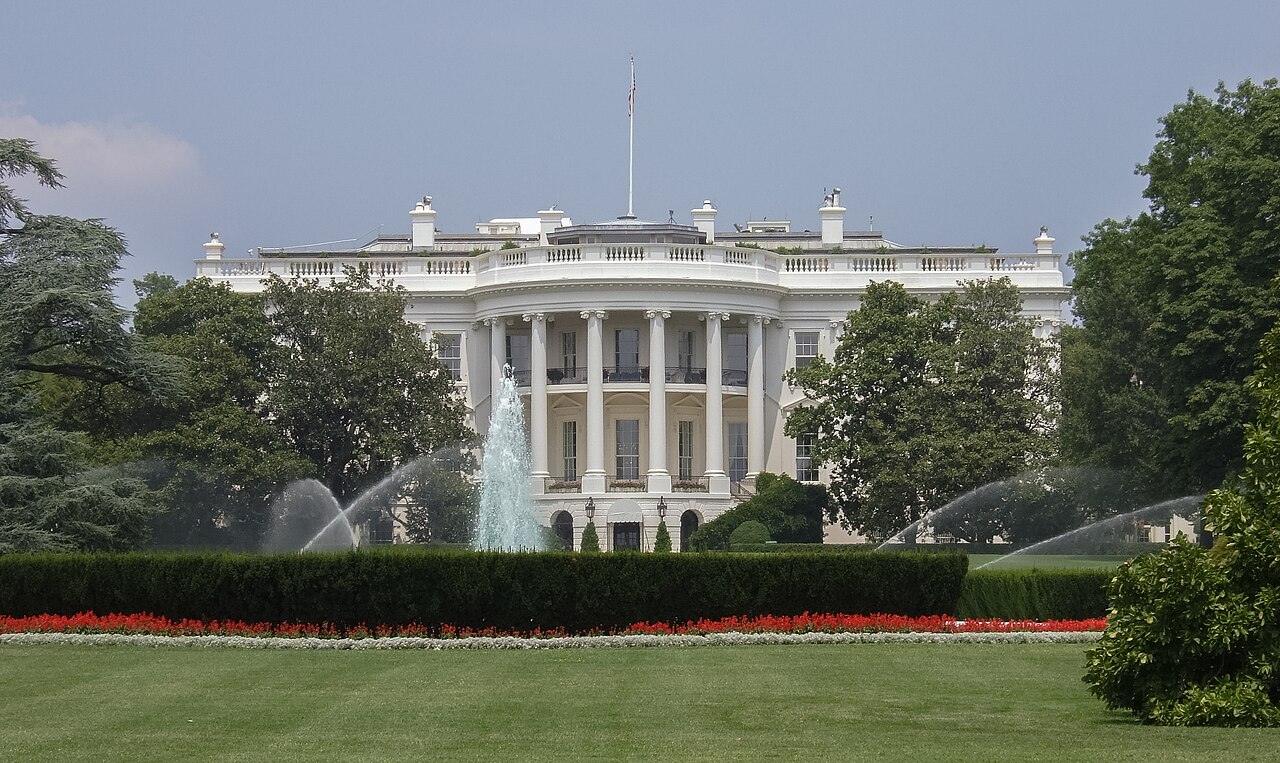
The White House in Washington, D.C. Photo: Diego Delso, Wikimedia Commons, CC BY-SA 3.0.
Two different accounts of the departure
The White House has given two different explanations for why Cairncross is leaving. A source close to the White House told Reuters that President Donald Trump fully supported the firing because Cairncross lacked the strong cyber credentials the job requires. CNN reported the same account, adding that the White House had praised his leadership experience when he was confirmed to the role in 2025.
Axios reported a different version: that the departure was amicable, that Cairncross did not want to serve another two years, and that leaving now gives the administration time to win Senate confirmation for a permanent successor before Democrats take control of Congress in January. Cairncross himself said in a statement that it had been the honour of a lifetime to serve the president.
What the replacement signals
Davies arrives with the credentials the White House says the job needs. She is Senate-confirmed as the Pentagon’s chief information officer, and the Secretary of State, Marco Rubio, publicly congratulated her on taking the new role. Her appointment was also one of the first tasks handled by Stephen Miller, the new White House chief of staff, a sign the cyber portfolio now sits near the top of the administration’s agenda.
The change also fits a wider pattern. Last year, the administration fired the director and deputy director of the National Security Agency. On Thursday, Michael LoSapio, the nominee to lead the Cybersecurity and Infrastructure Security Agency, faced sharp questions from senators about proposed budget and staff cuts.
What happens next
Davies takes over an office that coordinates cybersecurity policy and strategy across the whole federal government. The administration says powerful new artificial intelligence tools can now carry out cyberattacks, and the same tools are being used to hunt for the flaws that caused last week’s outages. Whether it calms the criticism will depend on what happens the next time a major system fails. For now, the White House has chosen a new face for its cyber policy, and the test will come quickly.
Sources: Reuters, CNN, Al Jazeera, The Wall Street Journal, AFP, via The Hindu.