
Senate Passes Bipartisan Energy Bill to Speed Up Power Plants and Data Centers
The United States Senate has passed a sweeping bipartisan energy bill that promises faster approval for power plants, transmission lines, mines and data centres, and lower electricity bills for households. The Bipartisan American Affordability and Jobs Act passed on Thursday by 62 votes to 33, with 14 Democrats and one independent joining most Republicans. It now goes to the House of Representatives.
What the bill changes
The bill, which runs to more than 400 pages, rewrites the federal permitting system that decides how quickly large energy and infrastructure projects can be built. It shortens the deadlines for many environmental reviews, narrows the window in which developers can be sued over environmental concerns, and limits the circumstances in which an approval can be withdrawn once granted. Supporters say the current system lets projects stall for years in paperwork and court challenges, and that the delays are one reason energy costs keep rising.
The authors of the bill are two Republicans, Shelley Moore Capito of West Virginia and Mike Lee of Utah, and two Democrats, Martin Heinrich of New Mexico and Sheldon Whitehouse of Rhode Island. They introduced it in September, and President Donald Trump promoted it in a social media post on 8 November, saying it would lower energy costs for families and let the country build pipelines, mines and power plants faster.
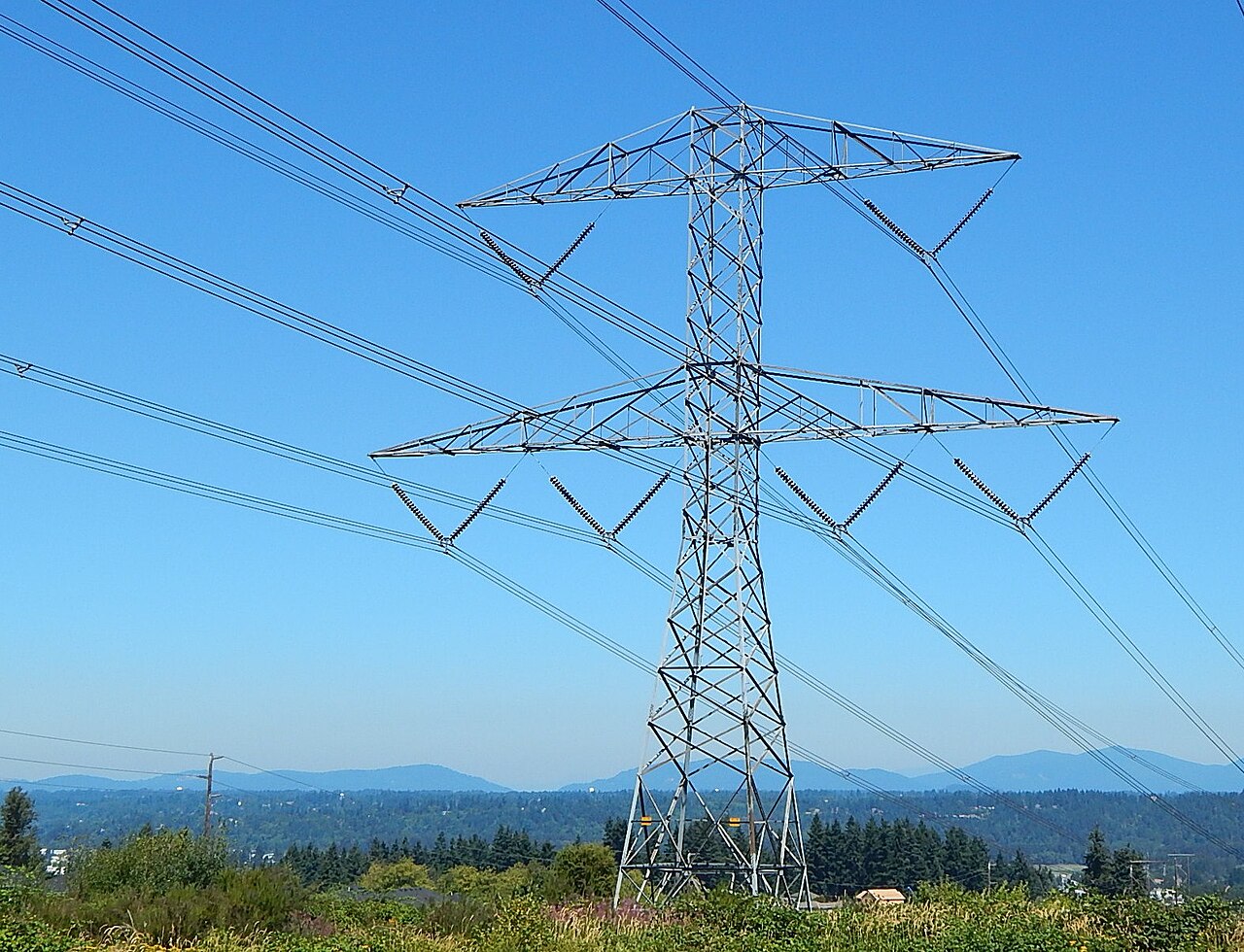
High-voltage transmission lines in Auburn, Washington. Photo: Ron Clausen, Wikimedia Commons, CC0.
The data centre question
A central part of the bill deals with data centres, whose demand for electricity has surged as artificial intelligence expands. The bill directs federal regulators to overhaul grid pricing rules so that large data centres, rather than ordinary households, pay their share of existing infrastructure and cover the full cost of the transmission upgrades needed to connect them. Supporters present this as a fairness measure: families should not subsidise the power needs of the world’s largest technology companies.
Independent analysis cited by supporters puts the savings in concrete terms. The Rhodium Group estimates that the bill would cut household electricity prices by 3 to 5 percent, saving families between 50 and 78 dollars a year by 2040. Senator Heinrich’s office also says the bill would create more than 100,000 jobs, while holding data centres accountable for their grid costs.
Why some Democrats objected
The bill passed despite opposition from many Democrats, who argued that it weakens environmental protection laws. Two Republicans also voted against it. Critics say shorter review deadlines and a narrower window for legal challenges will make it harder to stop projects that damage the environment or nearby communities. Supporters answer that the bill keeps important environmental protections in place and strengthens consultation with tribal communities, a claim its Democratic authors have repeated in public statements.
What happens in the House
The bill now moves to the Republican-controlled House, where its path is less certain. Some Democrats there have already voiced opposition, and many Republicans are preparing to leave Capitol Hill after losing their seats in the midterm elections. If the House passes it, the bill goes to the president’s desk. For households watching their electricity bills, the promise is real but distant: the projected savings are measured in decades, not months, and the first test will be whether the House acts before the current Congress ends.
Sources: NPR, Reuters, The Wall Street Journal, Senator Martin Heinrich’s office.