Trump Weighs a New Iran Offensive as Netanyahu Pushes a Four-to-Seven-Day Campaign
US President Donald Trump is weighing another major offensive against Iran, according to reports on Thursday, in a sharp change of tone from just last week, when he called such a move “quite unlikely”. The shift comes as Israeli Prime Minister Benjamin Netanyahu presses Washington to join a four-to-seven-day campaign of airstrikes.
The trigger for the latest escalation was an American strike on an Iranian missile site on Qeshm Island in the Strait of Hormuz on Tuesday, followed overnight by Iranian drone attacks on a US base in Kuwait and further attacks on Bahrain. But the debate in Washington is now about whether to open a new, sustained campaign.
A new claim about chemical and biological weapons
Trump told Fox News on Wednesday that there was an “indication that Iran is looking at gas and they’re looking at the bio… the biological weapons.” He added that Americans did not need to be concerned, saying: “If it does happen, we wipe them out.”
The claim follows a visit to Washington last week by Mossad chairman Roman Gofman, who presented Trump administration officials with intelligence suggesting Iran is advancing a chemical weapons program, according to the New York Times and Axios. Some officials are sceptical, with Axios reporting that some believe the Israeli material is “driven by an agenda”.
US Secretary of State Marco Rubio said on Wednesday he saw no imminent threat to the American capital, responding to a CNN report citing US intelligence assessments about a possible Iranian dirty bomb plot in Washington.
Netanyahu wants a short, sharp campaign
Netanyahu’s proposal, as reported, is a four-to-seven-day joint campaign of airstrikes, intended to degrade Iranian capabilities and force concessions without the open-ended commitment of a longer war. Yet it is unclear how another air campaign would persuade Iran to give in to US demands on reopening the Strait of Hormuz and on its nuclear program, when previous offensives did not produce that result.

That widening was on display overnight. Iran said it targeted US drone and missile sites at Ali Al Salem air base in Kuwait, its first attack on the Gulf state since September. Bahrain intercepted a third aerial attack this week, a Saudi-led coalition destroyed a Houthi cruise missile headed towards Riyadh, and an ADNOC vessel was struck in the Strait of Hormuz, leaving one crew member missing and eleven injured.
The Gulf allies want pressure, not another war
Only last week, Trump appeared to be listening to the Gulf states. He declared another offensive “quite unlikely”, heeding allies who argued for keeping economic pressure on Iran instead of renewing a military conflict that has repeatedly landed on their own soil.
US Central Command warned on Wednesday that ships receiving cargo at sea from vessels loaded in Iran could be treated as evading the blockade of Iranian ports. The International Energy Agency warned this week that the Hormuz crisis has created the largest threat to energy security in history.
What happens next
Trump himself signalled that no strike is imminent. “We are going to have a new year coming up, and we will see what happens after January 1,” he said. That leaves weeks for diplomacy, and for Gulf allies and Israel to keep making their opposing cases.
For now, the war is in a holding pattern that nobody should mistake for peace. The next move will tell us whether last week’s caution or this week’s pressure wins.
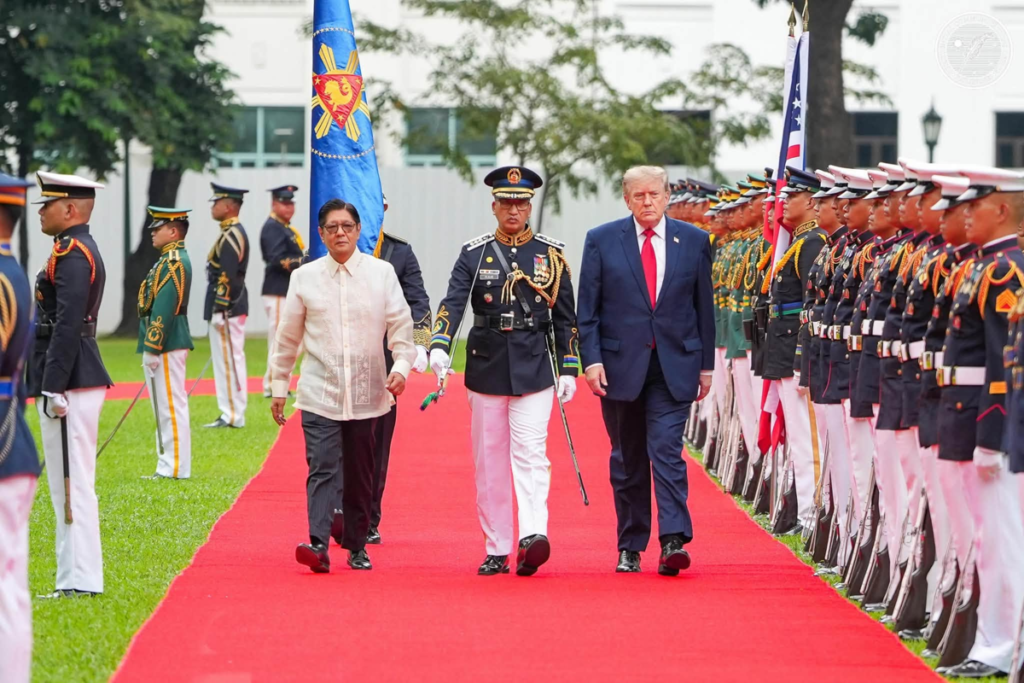
Featured image: US President Donald Trump in Manila on 18 November 2026. Photo: Presidential Communications Office, Philippines (public domain).
Sources: The Times of Israel (https://www.timesofisrael.com/liveblog-november-19-2026/) and Dawn (https://www.dawn.com/news/print/2045503).