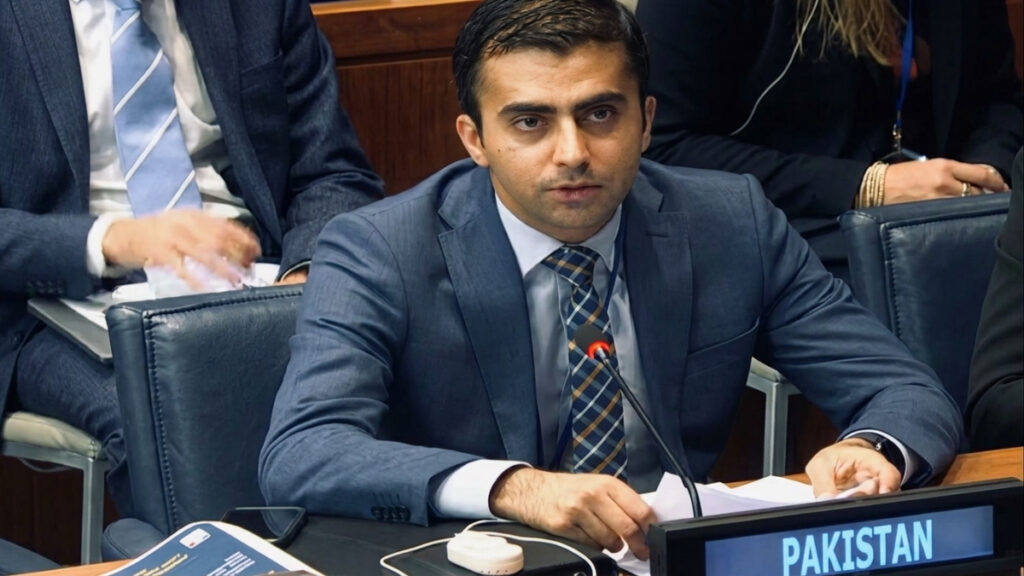
Pakistan Urges Binding Treaty to Halt Space Arms Race
Pakistan warned that the move from theoretical concepts to actual deployment of space weapons makes a legally enforceable Prevention of an Arms Race in Outer Space (PAROS) treaty more urgent than ever, as humanity’s reliance on orbital infrastructure grows. Speaking at the United Nations General Assembly’s First Committee on Disarmament and International Security during Thursday’s thematic debate, delegate Husham Ahmed noted that weapons in orbit were formally recognized only last month. He cautioned that merging missile‑defence systems with space‑based assets threatens global strategic stability and could spark countermeasures, fueling an unsustainable arms race.
Ahmed said the window to stop the weaponisation of outer space has not yet closed, but recent developments have narrowed it and made it harder to keep the issue open for negotiation. He urged the international community to act now before deployments become permanent facts. The Pakistani envoy stressed that non‑binding guidelines are no longer enough to protect the global commons and called for formal international frameworks to curb the militarisation of space.
While acknowledging the value of transparency measures and the voluntary Open‑Ended Working Group (OEWG) guidelines as useful steps, Ahmed argued they cannot replace a binding treaty. He outlined Pakistan’s concrete proposals that set out basic obligations for a potential PAROS treaty. “The OEWG on PAROS in all its aspects offers a unique platform to bridge differences, where useful discussions are taking place,” he said, adding, “We must build on these discussions to lay the foundation for both legally and non‑legally binding measures.”