
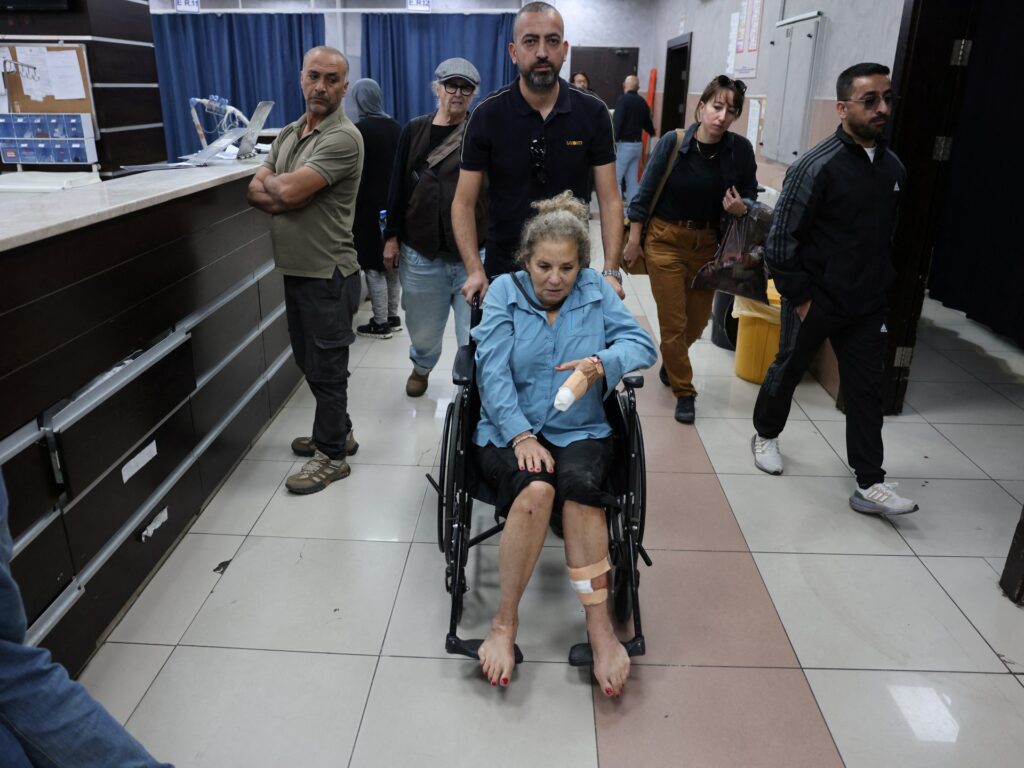
Al Jazeera investigation disputes Israeli version of Heidi Levine attack
An Al Jazeera probe has called into question the official Israeli story about a settler assault on Palestinian olive pickers and American photojournalist Heidi Levine on Friday in Khirbet Abu Falah, northeast of Ramallah in the occupied West Bank. The investigation, carried out by Al Jazeera’s Data Journalism Unit, relied on open‑source verification and a detailed analysis of visual and geographic material.
Israeli officials have offered conflicting accounts. The office of Prime Minister Benjamin Netanyahu has suggested that it is not clear whether settlers were involved, while the Israeli army has said its troops were dealing with a clash between Palestinians and settlers at the time. In contrast, the Al Jazeera team’s verified footage and mapped coordinates point to a coordinated assault by masked settlers, with Israeli military vehicles passing the scene shortly before the attack but not intervening. The incident on 16 October left veteran Washington Post photographer Heidi Levine, 63, with a broken rib, four fractured vertebrae and injuries that required hand surgery, despite her wearing a clearly marked press vest.
To reconstruct the event, the Data Journalism Unit examined more than 20 videos and photographs taken by journalists and eyewitnesses. The team independently verified each clip, arranged them in chronological order, consulted local reporters and plotted key locations on a map.
Geospatial analysis identified the settler outpost from which the attackers came, the olive‑harvesting fields, and the exact spot where Levine was assaulted. The attack was mapped at 32°01’13.5″ N 35°18’40.7″ E, roughly 455 metres southwest of a hill‑top outpost near the Misholash settlement and about 120 metres north of the olive‑picking area. The unit also located rooms traditionally used by Palestinians to store fertilizer and tools, and sometimes to sleep, situated 430 to 500 metres northeast of the assault site. A local journalist, who spoke on condition of anonymity for safety reasons, said that settlers now occupy those rooms and that Palestinian owners can no longer enter them.
The journalist explained that the outpost lies in Area B under the Oslo Accords, where the Palestinian Authority handles civil affairs while Israel retains security control. Although only a few settlers normally reside there to “prove” a presence, the reporter said that during incidents 50 to 100 settlers from other outposts converge on the site before moving onto the fields. Additional tents on the neighboring mountain also serve as gathering points for attacks on olive harvesters.
Chronological review of the footage shows a gradual escalation. Around 8 a.m. a 4×4 vehicle carrying settlers headed toward the area, followed by six motorcycles moving toward the opposite side of the harvesters. By just after 9 a.m., a video shows about 30 settlers assembling near the farmers. Al Jazeera correspondent Tharwat Shaqra, who was on the ground, reported that Israeli military vehicles passed through the area and, after their passage, settlers moved toward the journalists and farmers “as if it were a green light.” Independent Israeli journalist Oren Ziv noted that the military jeeps made no attempt to stop the masked men.
The settlers then set fire to olive trees and advanced on the harvesters, prompting village youths to throw stones. Footage later captures the attack on Levine after she was knocked down; her colleagues could only reach her after the Palestinian youths pushed the settlers back with stones. American journalist Jasper Nathaniel, who helped pull Levine away, wrote on X that he was able to reach her only because Palestinian youth provided cover with stones, while soldiers with machine guns and tear gas pursued the youths after the attack, not the settlers.
During the same period, a video recorded four gunshots followed by two more, which Shaqra confirmed came from the settlers. Israeli forces appeared in later footage, with vehicles stationed in the settlers’ area. Soldiers then shot local council member Abdel Jaber Obeid, intercepted an ambulance bound for the hospital and continued firing tear‑gas at the olive harvesters.
The timeline and geographic data contradict the Israeli narratives. The Prime Minister’s Office said that “the facts surrounding the confrontation near Abu Falah, during which Washington Post photojournalist Heidi Levine was allegedly assaulted, remain unclear and are under investigation,” adding that reports indicated “some 200 Arabs and far‑left activists confronted approximately 40 Israeli youths.” However, the footage and testimonies show settlers gathering, descending, and burning trees before any response from youths, and the assault on Levine is clearly documented on video.
The Israeli army, while acknowledging the injury to a foreign journalist, did not dispute the assault itself. It said forces were deployed “following a report of a violent confrontation” and that they broke up the incident using “riot” measures. The Al Jazeera investigation suggests that the military’s role was limited to positioning vehicles after the attack rather than intervening to stop the settler violence.