
Russia’s Foreign Minister Lavrov Talks US‑Iran Conflict and Regional Security in Tehran
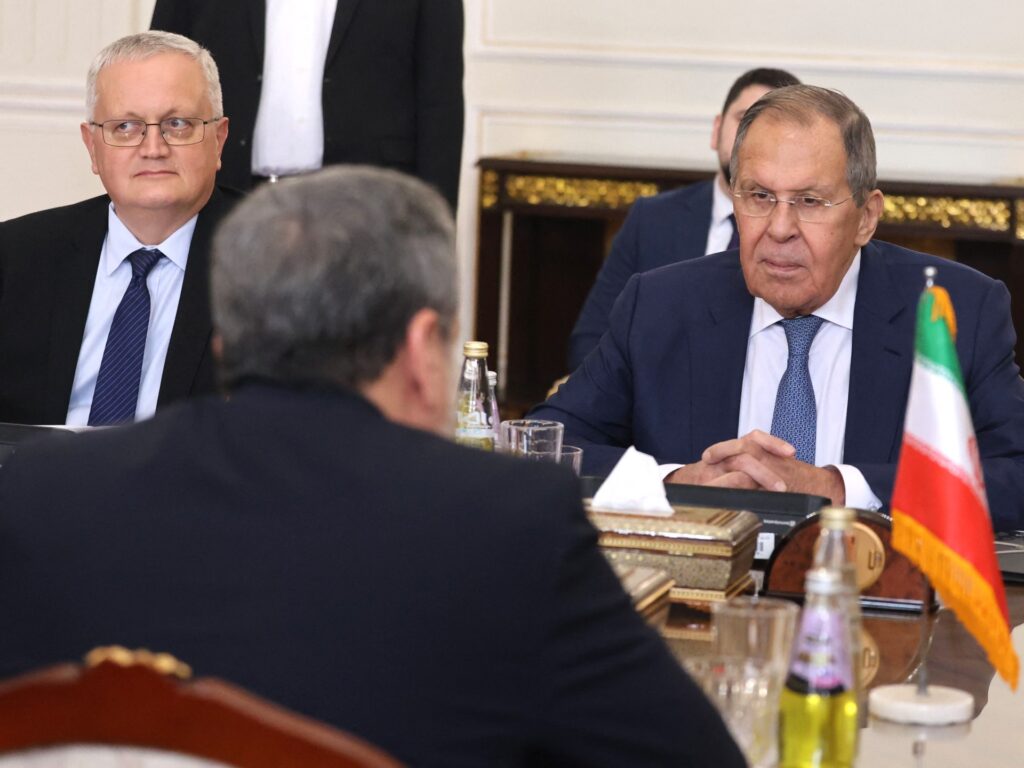
Russian Foreign Minister Sergey Lavrov arrived in Tehran on Monday afternoon for his first visit to Iran since February 2025. He met with his Iranian counterpart, Foreign Minister Abbas Araghchi, to discuss the war involving the United States and efforts to bring it to an end.
Araghchi said the discussions centered on regional developments, including what he described as the US‑Israeli war on Iran. He condemned Israel’s “dangerous expansion” in the region, blaming it for the current hostilities. “The existing insecurity around the Strait of Hormuz is a direct result of the military aggression by the US and [Israel] against Iran, and it is ongoing in different forms,” he said. Araghchi added that Iran’s policy is to pursue diplomacy, noting that regional problems have “no military solution.” He called on Europe to recognize “some truths,” arguing that both Europe and the United States have made miscalculations and caused wars through flawed policies.
Lavrov reaffirmed Russia’s commitment to a 20‑year strategic partnership with Iran, which officially took effect on 2 October. He announced that Russian experts would gradually return to the Bushehr nuclear power plant after being withdrawn during the war. The Russian minister also linked the restoration of navigation in the Strait of Hormuz with protection for Iran against renewed attacks.
Later on Monday, Lavrov met Iranian President Masoud Pezeshkian, who said Russia shares “common views and approaches with Iran” and supports a world based on mutual respect.
Moscow described Lavrov’s trip as part of an effort to ease months of tension since the US and Israel launched their war on Iran on 28 February. The day before arriving in Tehran, Lavrov visited Bahrain, a country heavily targeted by Iran during the conflict, to take part in a strategic dialogue between Russia and the Gulf Cooperation Council (GCC). GCC members urged him to use Moscow’s influence with Tehran to press for serious dialogue and to restore shipping through the Strait of Hormuz, which has been disrupted by attacks on commercial vessels. GCC chief Jasem Al‑Budaiwi said member states have faced more than 7,000 Iranian missiles and drones since the war began. In its closing statement, the six Arab nations called for Iran’s nuclear and missile programmes, as well as its support for regional armed groups, to be included in future negotiations to end the war.
Analyst Nikita Smagin, who studies Iran and Russia’s role in the Middle East, said Lavrov’s tour reflects Moscow’s desire to keep working relations with all regional players while maintaining its status as a mediator despite the impact of the Ukraine war on its global standing. He noted that the almost simultaneous visits to Gulf monarchies and Iran send a deliberate signal that Moscow seeks equal cooperation with each country.
In Manama, Lavrov told GCC ministers that the region is once again on the brink of a full‑scale war and that Russia wants to build a regional architecture for collective security. He suggested combining initiatives from regional states with those proposed by Russia and China to restore maritime traffic and achieve lasting peace, urging countries such as Iraq and Jordan, which have also been hit by Iranian strikes, to join the effort.
Lavrov expressed support for the memorandum of understanding signed between Iran and the United States in June, which later collapsed, and said it could serve as a framework for reducing tension. Iran has called for a return to that agreement and for Washington to honor a bilateral deal with Oman that would manage territorial waters in the Strait of Hormuz, a proposal the United States has opposed in favor of its own shipping route.
U.S. media have cited intelligence reports that Russia and China are providing Iran with satellite imagery for targeting and weapon components. President Donald Trump contradicted those reports last week, saying Moscow and Beijing would have “too much to lose” if they helped Iran. Washington has also issued sanctions waivers for Russia in an attempt to lower fuel prices driven up by the war against Iran.
Smagin noted that Russia’s stance on the Iran war is unusual. While higher oil prices and reduced Iranian oil supplies to China benefit Moscow, he said Russia does not want the conflict to escalate further.