Palestinian Israelis weigh fear against disillusionment as election approaches
In occupied East Jerusalem, 19‑year‑old Laila Atamneh remembers the dinner‑table debates that erupted whenever Israel scheduled an election. Her father urged her to support an Arab‑led list, while her mother chose to stay home from the polls. “She thinks it feeds into the idea that Israel is a democracy and Palestinians have the same rights here – only to get extremely humiliated, and then get one of the worst governments ever, and be surrounded by fascists,” Atamneh said, referring to her mother’s stance.
On October 27 the young woman will cast her first vote in Israel’s national election. She frames the act as a duty to the millions of Palestinians living in the West Bank and Gaza, who have no vote in the Israeli Knesset yet bear the consequences of its policies. “I feel like I have to be these people’s voice,” she told Al Jazeera. “Not that one person is really capable of that much – but if this gives them one percent hope, then I will do it.”
Atamneh, an Arabic speaker, admits she struggles to follow the campaign in Hebrew and feels excluded from the national conversation. “It feels like none of the parties really address our generation of first‑time Palestinian voters,” she added.
Her ambivalence reflects the mood of Palestinian citizens of Israel – roughly one‑fifth of the country’s population – as the election nears. Many doubt that the political system can serve their interests, yet a sizable share fear a return to a government led by Benjamin Netanyahu, the longest‑serving prime minister, whose tenure has been marked by the war in Gaza that began in 2023. Opinion polls suggest that neither Netanyahu’s far‑right bloc nor the self‑styled Zionist opposition can form a coalition without the Arab‑led Ra’am and the Joint List. If no bloc secures a majority in the 120‑seat Knesset, fresh elections will be called, leaving the current hard‑right government in place until a new vote is held.
The election is being framed by many Palestinian Israelis as a response to an accelerating assault on Palestinian rights, land and livelihoods. “This election comes in the context of the genocide and the ethnic cleansing in the West Bank, and the harsh state policies towards Palestinians in Israel,” said As’ad Ghanem, a political scientist at the University of Haifa. “Palestinian citizens are really afraid. Their leadership is afraid, and this is real.”
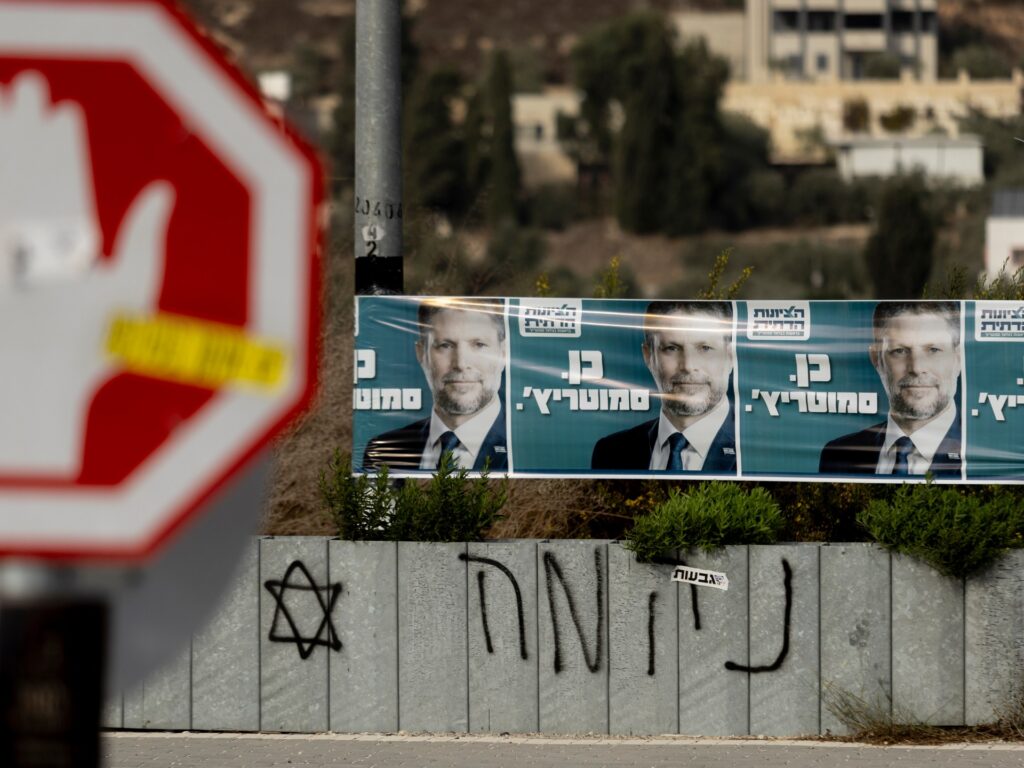
For 36‑year‑old Hanan, a Palestinian Christian living in a Druze village in the Galilee, the threat feels immediate. Israeli settlers recently attempted to establish an illegal outpost near Majd al‑Krum, a Galilean Palestinian community. Shortly thereafter, far‑right finance minister Bezalel Smotrich released an AI‑generated video in which a West Bank Palestinian urgently warns a relative in the Galilee that “the Jews are coming” to repeat past violence. “Acts like these make me more afraid that the settlers will get worse and try to take more Palestinian land,” Hanan said. “This makes me want to vote more, and want to encourage other people to vote.”
On September 23 the Central Elections Committee moved to disqualify Ra’am and the Joint List, but the Supreme Court overturned the decision. Nevertheless, Balad leader Sami Abu Shehadeh withdrew his candidacy after the court signaled that a majority of justices were inclined to uphold the disqualification. Many Palestinians interpreted the episode as proof that the system is illegitimate, while others saw it as a further reason to turn out at the polls. “We feel that we are under attack,” said Thabet Abu Rass, an expert on Arab‑Jewish relations. “This is why we will cast our vote in a higher percentage.”
Turnout among Palestinian citizens of Israel has fluctuated between roughly 45 % and 65 % over the past five elections, reaching about 53 % in 2022. A campaign operative cited surveys indicating that around 62 % intend to vote this week, with a target of 70 % to 75 % – a level last achieved in 1999 when a strong Palestinian turnout helped Ehud Barak defeat Netanyahu. “We want to take it there,” the operative said, noting that a high turnout could keep small right‑wing parties such as Amcha Yisrael and The Reservists below the 3.25 % electoral threshold, altering the balance of power.
Despite lingering doubts, Ghanem dismissed the notion of a mass boycott as a marginal view. “We are under a real danger, and we can contribute to ending this government’s term,” he said. Hanan echoed the sentiment, acknowledging that she often questions whether her vote matters, yet she still goes to the polls, hoping that this time it might make a difference.