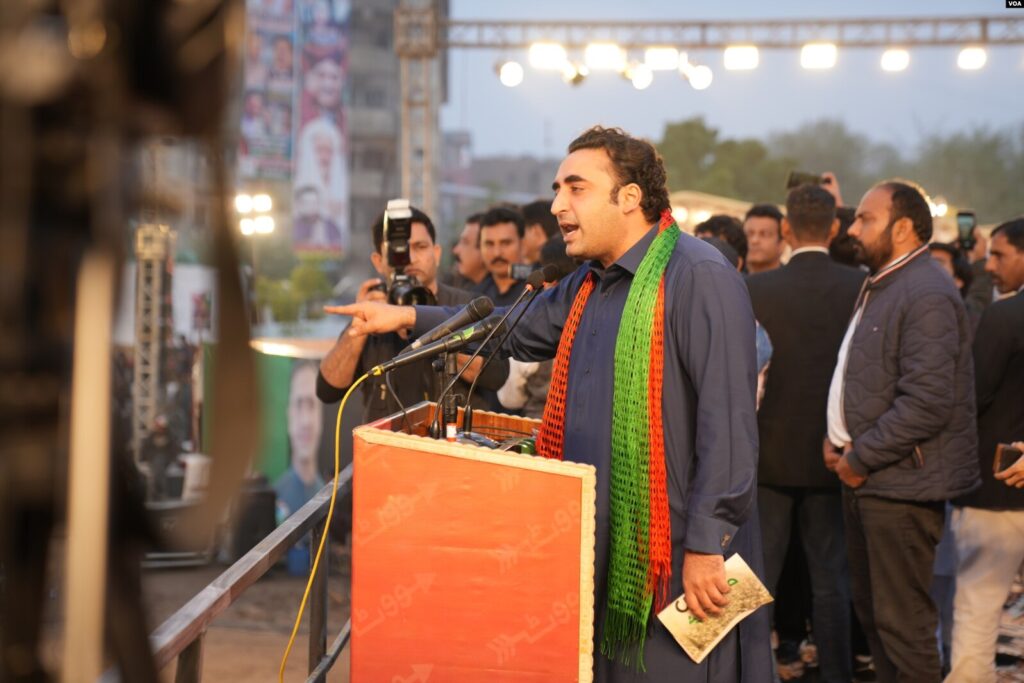
Bilawal Warns Forced Division of Sindh Would Spill Blood on Karachi Streets
KARACHI: Pakistan Peoples Party Chairman Bilawal Bhutto-Zardari warned on Tuesday that any attempt to divide Sindh by force would spill blood on the streets of Karachi, in the sharpest intervention yet in the renewed debate over creating new provinces.
Speaking at the Karachi Press Club’s Meet the Press programme, Bilawal said the PPP supported new provinces where people wanted them and where constitutional and legal procedures were followed. But he drew a firm line at force. “If Sindh is divided by force, there will be blood on the streets of Karachi, not garbage,” he said.
He warned the violence would not stop at one death. “If they resort to coercion, brothers will kill brothers in Sindh. Society will become divided, hatred will turn into enmity and ordinary people will take up arms,” he said, and named Hyderabad, Mirpurkhas, Tando Allahyar and Nawabshah.
No to a referendum, yes to the Constitution
The warning was aimed at Interior Minister Mohsin Naqvi, who has called for a referendum on new administrative units, arguing that the governance system had collapsed and needed a reset. Bilawal rejected the idea outright, questioning the intent behind it.
“In our history, a referendum has always been carried out for an undemocratic act and never a democratic one,” he said. “It is not about a referendum, it is about intent.” He challenged its backers to hold a referendum in their own provincial assembly first, and noted the Sindh Assembly had stated its position “not once, but ten times” through resolutions.
He also said neither he nor President Asif Ali Zardari had been consulted on new provinces. The Constitution already lays down a procedure: an amendment on provincial boundaries needs the provincial assembly concerned to pass it by at least a two-thirds majority. The debate has not yet reached parliament or the cabinet.

A political reset, and a warning to his own side
Bilawal used the same appearance to call for a political reset, arguing that the system had not collapsed on its own but had been “made to collapse”. He demanded an end to revenge politics, backed the return of the PTI’s reserved seats and election symbol, and said his party’s lawmakers would not give in to pressure.
He also made clear the resistance would come from inside his own party. “If tomorrow, my software is updated and I direct my party to vote for Sindh’s division, there will be a revolt against me,” he said. He recalled that One Unit had also been imposed by force.
Why the warning carries weight
The warning matters because of who delivered it. The PPP is a partner in the ruling coalition, so this was not an opposition attack but a public crack inside the government. Information Minister Attaullah Tarar replied that a referendum was part of the Constitution, called talk of bloodshed incomprehensible, and reminded Bilawal that the PPP was “part of the same government”. Karachi’s own history gives the warning its edge: the city has seen ethnic and political violence before, and a debate over dividing Sindh touches the same fault lines.
What happens next
For now the proposal exists only as debate: no bill has been tabled, and a government adviser has said the matter has not entered parliament or the cabinet. The next signals are whether the idea is formally put before parliament, whether the Sindh Assembly passes another resolution, and whether the coalition partners can agree on a process.
Sources: Dawn, The News, The Express Tribune, ARY News, Islamabad Post (17-18 November 2026).