
Yemen’s Government Forces Face Logistical Hurdles in Their Push Against the Houthis
A missile launched by Yemen’s Houthi movement, also known as Ansar Allah, arced across the sky over Sanaa on a bright midday, leaving a plume of smoke. Officials have not confirmed the intended target; it may have been a location in Saudi Arabia or an area in southern and eastern Yemen under the control of the internationally recognised government. For residents of northern Yemen, such missile launches have become a routine sight.
On Thursday, Houthi missile strikes near the al‑Maashiq presidential palace in Aden killed at least five people. Yemeni Prime Minister Shaya al‑Zindani was inside the palace at the time but escaped injury. Houthi military spokesman Yahya Saree said the attack was aimed at an operational headquarters as part of the group’s campaign against Saudi‑backed fighters and equipment supporting the government in Aden.
Repeated Houthi missile attacks, together with the group’s recent territorial gains around the southwestern city of Taiz, have disrupted key supply routes and threatened other roads, ports and airports that government forces depend on for logistics. The interruptions risk undermining the government’s “Dawn of Yemen” operation, which seeks to retake areas held by the Houthis, including the capital Sanaa that the rebels seized in 2014.
Government officials, however, argue that logistical challenges will not halt the offensive. Colonel Wadah al‑Dubaish, spokesperson for the government‑aligned Joint Forces on Yemen’s west coast, told Al Jazeera that “the Houthi group consistently attempts to sever supply lines to government forces, but they have been unable to halt these supplies. So, military operations against the Houthis will continue.”
Recent Houthi advances have inflicted damage on the government’s capabilities. In early September the rebels moved quickly south along the Red Sea coast, capturing Mocha, a vital port for pro‑government forces in western Taiz governorate. A government counter‑offensive reclaimed some ground in the southern Red Sea area but Mocha remains under Houthi control. Al‑Dubaish said these setbacks may delay deliveries or raise the cost of supplying certain fronts, but “the air, land and sea routes are still available, allowing supplies to continue reaching the front lines.”
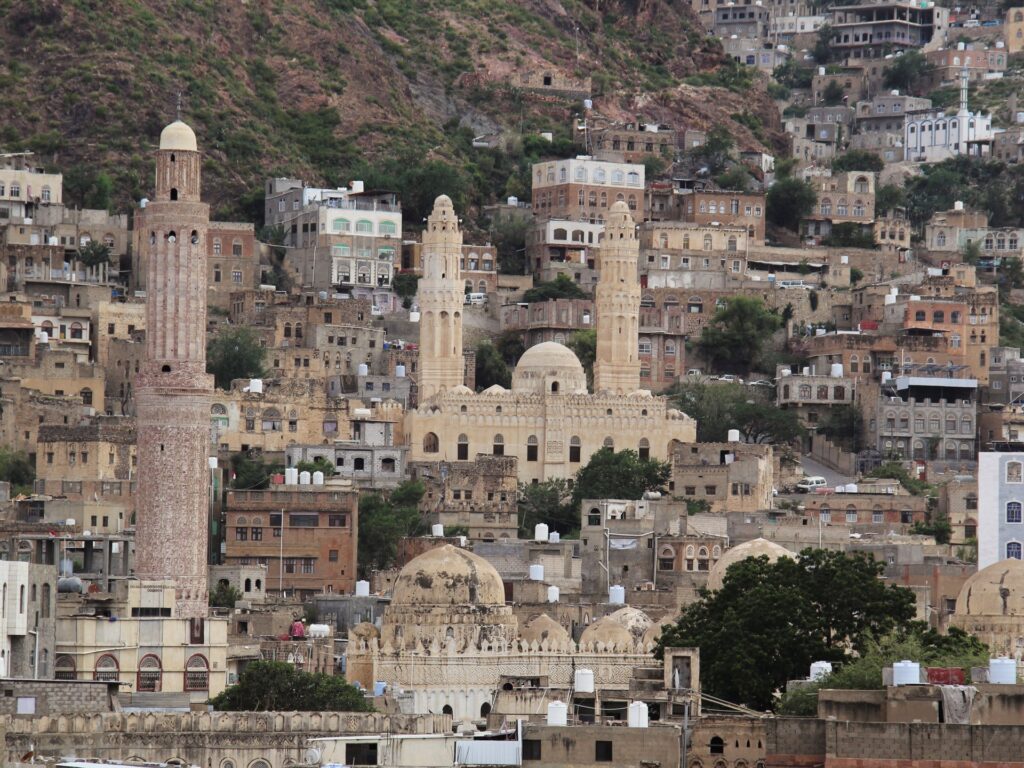
The situation in Taiz highlights the limits of that flexibility. Houthi forces have blocked the main highway linking the city to Aden, the seat of the internationally recognised government, and have disrupted alternative mountain routes, effectively placing Taiz under siege. The fallout is already visible: fuel shortages have driven petrol prices to triple in the past week. The loss of crucial supply corridors also threatens the delivery of ammunition, reinforcements and other essentials to troops confronting sustained Houthi attacks. Nonetheless, al‑Dubaish stressed that setbacks in individual battles do not decide the overall war, stating, “The war is still ongoing and will not cease until the Houthis are defeated.”
Yemen’s government troops are currently engaged on several fronts, including the southern Red Sea coast, around Taiz, and in Marib and al‑Jawf east of Sanaa. Deputy Minister of Justice Faisal al‑Majidi told Al Jazeera that the forces rely on “logistical flexibility and decentralisation” to keep supply lines open across the country. He explained that this strategy divides routes into semi‑autonomous sectors supported by nearby access points and key hubs such as Shabwa, Marib, Houthi‑free zones in Taiz, the Red Sea coast and the southern governorates. The approach helps mitigate the difficulties of moving between widely separated battle lines. Al‑Majidi added that government troops have also focused on securing high ground overlooking major roads to protect vital supply arteries from bombardment.
One strategic area of focus is the mountainous district of al‑Waziiya in Taiz governorate, which commands a view of the Red Sea coast and could serve as a launch point to relieve the siege on Taiz from its western approaches. Fighting continues there between pro‑government forces and the Houthis.
Saudi Arabia has increased its support for the Yemeni government and allied forces since the launch of the Dawn of Yemen operation, even acknowledging airstrikes against Houthi positions for the first time since a 2022 truce. Riyadh first intervened in Yemen in 2015 with the aim of restoring the internationally recognised government to Sanaa. Al‑Dubaish described Saudi military assistance as a pivotal and indispensable element of the conflict, saying, “Saudi support is a decisive factor in the conflict. Without Saudi Arabia, it would be a huge challenge for our forces.”