
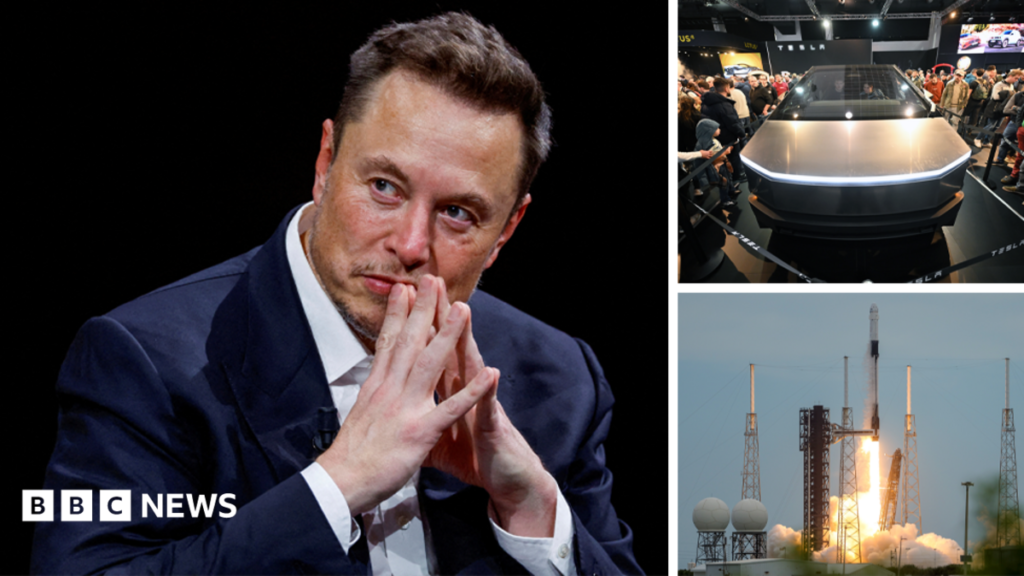
Why Elon Musk Is Weighing a Mega‑Merger of SpaceX and Tesla
Elon Musk has spent years turning Tesla and SpaceX into two trillion‑dollar technology giants, and now he is entertaining the idea of joining them. When asked on Tuesday if a merger would make sense, Musk answered simply, “Yes.” The notion is not just speculation; Musk said that special committees have been set up to evaluate a possible deal, although he cautioned that nothing is certain and no agreement has been reached.
Tesla is currently valued at about $1.5 trillion (£1.1 trillion) and SpaceX at roughly $2 trillion, meaning a combined entity would be the largest merger in history. Any transaction would require shareholder approval, but Musk believes the benefits of a union are substantial.
David Nicholson, chief technology advisor at market‑research firm The Futurum Group, estimates the likelihood of a merger at “100 percent; it’s only a matter of timing.” During Tesla’s earnings call on Wednesday, Musk declined to add new details, joking that he feels “like I’m tap‑dancing through a minefield.” He also noted that calling the merger a certainty would be “overstating” the situation.
Tesla’s third‑quarter revenue slipped slightly to $28.05 billion from $28.1 billion a year earlier. The recent unveiling of a new Tesla Roadster, which uses SpaceX rocket thrusters, was described by Nicholson as a “symbolic embodiment” of a potential merger.
Musk, who runs both companies, argues that combining their work on chips, artificial intelligence and other advanced technologies would be advantageous. The merger would blend Tesla’s electric cars, robots and autonomous‑driving software with SpaceX’s rockets, data centres, satellites and communications assets. Such a union could advance Musk’s long‑term goal of establishing a self‑sustaining city on Mars, a vision that attracts both critics and supporters.
In the past year Musk has been consolidating his holdings, with SpaceX acquiring xAI and X (formerly Twitter) before taking the latter public. Ultimately, shareholders would decide the fate of any merger; roughly half of Tesla’s shareholders would need to back the plan, a threshold Musk himself called “quite a high hurdle.” Because he leads both firms, Musk cannot take part in the shareholder vote, but as a major Tesla shareholder he is likely to influence the outcome, according to analyst Dan Sheehan of Telos Wealth Advisors. Sheehan expects investors to support the deal because the two companies’ technologies complement each other, though he warns that Tesla shareholders would end up owning a “smaller slice of a much larger and more complex business.” He adds that there is no clear precedent for valuing a public company like Tesla in such a scenario.
After the news broke, SpaceX shares rose 8 percent in after‑hours trading and Tesla’s stock climbed 2 percent.
What would the merger mean for customers? Experts told the BBC that Tesla owners are unlikely to notice major changes in the near term, even if the companies combine. Nicholson says the vehicles may become “an afterthought” compared with the broader technological synergies. Tesla has already shifted focus to its best‑selling Model Y and Model 3, while scaling back less popular models, and it has begun producing its Optimus humanoid robots at a California plant.
Pairing Tesla’s self‑driving software and robotics with SpaceX’s AI and satellite network could produce more capable cars, according to Sheehan, who wonders how much priority vehicles will receive in a company increasingly driven by AI infrastructure. The Roadster showcase suggests that SpaceX technology could be integrated into future Tesla products, potentially attracting new buyers, says Tu Le, founder of advisory firm Sino Auto Insights. Tesla now faces stiff competition from Chinese manufacturers such as BYD, which overtook it as the world’s largest EV maker in January.
For Musk, the biggest beneficiary would likely be himself. He became the world’s first trillionaire earlier this year, and a merged entity would give him greater voting power than he currently holds at Tesla—a factor the special committee must weigh. A single, larger company would also simplify Musk’s ability to steer his AI strategy, notes Sheehan, who adds that while the merger would not directly increase Musk’s wealth, it would concentrate his holdings in one stock.
The proposal could also draw political and regulatory scrutiny, especially if Democrats, many of whom have criticized Musk, gain more seats in the upcoming U.S. midterm elections, according to Nicholson. Shareholders have previously backed Musk’s ambitions; last year they approved a historic compensation package for him valued at about $1 trillion. Nicholson believes Musk is less concerned with how the merger would affect his personal fortune and more focused on what he describes as “his mission in life”: colonising Mars.