
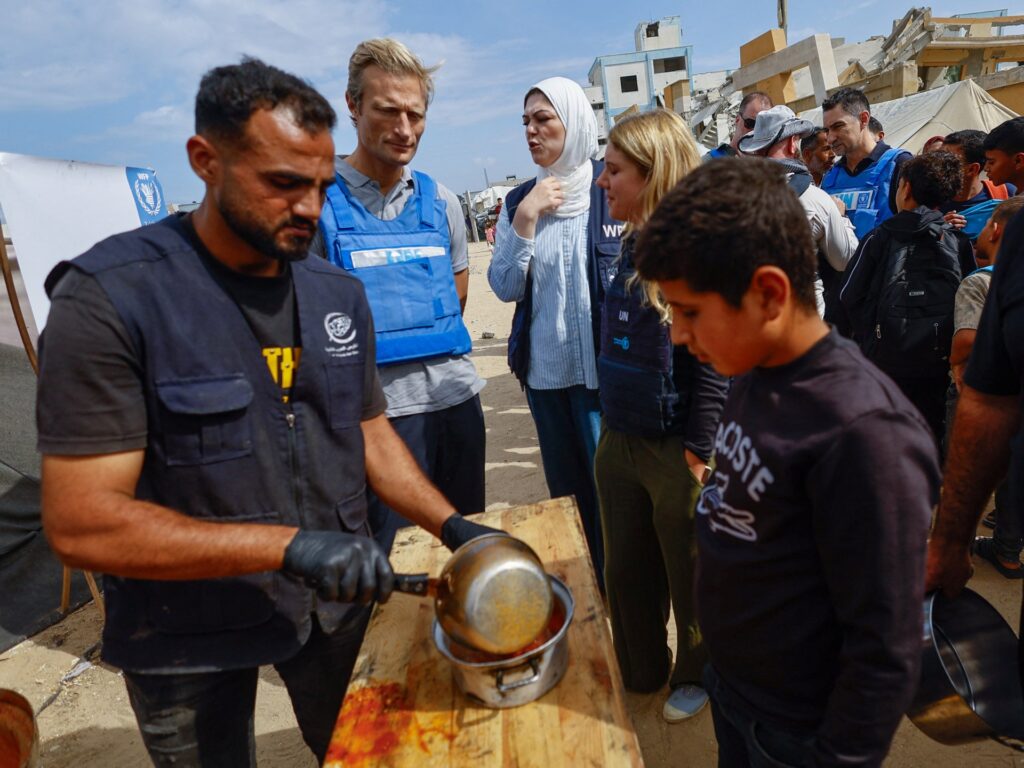
WFP reduces Gaza food aid for 500,000 Palestinians due to funding gap
The World Food Programme announced on Monday that it will sharply scale back its assistance in Gaza because of a severe funding shortfall. The United Nations agency said it now expects to support only 1.1 million people, down from the 1.6 million it has been reaching each month, leaving roughly half a million residents without the regular food parcels they have depended on.
The agency’s statement explained that contributions for its Palestine operations in 2026 are less than half of the amounts received in previous years. It warned that an additional $450 million is needed to keep essential services running in the occupied territories over the next six months.
Under the new plan, families will receive a single food parcel instead of two, and the bags of flour distributed will be smaller. The daily provision of hot meals will also be cut, dropping from 250,000 meals a day to 150,000. Households in hard‑to‑reach zones, including those near the “yellow line” that marks Israeli military control, will get a hot meal every other day rather than each day.
The cuts come after more than three years of conflict that began with Hamas’s October 7, 2023 attack on Israel and has been described by many as a genocidal war on Gaza. The fighting has devastated the enclave’s schools, hospitals and economy, turning access to food, water, shelter and basic services into a daily struggle.
Gaza’s health ministry reports that more than 74,245 Palestinians have been killed. United Nations data indicate that over 80 percent of the population is unemployed and cannot afford fresh or protein‑rich foods even when they are available. Only one in five children receives a diet that meets basic diversity standards, and health care remains severely limited.
The World Food Programme estimates that about 1.4 million people – roughly 67 percent of Gaza’s residents – are now facing acute food insecurity at crisis levels or worse. This is a slight decline from the 1.6 million people, or 77 percent of the population, recorded at the end of 2025, but the agency cautioned that the improvement is modest and fragile.
Funding gaps have already impacted the agency’s work in the occupied West Bank, where the number of beneficiaries was cut in half in September, dropping from 400,000 to 200,000.