
Can faith sway red‑state voters? Democratic clergy aim to tip the balance
Republicans have long courted Christian conservatives, but Democrats are now wondering whether religion could help them win the 2026 midterm elections. A small but growing group of clergy members are running for office in states that usually favor the GOP, hoping to show that faith does not belong exclusively to the right.
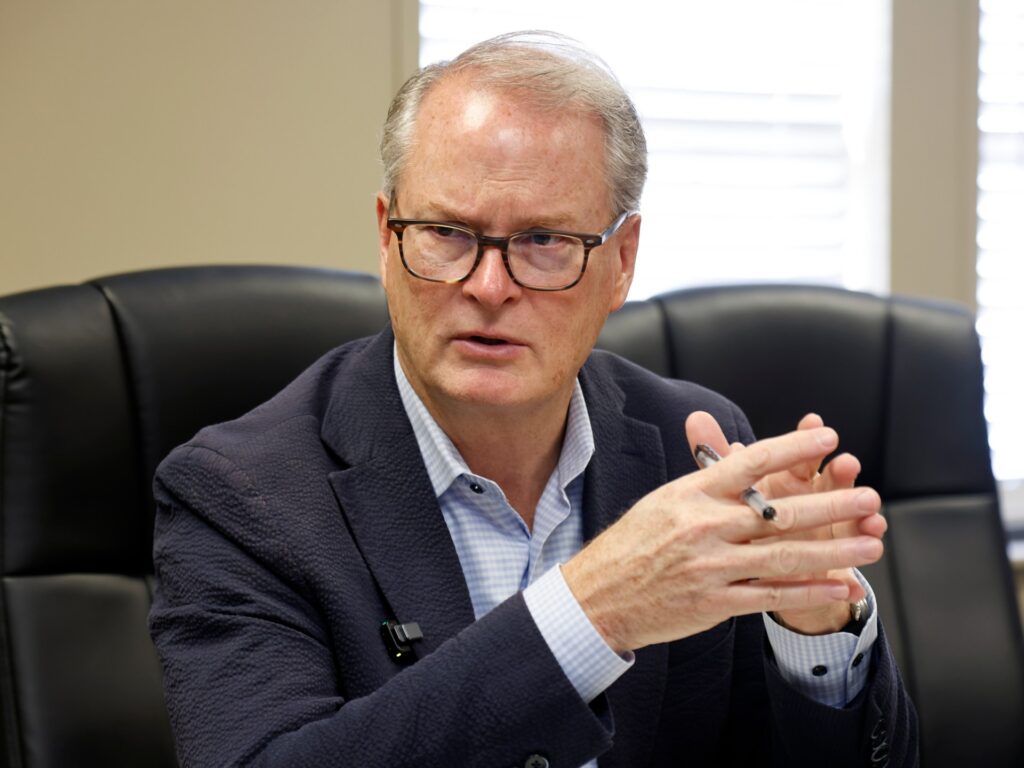
Reverend Adam Hamilton is perhaps the most visible of these candidates. He founded the Church of the Resurrection, the nation’s largest United Methodist congregation, which now operates nine campuses and counts roughly 23,000 members. Hamilton has written more than 30 books and has become a familiar face on religious television programs. This November he will seek a U.S. Senate seat from Kansas as a Democrat. A victory would be the first Democratic win in a Kansas Senate race since 1932, and it would break the state’s long‑standing reputation as a “ruby‑red” stronghold that has consistently backed figures such as former President Donald Trump.
Hamilton is part of a broader trend in the 2026 midterm cycle. Roughly nine Democratic faith leaders, seminary students and Sunday‑school teachers have entered federal races, and at least a dozen more appeared on primary ballots earlier this year. Many are challenging incumbents in Iowa, Texas, Arkansas and Tennessee—states that have historically elected conservative candidates. Their campaigns raise the question of whether a religious appeal can give Democrats a foothold in the fiercely contested midterms.
Rev. Shannon Fleck, executive director of the progressive Christian group Faithful America, believes that some voters are growing weary of the Republican claim to moral authority. “This is going to move the needle even more in red states because, in our homes, faith has been a part of our ecosystem for forever, but it’s also been manipulated by our leaders for forever,” she said, adding that Democratic candidates who draw on faith “have more opportunities for turnover because we are so intimately familiar with the other option.”
More than 60 percent of Americans identify as Christian, yet white evangelical Protestants have drifted steadily toward the Republican Party over the past three decades. Pew Research Center data from 2024 indicate that 85 percent of white evangelicals now lean Republican, up from 65 percent in 1994. Overall, 59 percent of Protestants, 52 percent of Catholics and 75 percent of Mormons say they align with right‑wing politics.
Political analysts trace the GOP’s courting of Christian voters to the 1970s and 1980s, when leaders such as megapastor Jerry Falwell grew disillusioned with the social policies of then‑President Jimmy Carter. Falwell helped launch the Moral Majority in 1979 and later the Christian Coalition of America in 1987, organizations that promoted issues like abortion restrictions and limited government. Former President Trump continued to mobilize the evangelical bloc, pledging to protect its interests, establishing a “religious liberty commission” and promising to eradicate “anti‑Christian bias.” However, Pew’s latest findings suggest that Trump’s grip on white evangelicals is weakening. Approval among that demographic fell from 78 percent in 2025 to 69 percent in 2026, and only 40 percent said they trusted him to act ethically while in office.
Democrats hope to capitalize on the declining evangelical enthusiasm for Trump as the midterms decide which party will control both chambers of Congress. Among the faith‑based candidates is Reverend Frederick D. Haynes III, who is running as a Democrat for Texas’s 30th congressional district.
The idea of religious leaders running on progressive platforms is not new. “There have always been progressive Christians throughout American history,” said Guthrie Graves‑Fitzsimmons, vice president of programmes and strategy at the Interfaith Alliance, an organization that defends religious freedom. As the 2026 elections approach, these clergy‑candidates will test whether a message of faith can bridge the partisan divide in America’s most conservative states.