
France Prime Minister vows new curfews to curb unrest
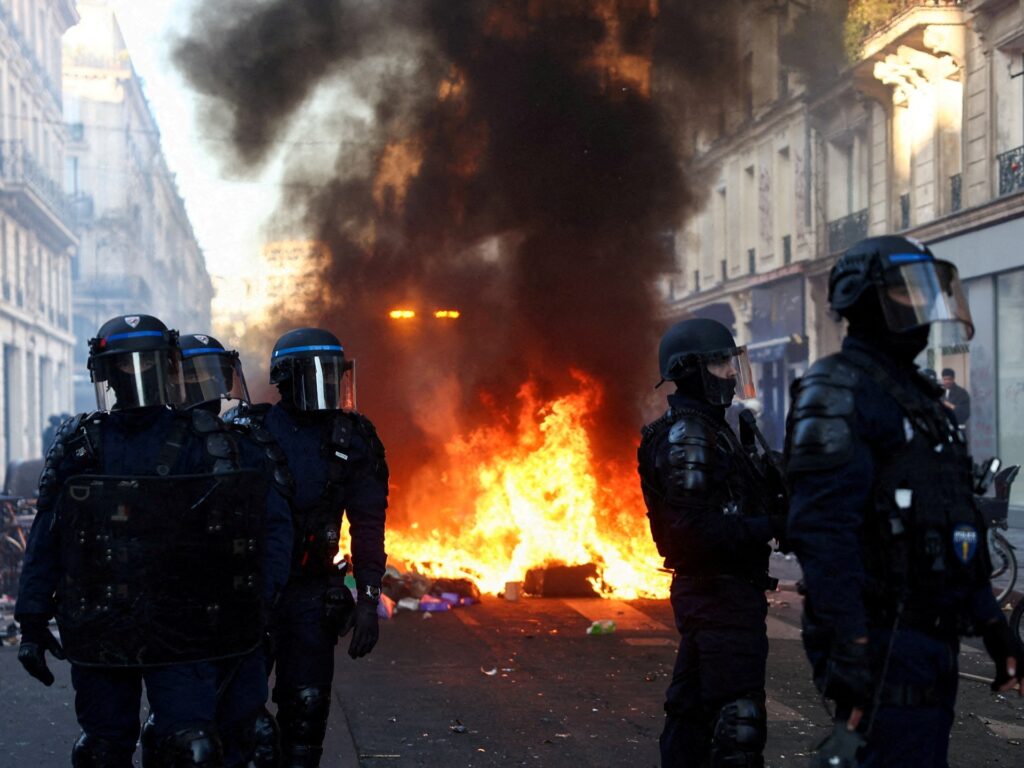
French Prime Minister Sebastien Lecornu announced on Tuesday that additional curfews will be introduced where needed, as authorities work to restore order after weekend protests over the cost of living and education issues turned violent. In a post on X, the premier said local officials will coordinate with mayors to decide on curfew measures for their prefectures.
More than half a million people gathered across France on Saturday, uniting students demanding better education conditions with citizens protesting high living costs. The demonstrations spiraled into looting and arson in several cities, leading to the arrest of over 2,500 individuals. Police reported that Monday night passed without any major incidents.
The government plans a series of meetings to contain the unrest, which follows weeks of student demonstrations over education standards. Digital Minister Anne Le Henanff is scheduled to meet social‑media executives on Tuesday to address the protests. In a Monday post on X, she warned that goods looted over the weekend were being sold online and urged platforms to delete those listings.
Organisers have hinted at further protests this Saturday, although the country’s main trade unions have not endorsed the call. Union leaders are set to meet Lecornu on Wednesday, and the premier will hold talks with political parties on Thursday. The unrest comes ahead of the presidential election slated for April‑May next year.
Current polls show Marine Le Pen, leader of the far‑right National Rally, in first place, with far‑left candidate Jean‑Luc Mélenchon of La France Insoumise trailing. President Emmanuel Macron is ineligible to run again because of France’s two‑term limit. Both Le Pen and Mélenchon have been accused of using the protests to boost their campaigns.
Alice Cohen‑Morzadec, a spokesperson for the French Student Union, told Al Jazeera that the demonstrations represent an outburst of anger at President Macron’s policies, which she says have “destroyed” students’ living conditions. “One student out of two cannot eat properly. One student out of three doesn’t have a permanent house to live in. We cannot study in these conditions,” she said.