
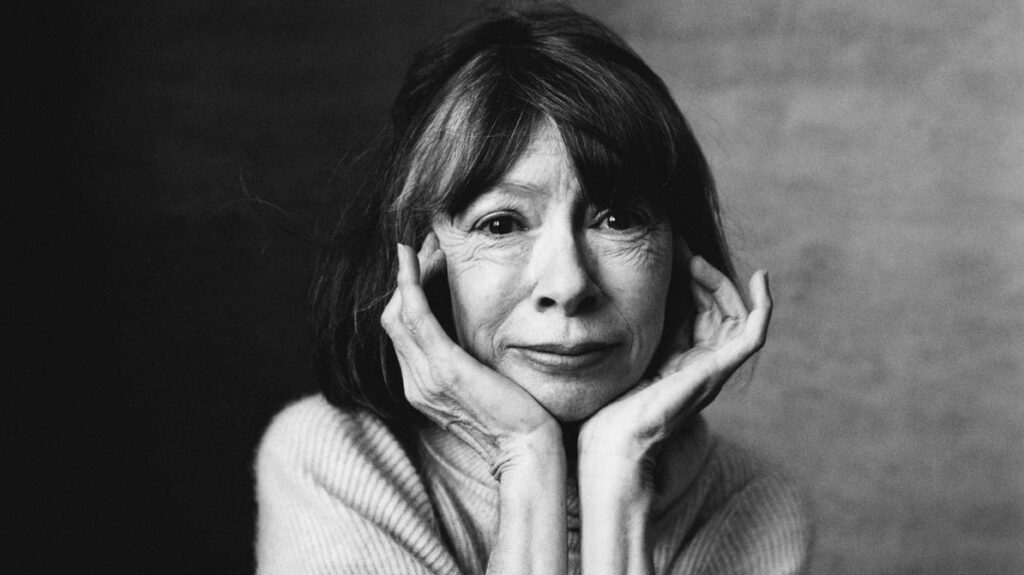
Female Authors Face Branding Pressure and Harassment While Male Counterparts Get a Pass
I walked into my kitchen to find a bubble the size of a football dome hanging from the ceiling. When I nudged it, it quivered, swollen with water from a leak I could not locate. As I tried to decide what to do, my phone buzzed with an email that contained a single, chilling sentence from an unknown sender: “Men abuse women because of women like you.”
Just days earlier I had published a personal essay about leaving a toxic relationship for a job at Death Valley National Park. The piece sparked an outpouring of kindness that I assumed would endure. It did not. The email led me to a flood of comments on my article, messages on Instagram and Facebook, and the bubble on the ceiling seemed to grow larger with each new insult. I called family and friends, and one of them shrugged, “Well, it does come with the territory.”
Many writers share this experience. We chase bylines and book deals, yet few resources prepare us for the scrutiny—and occasional harassment—that accompanies a wide audience. We are not celebrities, but we occupy a space where hundreds, thousands, even millions can pass judgment. In an age where personal branding is expected, the pressure is even more intense. Being a writer in 2026 means presenting yourself as a public figure.
Rachel Taff, whose debut novel *Paper Cut* was released this year, told me she spent her own money on a photo shoot for social media and taught herself to use Canva and TikTok. “To promote my own novel, I bought a ring light, a tripod, and a CapCut subscription. I wrote scripts for myself and recited them to a front‑facing camera,” she said. “I didn’t want to feel embarrassed, but I was.”
I grew up in New Hampshire and would drive through the tiny town of Cornish hoping to catch a glimpse of J.D. Salinger. I sometimes stopped at the general store for ice cream and tried to work up the nerve to ask about him, aware of the stories about visitors being given false directions to protect his privacy. The image of the reclusive literary figure—think Thomas Pynchon or Cormac McCarthy—is usually male. I have never heard a male writer lament the tension between writing and being a public figure. It is the women around me who launch Substack newsletters, curate social‑media feeds, and invest in self‑promotion.
A male professor I had during my MFA once advised me to focus solely on the work, but an online presence has opened enough doors to make it worthwhile. A quick search of #DebutAuthor on Instagram and TikTok revealed an endless stream of women’s faces. On Instagram, 49 of the top 50 posts under that hashtag were from women; on TikTok, all 50 of the leading posts were by women. The most successful content on both platforms was personal. Instagram captions repeatedly read “I’m an author, but I’m also …” followed by photos of women with their books, then carousels of pets, children, and hobbies. Women writers used familiar internet formats: GRWM (get‑ready‑with‑me) videos, day‑in‑the‑life clips of a romantasy author doing skin‑care and eating a burrito, and countless unboxing videos for debut novels. They recorded themselves crying when they received book deals, reflected on moments they almost gave up, and wrote about the challenge of balancing writing with family.
Women writers have long been linked to personal narrative. Anne Sexton, a celebrated confessional poet, was criticized for using her emotional work to draw attention to her appearance. The personal essay boom grew out of female‑centered sites, most notably the now‑defunct xoJane, known for its “It Happened to Me” series. Even when a piece is not autobiographical, people tend to assume it is. In 2017, when Kristen Roupenian’s fictional short story “Cat Person” went viral, much of the conversation labeled it an essay.
Once a male friend picked up my book, turned it over, and stared at the photo of me on the back cover—taken by my friend Bridget, an accomplished photojournalist. “Ha,” he said, looking down at it. “Of course you made them put this giant picture of you on the back.” I replied, “I didn’t make them do anything.” He answered, “Sure.”
I once posted a TikTok video that, at the last count, had 1,215 comments, most of them negative. The clip was filmed during my book tour. I had been making road‑trip videos set to music, which rarely attracted more than a hundred views. After a long day driving, I arrived at a hotel in Utah, tired and hungry. I thought the hotel’s outdoorsy theme was a bit cheesy, so I texted a friend a short video mocking it and uploaded it to TikTok, hoping a few viewers might be intrigued enough to read my novel. Instead, I was met with anger and ridicule.
I left an apologetic comment, but the negative remarks kept coming. I read each one, wondering if they were right. I went to the movies with a friend to escape my phone, only to return after the credits and see 648 new comments. One user wrote, “The vocal fry is cringe,” a phrase linguists link to sexism. A week later, after the video had amassed over 100,000 views, a men’s website emailed me saying they were writing a story about it. I spent an afternoon spiraling, imagining how much worse it could become with a male audience targeting me. I remembered the stranger’s email in my kitchen: “Men abuse women because of women like you.” And then it occurred to me: What did any.