
Famine fears as aid cuts and shipment restrictions coincide in Gaza
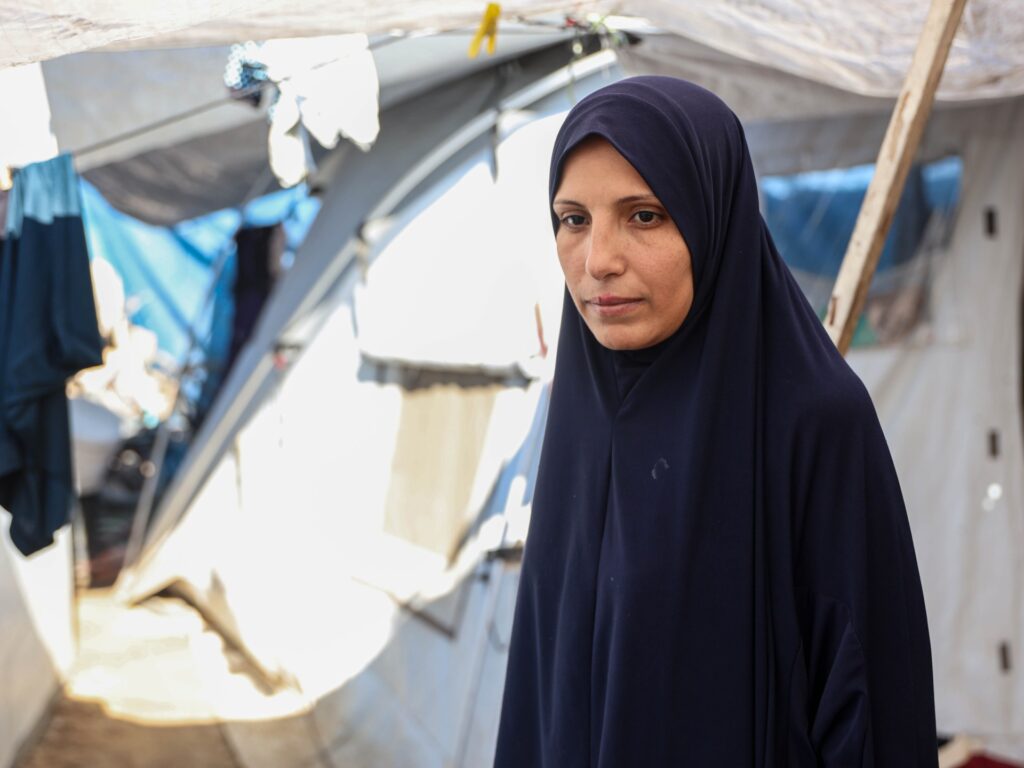
Manal Abu Rabie, a mother of six who was displaced from Beit Lahiya in northern Gaza, learned that the World Food Programme (WFP) will reduce food assistance to the enclave, raising concerns about what lies ahead in the coming days. Gaza has been facing severe shortages of staples such as eggs, flour and onions after Israel closed border crossings on Wednesday. Prices for food and other essentials have surged, prompting families that can afford it to buy in bulk in anticipation of a prolonged blockade.
Following the WFP’s announcement of aid cuts, the price of a loaf of bread jumped from five to twelve shekels, roughly $1.60 to $3.90. Abu Rabie, already struggling to feed her family, said she has little to fall back on if the support is reduced. “We were just beginning to say, ‘Thank God,’ and now they want to cut off our food and drink,” she said. “We are going back to starvation. We are dying of hunger.”
On Monday the WFP said a funding shortfall forced it to lower the number of people receiving monthly food assistance in Gaza from 1.6 million to 1.1 million, leaving about 500,000 people without support. The agency also announced that it will halve food rations, giving families one parcel instead of two and a smaller bag of wheat flour. The daily provision of hot meals will drop from 250,000 to 150,000, and cash assistance will be reduced for 75,000 families. The WFP blamed the cuts on a lack of funding, despite ongoing humanitarian needs.
A separate development has added to the uncertainty: aid shipments into Gaza have been suspended for a sixth consecutive day, heightening concerns about the availability and affordability of food, fuel and medicine.
Abu Rabie, 39, lives in al‑Salam camp in Deir el‑Balah, central Gaza, and depends on food parcels that contain lentils, rice, flour and cooking oil. Prices for basic items are climbing; a small bottle of cooking oil, which is included in the parcels, now costs 10 shekels, about $3.20, a sum she cannot afford. “It is very difficult. I cannot afford to buy anything,” she said. She suffers from high blood pressure, diabetes and heart disease, and the reliance on aid parcels worsens her digestive problems. “If the assistance stops and the quantities become smaller, how are we supposed to get through the day? We’ll have to eat sand. That is all that will be left for us,” she warned. “I swear to God, my son asks me for things, and I cannot get them for him. My husband is injured, and I am sick.”
The approaching winter adds to her anxiety. Abu Rabie said her family has no blankets or mattresses. “I say, ‘God, please don’t let winter come,’ because we have no blankets and no mattresses,” she said. “There is no food and no drink. God knows how we are managing.”
Gaza’s Government Media Office issued a statement on Monday warning that the WFP’s planned cuts could deepen the humanitarian crisis and leave hundreds of thousands of Palestinians facing greater food insecurity. The office called on the United Nations and the international community to provide urgent funding to sustain relief programmes, and held Israel responsible for the restrictions on aid entering Gaza. It urged all crossings to be opened to allow humanitarian supplies to flow without interruption, and appealed to Arab and Islamic countries and international organisations for financial support and assistance in delivering food, medical supplies and other essentials.
The WFP has attributed its reductions to a funding shortfall rather than a decline in needs, and is appealing to donors for additional support.
Randa al‑War, a displaced mother of three originally from Gaza City’s Shujayea neighbourhood, said the WFP’s food assistance is a lifeline. She now lives with her family in Sarsour camp in Deir el‑Balah and receives no aid from other organisations. “We depend on the World Food Programme. We cannot live without bread, without flour. These children need to eat,” she said. The parcels her family receives every two or three months, which include flour and cooking oil, last about a month. “We get through the day if the food parcel comes. If it comes, the children eat. If it doesn’t, there is no food,” she explained.
Al‑War fears that the WFP’s cuts could leave her family without the support it relies on. Buying food from the market is not realistic, she said, because neither she nor her husband can work; she is injured and he has health problems. “I cannot work, and my husband cannot work,” she said. “We are living only on the World Food Programme and the food parcels.” The prospect of further cuts has left her frightened that her children will face hunger again. “We are …”