
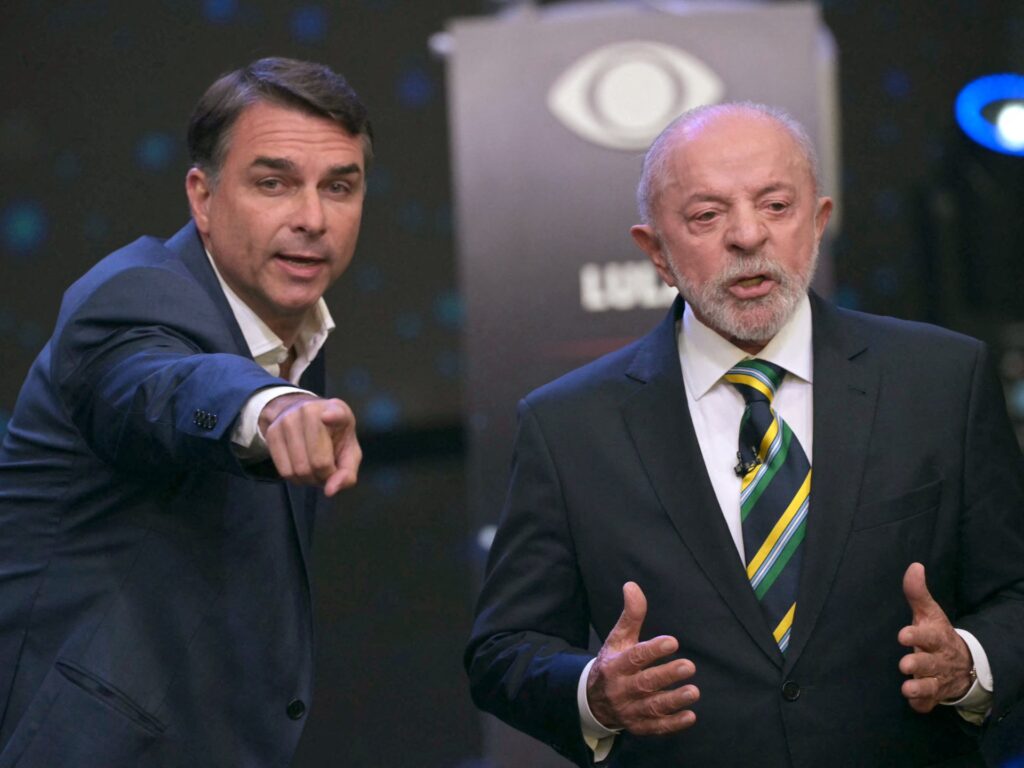
Brazilian court orders Meta to prove equal treatment for Lula and Bolsonaro
Brazil’s highest electoral court has doubled the daily fine imposed on Meta, the U.S.‑based owner of Facebook, Instagram and WhatsApp, after the company failed to comply with a ruling on how political content appears on its services. On Monday, the Superior Electoral Court (TSE) gave Meta 24 hours to demonstrate that it is not giving preferential treatment to either presidential candidate in its feeds.
The decision arrives less than a week before a run‑off election that pits incumbent left‑wing President Luiz Inácio Lula da Silva against right‑wing Senator Flávio Bolsonaro. “The continued non‑compliance, just a few days before the run‑off election, shows that the fine was insufficient,” a TSE judge wrote in the order. The court raised the penalty for non‑compliance from 500,000 Brazilian reais (about $100,000) to one million reais (about $200,000).
Lula’s campaign filed a complaint alleging that Meta limited the visibility of his Instagram profile and made it harder to find in searches. The campaign also claims that posts from Lula supporters are being removed more often than content that favors Bolsonaro or questions the election’s integrity. Civil‑society groups and digital‑rights monitors have echoed these concerns, saying the three Meta platforms have suppressed material from the left‑leaning leader while amplifying posts that benefit Bolsonaro.
Meta denies any bias, though it acknowledged that some of Lula’s campaign ads were temporarily taken down because of technical glitches. The final round of voting is scheduled for Sunday. Bolsonaro, the son of a former president who is currently imprisoned, performed better than many analysts expected in the first round on October 4, earning 47 % of the vote to Lula’s 45 %. Neither candidate reached the 50 % threshold needed to avoid a run‑off, and pre‑election polls show the two candidates virtually neck‑and‑neck.
Social‑media bias has been a recurring issue for both sides of Brazil’s political divide. Earlier this month, Lula’s team launched a website to collect complaints from supporters who say their accounts and posts have been unfairly restricted on Meta’s platforms. Several digital‑rights organizations, including the nonprofit CTRL+Z, have released analyses suggesting that Meta may have given Bolsonaro an outsized presence, a concern in a country where many citizens rely on Facebook, Instagram and WhatsApp for news.
“Brazilian citizens have the right to know why their accounts were banned, why their posts disappeared, why their accounts lost reach, and why they are being prevented from commenting, reposting, and saving content,” CTRL+Z wrote on its site. “Meta cannot be the invisible judge of the Brazilian electoral debate.”
A report by Folha de S. Paulo on Friday cited internal Meta messages that acknowledged inconsistent treatment of the two candidates’ online presence. According to Daniela da Silva, executive director of CTRL+Z, political campaigns in Brazil have dramatically increased spending on platforms such as Facebook and Instagram, surpassing traditional media like television and outdoor advertising in recent elections. Data from the Supreme Electoral Court shows Facebook generated more than 200 million reais (about $40 million) in revenue during the 2024 municipal elections, making it the top advertising supplier for that cycle.
Despite that revenue, da Silva said Meta and other tech firms are not taking their responsibility for electoral fairness seriously. “These are very powerful, wealthy companies, and they do have the capacity to do much more than they are doing,” she told Al Jazeera.
Over 100 civil‑society groups, including Greenpeace International, Global Witness and Oxfam Brazil, have joined CTRL+Z in signing a letter urging Brazilian authorities to enforce rules that curb Meta’s influence. The groups also call on the company to improve its handling of deepfakes and disinformation and to publish clear moderation policies. “We want transparency regarding moderation criteria, a human review channel, and timely responses to protect the election,” the coalition said on its website.