
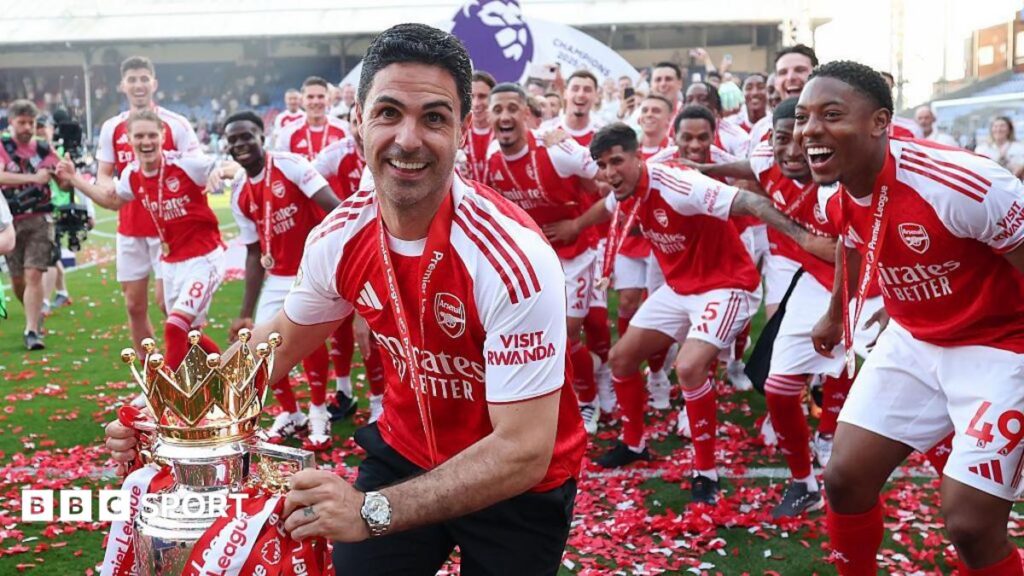
Arsenal had over 20 players on summer shortlist after title win
By Sami Mokbel, senior football correspondent
Entering the summer transfer window as Premier League champions, Arsenal felt a surge of optimism. The atmosphere at the Emirates suggested that rivals were in flux, with several clubs dealing with managerial changes, making the timing appear ideal for recruitment. The club’s agenda was ambitious, with a list that stretched beyond 20 names, including targets from Real Madrid, Atletico Madrid, Chelsea and Tottenham. Yet, when the window closed on Tuesday night, a feeling of disappointment lingered among a portion of the fanbase.
Arsenal’s close season combined clear successes with noticeable frustrations. Ahead of their home game against Chelsea on Sunday, BBC Sport examined whether manager Mikel Arteta, sporting director Andrea Berta and owners Kroenke Sports Entertainment could view the summer’s activity as a triumph.
Why the club signed Bruno Guimarães rather than Elliot Anderson, Sandro Tonali or Alex Scott
The most headline‑grabbing acquisition was Bruno Guimarães, secured from Newcastle United for £75 million. Throughout the summer, Arsenal monitored Guimarães’s situation, although other midfielders were initially considered higher priorities. Interest in England international Elliot Anderson was widely reported, but he ultimately joined Manchester City. Former Newcastle teammate Sandro Tonali and Bournemouth’s Alex Scott were also evaluated before the South American’s deal accelerated. Tonali, then 26, and Scott, 23, were younger than Guimarães, who turns 29 in November, but factors such as price and availability hampered their pursuit – Tonali moved to Tottenham for a minimum £92 million, and Amadou Onana of Aston Villa suffered a serious knee injury at the World Cup.
By mid‑June, Guimarães emerged as Arsenal’s primary target, enjoying unanimous support inside the Emirates. Berta’s familiarity with the player’s representatives and Arteta’s desire for proven talent to strengthen the starting eleven helped drive the move. Berta relied on intermediaries to negotiate, a practice that has produced mixed results. For example, Arsenal’s attempts to sign Leicester City youngsters Jeremy Monga and Louis Page fell through after a lack of direct club‑to‑club talks, with Monga eventually moving to Manchester City.
The successful pivot to Guimarães when other options proved unviable was praised within the club.
Konsa secured as first‑choice defender
Ezri Konsa’s signing proved equally intricate. Internally, Konsa was seen as Arteta’s preferred defensive addition, valued for his Premier League experience and his ability to operate at right‑back. Arsenal had also considered a traditional right‑back such as Ivan Fresneda, but Konsa’s versatility tipped the balance. Berta initially offered £40 million, which Aston Villa rejected. The deal was later finalized at £51 million plus £4 million in add‑ons after the clubs’ owners intervened.
Had the Konsa deal collapsed, Arsenal had identified Tottenham’s Cristian Romero and Micky van der Ven as alternatives, but the north London club was unwilling to sell. Other centre‑backs, including Jacobo Ramón and Tarik Muharemović (who later joined Leeds United), remained on the club’s radar.
Attacking additions
Christos Tzolis, signed from Club Brugge for around £35 million, quickly earned praise as one of the summer’s standout discoveries. An intermediary close to a senior coach first raised his name, and Maurizio Micheli, Berta’s deputy, watched Tzolis impress for Greece against Sweden in June before recommending the move. The 24‑year‑old now appears a positive addition to Arteta’s attacking options.
Arsenal also made the loan of Piero Hincapié permanent and added Illan Meslier on a free transfer. While the acquisitions of Guimarães and Konsa, both set to turn 30 by the end of next season, attracted scrutiny due to the combined £126 million fee and concerns about long‑term squad evolution, the club maintains that the price paid reflects the quality and experience they bring.
Missing a marquee forward
Although the club secured proven talent in midfield and defence, Berta’s mandate to bring in a top‑class attacker fell short. The primary target, Morgan Rogers from Aston Villa, did not materialise, leaving Arsenal still searching for a high‑profile striker to complement their recent signings.