
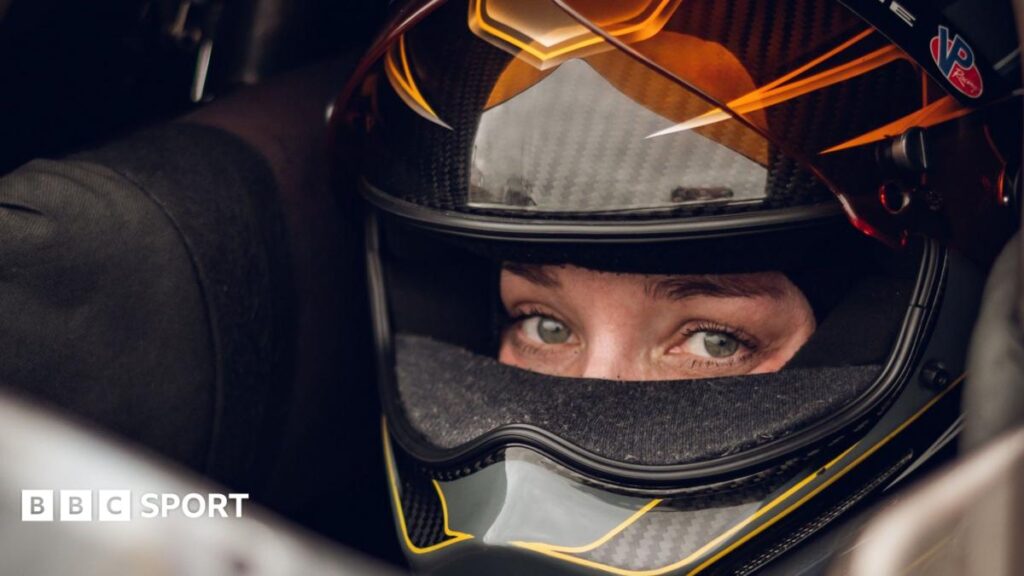
Women dominate the high‑speed world of Top Fuel drag racing
By Jessica Abrahams, BBC World Service
Susanne Callan describes the feeling of competing in her sport as “being shot out of a cannon”. The Swedish driver, a two‑time European champion in Top Fuel drag racing, takes part in a discipline often billed as the fastest sport on Earth. Races begin with a deafening roar as the world’s quickest‑accelerating cars launch from the start line, flames spilling from their exhausts. Within four seconds the machines can exceed 300 mph (483 km/h), subjecting drivers to more g‑force than an astronaut feels during launch.
Top Fuel is the only elite motorsport category where women regularly outperform men for major titles. Female racers have claimed seven of the last nine European championships, and until recently American driver Brittany Force held the sport’s world speed record. By contrast, it has been five decades since a woman started a Formula 1 Grand Prix. According to the advocacy group More Than Equal, women make up about 10 % of all motorsport participants and only 4 % of elite drivers, yet they represent 20 % of the competitors in this year’s U.S. and European Top Fuel seasons.
More Than Equal calls drag racing “the most gender‑equal motorsport in the world”. Top Fuel, the most extreme class, derives its name from the nitromethane fuel that powers the cars. Races occur on a straight strip just 1,000 feet (305 metres) long, usually featuring two cars side by side. The first second sees an intense surge of g‑force as the vehicles accelerate from zero to 100 mph, followed by a second jolt when the clutch fully engages midway through the run.
Callin, 43, tells BBC Global Women that the adrenaline rush is “extremely addictive”. She acknowledges the ever‑present risk but adds that safety measures are effective. After fatal crashes in nitromethane‑powered cars in 2004 and 2008, safety protocols were tightened and race lengths shortened. Spectators feel the vibrations in their bodies and on the ground, and are advised to wear ear defenders because the noise rivals that of a fighter jet taking off.
The fastest officially recorded Top Fuel speed tops 346 mph, far above the 231 mph typical of a Formula 1 Grand Prix. Brakes alone cannot stop the cars, so parachutes deploy from the rear at the finish line. Callan likens the sudden stop to “someone kicking you in the chest; you lose your breath”. Drivers need split‑second reactions, physical stamina to endure the forces, and precise control to make constant micro‑adjustments that keep the car on the track. “It has to be instant reactions with everything,” she says. “By the time you’ve thought about it, it’s too late… You really have to be one with the car.” Her rival and friend, 32‑year‑old Swiss driver Jndia Erbacher, jokes that the sport “takes balls”.
In September, Callan secured her second consecutive European Top Fuel title at the Santa Pod drag strip near Northampton, marking the fourth straight year a woman has won the championship. Across the Atlantic, Brittany Force captured the U.S. National Hot Rod Association (NHRA) championship in 2017 and again in 2022.
Fran Longstaff, chief innovation officer at More Than Equal, says drag racing is “highly unusual” among motorsports. She notes that seeing women compete and win has become normalized rather than treated as an exception, with sustained success in Top Fuel. Research she co‑led found no physical or biological reasons for the gender gap; instead, a steady flow of visible female role models, an accessible grassroots structure, junior programmes, open pits and a family‑oriented, collaborative culture have driven equality.
Women have been winning major drag races for decades. The most famous pioneer is Shirley Muldowney, often called the “first lady” of drag racing. She earned the first Top Fuel licence for a woman and captured the NHRA championship in 1977, then repeated the feat in 1980 and 1982, becoming the first driver to win three titles. Muldowney faced resistance and hostility early in her career but is now celebrated for her perseverance.
When the BBC visited Callan’s team at Santa Pod, the pit lane buzzed with roaring engines and the scent of burning rubber. While signing autographs for fans of all ages, she said, “I never feel I’ve been underestimated or treated badly for being a woman—never.” Her experience stands in sharp contrast to the challenges faced by women trying to break into Formula 1, where many young female drivers report being deliberately pushed off karting tracks by male competitors.