Could Russia broker a new US‑Iran deal?
By Dmitri Trenin, 22 October 2026
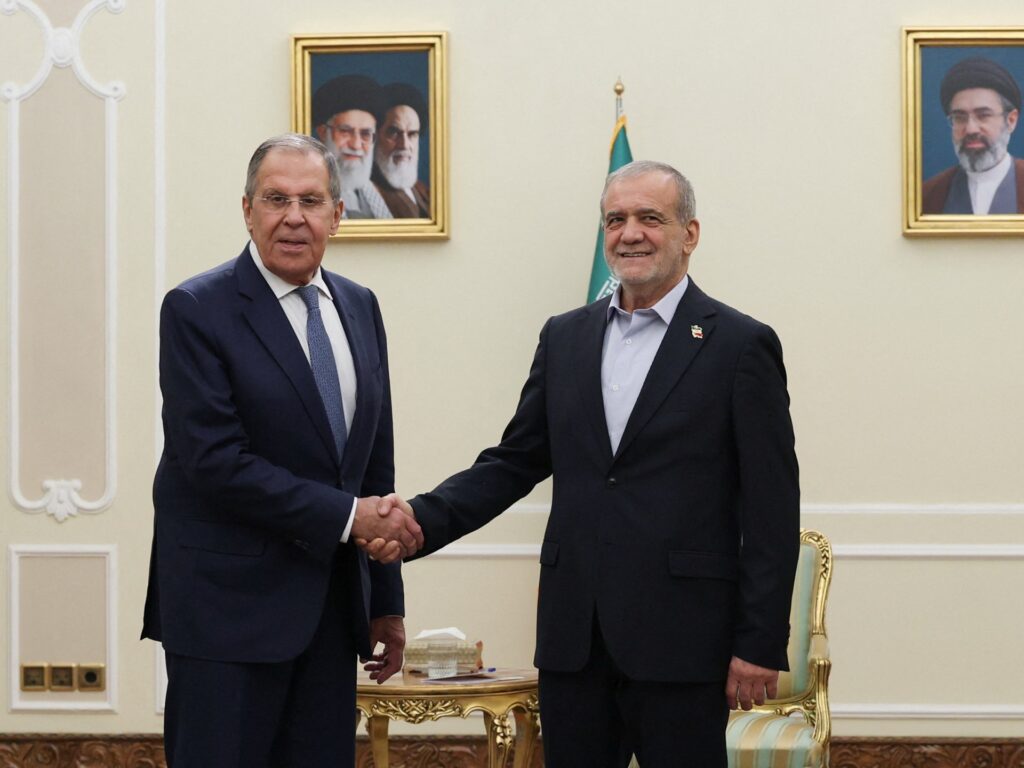
Russian Foreign Minister Sergey Lavrov visited Tehran this week, meeting President Masoud Pezeshkian and other Iranian officials. The trip followed two earlier meetings between Pezeshkian and President Vladimir Putin on 8 October and 1 September. Media reports say Moscow has offered to act as a go‑between for Washington and Tehran in talks about a possible nuclear agreement. It is still too early to assess whether the effort will succeed, but several factors could make Russia a more effective mediator than other parties.
Russia, a major nuclear power with the state‑owned Rosatom leading the global civilian nuclear sector, has the technical expertise to understand every aspect of Iran’s nuclear program. Moscow’s stance is clear: it supports Iran’s goal of expanding domestic nuclear energy, is helping build two new units at the Bushehr plant, but it opposes any Iranian move toward nuclear weapons and wants to prevent proliferation near its borders.
Relations between Russia and Iran, long strained, have improved markedly in recent years. Both countries have felt pressure from the United States—directly against Iran and indirectly against Russia through proxy conflicts. In 2022 Washington announced a goal of “inflicting a strategic defeat on Russia,” and Iran responded by sharing Shahed drone technology with Moscow. In early 2025 the two nations signed a Treaty on Comprehensive Strategic Partnership, outlining expanded economic, political and military cooperation. Russia had proposed a mutual military assistance clause, which Iran declined, but the partnership still signals growing trust.
Critics who claim Moscow failed to defend Tehran during the twelve‑day war of 2025 and the ongoing conflict overlook the fact that Russia has continued to stand by Iran and has repaid its debts. Assisting the United States in reaching a new nuclear deal would also serve Russian interests. While Russia views Iran as the resilient side in its confrontation with the US and Israel, it also recognizes the damage the conflict has caused its partner. Moscow hopes a peace settlement will free its large logistical project, the International North‑South Transport Corridor to India, which runs through Iran.
Russia also values its ties with the Gulf monarchies and does not want to jeopardize those relationships by allowing Iranian retaliation against their territories. Although higher oil prices from the closure of the Strait of Hormuz have temporarily boosted Russian revenues, a prolonged blockade would be detrimental.
Moscow’s experience as a participant in the eight‑party talks that produced the 2015 Joint Comprehensive Plan of Action gives it a strong footing to mediate now. The United States withdrew from that framework, and France, Germany, the United Kingdom and the European Union have lost influence in both Washington and Tehran. This leaves President Donald Trump with Russia and China as potential partners. Putin has reportedly conveyed an Iranian proposal to Trump by phone, while the United States is also intensifying diplomatic efforts to end the war in Ukraine, with Trump for the first time pressuring Kyiv.
Trump has suggested that a historic trilateral meeting with Putin and Chinese President Xi Jinping at next month’s Asia‑Pacific Economic Cooperation summit in Shenzhen could be worthwhile if it focuses on denuclearisation. The crises spanning Ukraine, Iran and Taiwan are interlinked, involving today’s main geopolitical and military players: the United States, China and Russia. The prospect of a three‑way summit marks more than a talking point for pundits; it could represent a modest step toward balancing warfare with diplomacy.
The opinions expressed are those of the author and do not necessarily reflect Al Jazeera’s editorial stance.