‘Stupid talk’: France rebuffs Trump’s claim migrants fuel unrest
Paris – France is still reeling from violent protests, riots and looting, and the blame game has moved across the Atlantic. A narrative gaining traction on both sides of the pond is that migrants and open‑border policies are to blame for the chaos.
President Donald Trump said at the White House on Monday, “If Europe doesn’t close its borders and bring the criminals out, like the people that are protesting, Europe is finished. When I look at France, when you look at Italy, when you look at all the turmoil and the hatred – that’s not about school. That’s about people coming into the countries that hate the country.” French President Emmanuel Macron later condemned “stupid comments by many, including foreign leaders” about the unrest, adding in Qatar that there was no evidence of foreign interference behind the riots.
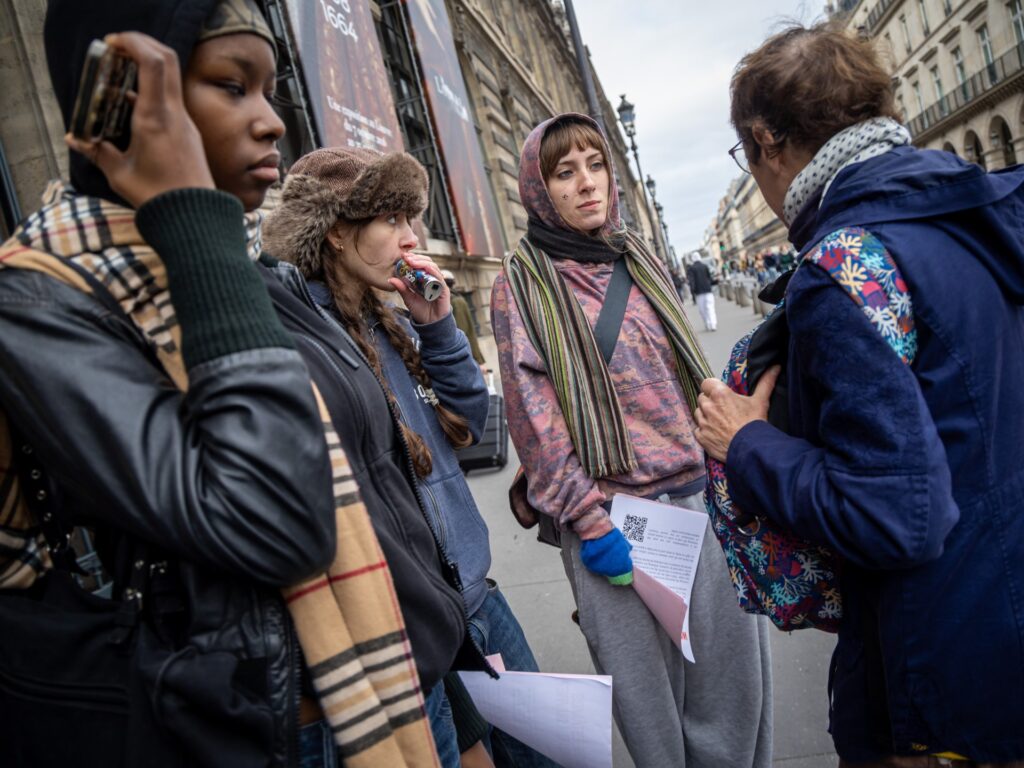
Young protesters in France were unimpressed by Trump’s intervention. Bilal Narjissi, a 17‑year‑old student at the Paul Eluard high school near Paris and one of the first to witness the demonstrations, called the president’s remarks “stupid talk”. “They can think whatever they like. We’re focusing on the main subject, which is the students’ demands,” he said. “The far right has to say these kinds of things because they base their politics and political programmes on instilling fear.”
Emmanuel Dupuy, president of the Institute for European Perspective and Security Studies, described Trump’s argument as a political tool aimed at American voters. “It’s an artificial argument used in the context of midterm elections,” he explained. “They are trying to argue that what is happening in France would happen in the US if Democrats get elected.”
Trump’s comments followed a weekend in which largely peaceful high‑school demonstrations turned violent, with rioters attacking city halls and looting stores – the most severe unrest in France in years. More than 2,000 people, most of them minors, were placed in police custody and thousands of businesses were ransacked. French authorities responded with partial, temporary curfews in several cities, including parts of Paris.
While the original protests centered on concerns about dilapidated school buildings, overcrowded classrooms and teacher shortages, the movement quickly expanded to include broader grievances over the cost of living and social unease. Similar demonstrations have been reported in Italy, Albania and Spain.
French officials have not linked the crime to migration, and the state does not release the identities of those arrested because constitutional equality laws prohibit the collection of data on ethnicity or race. Both far‑right leader Marine Le Pen and centrist politicians such as Macron and Prime Minister Sébastien Lecornu have accused hard‑left groups of fomenting disorder.
The unrest has resonated across Europe. Hungarian Prime Minister Péter Márki‑Zay posted a video of burning buildings in France on X, saying it clarified why Hungary maintains the toughest stance on immigration. Poland’s Prime Minister Donald Tusk, without naming France, wrote on X that Poland would not repeat “the mistakes of other European countries” and pledged an uncompromising approach to security.
Dupuy argued that the background of those who joined the violence is irrelevant. “These protesters were high‑school students; then professional black‑bloc and looters joined, too – whether they came from a third or fourth generation of former migrants is irrelevant,” he said. “Eventually, this is a problem of integration, not immigration.”
In the United States, the debate is occurring as the country prepares for the November midterm elections that will determine control of Congress. Republicans appear eager to use the European unrest to bolster support for Trump’s Make America Great Again agenda and its tough immigration policies. Vice President JD Vance posted on X that “Western liberals imported the third world into France and other countries in the name of diversity and compassion. They ignored fundamental questions of assimilation and compatibility.”
Some critics suggest Trump is trying to divert attention from America’s own cost‑of‑living crisis, which has been exacerbated by rising energy prices after the conflict in Iran and the closure of the Strait of Hormuz. Trump framed the French turmoil as a warning for American voters, telling a rally in Kansas, “If you want to see what is at stake in this election, just look at what’s happening in France.”