US campuses fall short in safeguarding sexual assault survivors
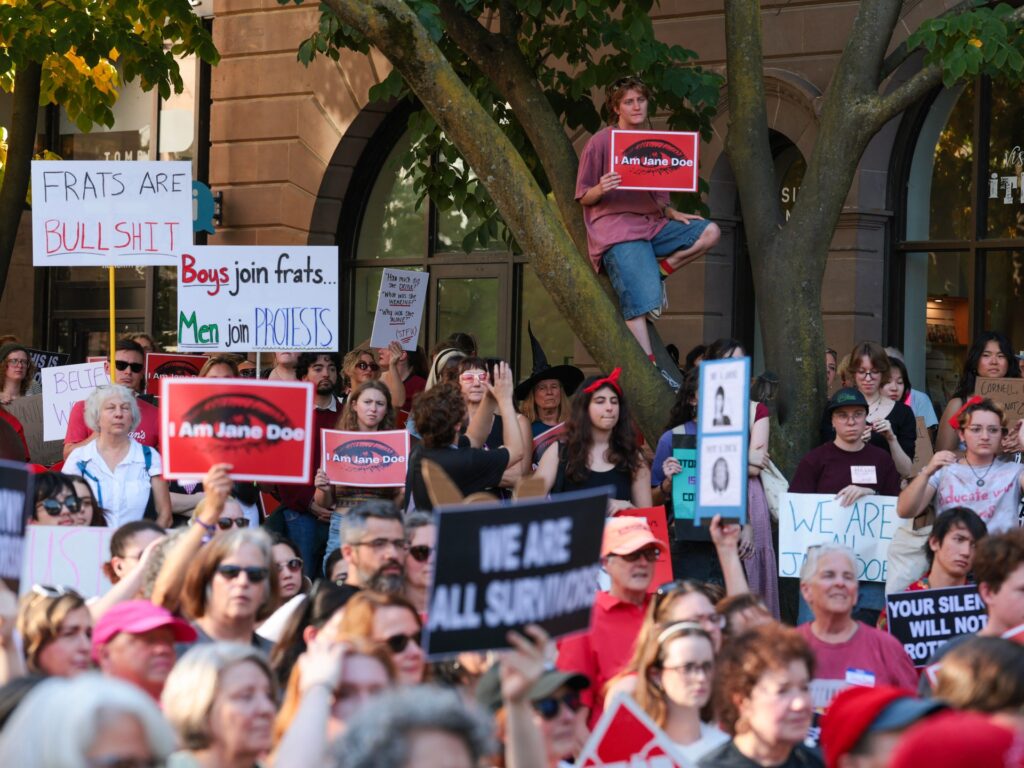
Protesters gathered at the Ithaca Commons on Oct. 13, 2026 to demand accountability for a former Cornell student known only as “Jane Doe.” Organized by survivor and activist groups, the rally called attention to the alleged gang rape she suffered at the Chi Phi fraternity house in 2024 and to Cornell University’s handling of her case.
Jane Doe, a third‑year student at Cornell, reported that seven men assaulted her while she was incapacitated. The university opened an investigation that stretched over several months, yet no criminal charges were filed and the student felt the process offered no real accountability. Feeling unheard and unsafe, she left Cornell without completing her degree and has since sued the school over its response. No university officials involved in the investigation have been publicly identified or held responsible.
Her experience illustrates how many campus confidentiality procedures appear designed to sweep incidents under the rug rather than deliver justice. Critics argue that deans, provosts, presidents, Title IX and affirmative‑action officers, and university lawyers prioritize protecting the institution over advocating for vulnerable students, staff, or faculty.
Surveys reveal the scale of the problem. A 2025 Cornell study found that 35 percent of undergraduate women reported experiencing non‑consensual sexual contact involving force or incapacitation since enrolling. A 2025 Michigan State University survey reported that roughly one in five undergraduate women had been sexually assaulted during their time at the school. Yet most incidents remain unreported; a U.S. Department of Justice analysis showed that fewer than five percent of completed or attempted rapes are reported to police.
Students and their families often encounter reporting pathways that are deliberately complex or dysfunctional. Administrators may publicly tout “robust” reporting systems while maintaining structures that are difficult to navigate. The same officials who greet families on Parents’ Day and attend alumni events can become unreliable allies when a victim seeks help.
Victims are frequently asked to provide detailed accounts of their trauma repeatedly—to campus police and multiple administrators—causing them to relive the assault and intensifying their distress. Research indicates that this “performance” of recounting the assault compounds trauma.
Critics say universities exploit bureaucratic inefficiency, blaming “broken systems” while avoiding substantive action on serious concerns. Administrators often shuffle complainants from one office to another, a tactic that exhausts victims and frames them as the problem, as feminist scholar Sara Ahmed argued in her 2021 book *Complaint!*. This approach protects the institution’s reputation and silences dissent.
The strategy also encourages victims to keep complaints internal, promising that institutional processes will be less harmful than involving law enforcement. Disciplinary proceedings are typically kept secret under the guise of protecting privacy, though privacy is not the sole motive for secrecy.
Public health advocate Dr. Sonia Cheruvillil notes that most sexual‑violence cases never involve lawyers because the crimes are often committed by acquaintances or family members, and survivors may not feel safe turning to authorities. Campus environments can mirror broader systems that isolate survivors, individualize their experiences, and deny them justice.
Many families are not safe havens for survivors; some actively discourage formal complaints. Universities frequently promote programs that claim to educate students about sexual assault and require faculty and staff to complete online “compliance” training. In practice, however, attempts to report gender‑based violence often meet silence.
As one student warned, the glossy flyers proclaiming campuses as “safe zones” and highlighting zero‑tolerance policies are more about public image than genuine protection. The reality, as the Cornell case and countless other stories show, is that U.S. universities still have a long way to go in truly safeguarding victims of sexual assault.