
Ukraine and Europe Face Limited Options in Dealing with Trump
By Dimitar Bechev, senior fellow at Carnegie Europe
Published 17 Oct 2026
“It's painful when President Trump chooses one side, not our side,” Ukrainian President Volodymyr Zelenskyy said on Wednesday. The U.S. president’s much‑talked‑about diesel agreement with Russian leader Vladimir Putin has added a new strain to the already tense relationship between Washington, Kyiv and European allies.
The reported interruption of Starlink and Starshield services on 13‑14 October, which hampered Ukraine’s military communications, further inflamed the dispute. Service was later restored, and claims that the White House ordered the outage to pressure Kyiv remain unverified. Nonetheless, the two incidents have reinforced the perception of a growing rift between Ukraine and the United States. On Friday, Zelensky accused Washington of continuing to limit Starlink and of offering new concessions to Moscow.
The situation remains fluid. Trump has previously leaned toward Moscow, most notably at his August 2025 summit with Putin in Anchorage, Alaska, before reverting to conditional support for Ukraine as Russian intransigence persisted and Kyiv, together with European leaders, pursued diplomatic channels. The financing arrangement under which Europe funds U.S. weapons delivered to Ukraine is still functioning, and the United States continues to share intelligence with Kyiv despite reports that some critical data have been withheld.
The White House has also retreated from proposals floated in its April 2025 peace framework that would have recognized Crimea as Russian territory or required Kyiv to withdraw from the entire Donbas region. Meanwhile, Ukraine and European capitals have continued to engage with Trump’s diplomatic overtures to Moscow, led by his envoys Steve Witkoff and Jared Kushner.
The diesel deal itself may still collapse, given bipartisan opposition in Congress, including from Republican senators. Washington’s recent tilt toward Moscow could therefore prove less consequential than it appears at first glance.
Even so, Ukraine and its main European backers have ample reasons for concern beyond Trump’s unpredictability. Chief among them is Putin’s determination to intensify the war. Ukrainian cities and critical infrastructure are under daily attack from ballistic missiles and upgraded jet‑propelled drones, while air‑defence systems struggle to keep pace. The country is also bracing for a harsh winter. A parallel propaganda battle, fueled by the diesel agreement, is unfolding.
Unlike Kyiv, Russia never embraced Trump’s suggestion of a partial cease‑fire on attacks against energy facilities. Yet Moscow now portrays Kyiv as the spoiler after Ukrainian strikes resumed, including a recent attack on a refinery in Ryazan that Trump condemned as “a disgrace.”
The conflict has spilled onto NATO’s eastern flank, with ships carrying Ukrainian grain through the Black Sea being targeted in Romanian waters. Russia is expanding hybrid attacks across Europe to disrupt the flow of weapons and ammunition to Ukraine and to sway public opinion in key states such as Germany by sowing fear. In some quarters of the European Union, calls to re‑engage with Moscow are growing. Slovak Prime Minister Robert Fico confirmed that the Slovak‑Russian intergovernmental economic commission would resume work, and Bulgaria’s president Rumen Radev praised Trump’s diesel diplomacy even as Russian drones struck near Bulgaria’s Black Sea coast.
Financing Ukraine remains a headache for European leaders. The €90 billion ($101 billion) loan the EU approved in April could be exhausted well before the end of 2027. Some analysts estimate that Kyiv will need an additional €70 billion ($79 billion) for defence and civilian needs in 2027. This pressure comes as EU member states negotiate the bloc’s 2028‑2034 budget, with some urging deep cuts in spending. The contentious issue of whether aid for Ukraine should be drawn from Russian assets frozen in Europe is resurfacing, and Trump has called for part of that money to be released.
The debate occurs ahead of several major elections, notably the French presidential race in April and May, as well as polls in Spain, Italy and Poland.
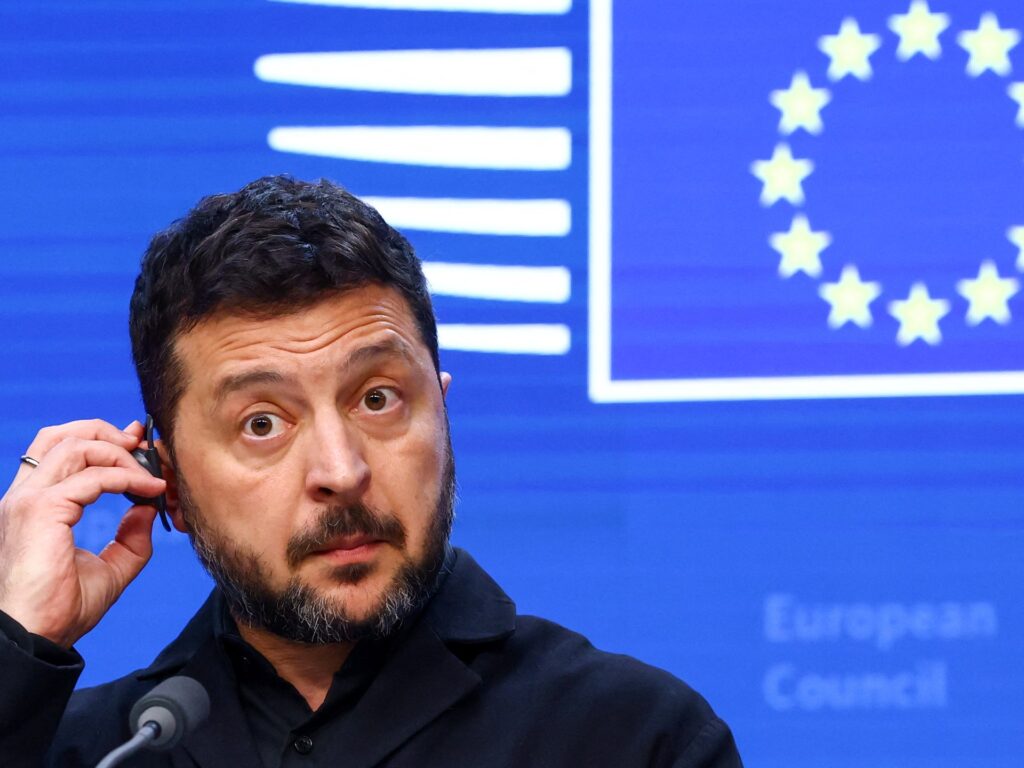
Despite Europe’s fragility, diplomatic and financial support for Ukraine has remained relatively steady. “This is no time to withdraw support for Ukraine. This is no time to ease Russia’s sanctions,” European Council President Antonio Costa said on Friday while standing with Zelenskyy and European Commission President Ursula von der Leyen in Brussels. “If we fall, 20 million Ukrainians will come to Europe,” Zelensky reminded the audience, “Stay strong, defend our country.”
In the run‑up to the summit, the EU opened two new accession‑talk clusters with Ukraine and imposed a fresh round of sanctions on Russia. Zelenskyy arrived in Brussels after meetings with British Prime Minister Andy Burnham and King Charles III in London on Wednesday.
There are limits to how much more the EU and the United Kingdom can contribute beyond what they already provide. They have effectively taken over from the United States as Kyiv’s main international champions and de‑facto guarantors of its survival as a state. In the long run, joining the EU—or at least becoming a closely integrated partner such as Norway—remains Kyiv’s best‑case scenario.
At the same time, Europe lacks the political cohesion needed to sustain an ever‑expanding commitment, leaving both Ukraine and its allies to navigate a complex and uncertain future.