
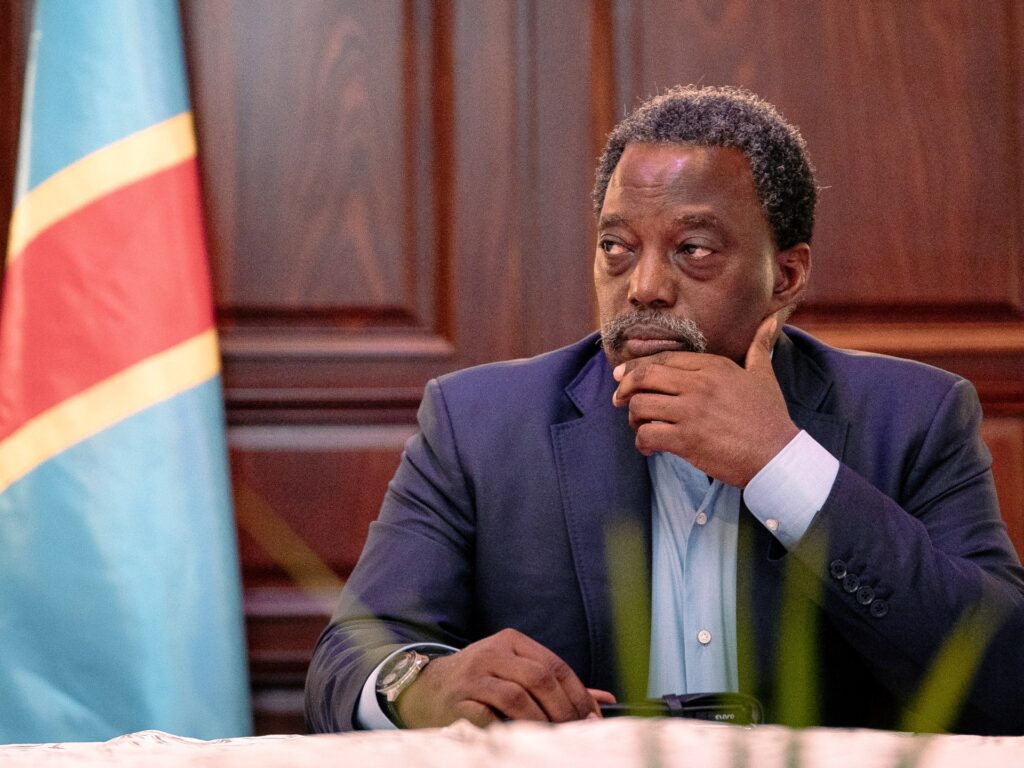
Fears rise in DRC as ex‑president Joseph Kabila joins rebel coalition
Goma, Democratic Republic of Congo – Hopes for peace in the DRC took another hit on Monday evening when former President Joseph Kabila announced the creation of a new political‑military front, the Front pour la Refondation de la Nation (FRN). The FRN replaces the earlier alliance between the Alliance Fleuve Congo (AFC) and the March 23 Movement (M23) and is led by Kabila himself, who now heads a coalition that accuses President Félix Tshisekedi of tyranny and calls for resistance by any means, including force.
Since January of last year, Goma, the main city of North Kivu province, has been under the control of the M23‑AFC alliance. Kabila’s entry places a former head of state directly at the helm of the rebellion, a development that has unsettled residents and observers alike.
The conflict, which has displaced millions and drawn in neighbouring states, has roots that stretch back decades. Regional rivalries, lingering security gaps and competition over territory and mineral wealth have all fueled the fighting. The aftermath of Rwanda’s 1994 genocide intensified wars across the region, while ongoing tensions between Kinshasa and Kigali continue to shape the battlefield.
M23 says it took up arms after the Congolese government failed to honour earlier commitments. The government and international actors have repeatedly accused Rwanda of backing the group, an allegation Kigali denies, citing security threats from armed factions operating in eastern Congo.
Whether Kabila’s leadership will reshape the rebellion or further complicate peace efforts remains uncertain. In Goma, many fear the latest realignment pushes any prospect of reconciliation farther away.
“For a resident of Goma, I thought the war might end soon, hoping the government would free us. We are shocked that even our former president has joined the fight,” said Basa Juhudi to Al Jazeera. He added that Kabila’s intimate knowledge of the country makes his involvement especially troubling. “The fact that Joseph Kabila has joined the rebellion, given that he is our former president and knows this country inside out, means the war is far from over. I am not happy about this frightening situation.”
Juhudi also voiced concern for the nation’s democratic future, recalling the historic peaceful transfer of power in 2019 when Tshisekedi succeeded Kabila. “Today I am very afraid. I do not know if I will be lucky enough to experience a proper democracy in the DRC. I was delighted by the country’s very first peaceful transfer of power,” he said.
Kabila first rose to power in 2001 after the assassination of his father, Laurent‑Desire Kabila. He won elections in 2006 and again in 2011. His second constitutional term was supposed to end in 2016, but elections were postponed, leading critics to accuse him of trying to cling to power beyond the two‑term limit. Protests against the delays were met with lethal force until a political compromise paved the way for elections in December 2018. Tshisekedi was declared the winner and took office in January 2019, marking the DRC’s first peaceful presidential transition through the ballot box. Kabila defended the delays, arguing that dialogue eventually resolved the country’s problems.
His alignment with the FRN signals a new phase in his confrontation with Tshisekedi. The coalition presents itself as a political alternative while maintaining an armed challenge to state authority. Whether Kabila can turn his political experience and networks into broader support remains to be seen.
The move has drawn criticism from other Congolese politicians. Vital Kamerhe, former speaker of the National Assembly and leader of the Union for the Congolese Nation, called on the rebels to abandon the use of weapons. “You cannot erase your own record by accusing your successor,” Kamerhe said in a Wednesday speech. “I call on the leaders of this movement to abandon their plans and prioritise the path of dialogue. Whatever our frustrations, our differences or our ambitions, nothing, absolutely nothing, can justify taking up arms against our own country, at the risk of sacrificing Congolese lives.”
Kamerhe’s appeal underscores the central challenge for peace: political grievances remain unresolved while renewed fighting threatens a population already battered by conflict.
International actors continue diplomatic outreach. The United States and Qatar have pursued separate initiatives aimed at ending the fighting. In Doha, representatives of the Congolese government and the AFC‑M23 alliance discussed a cease‑fire, the return of refugees, the release of detainees and steps to curb rhetoric that stigmatises ethnic minorities. Washington has also worked on an agreement with Rwanda that includes commitments to neutralise the Democratic Forces for the Liberation of Rwanda (FDLR).