
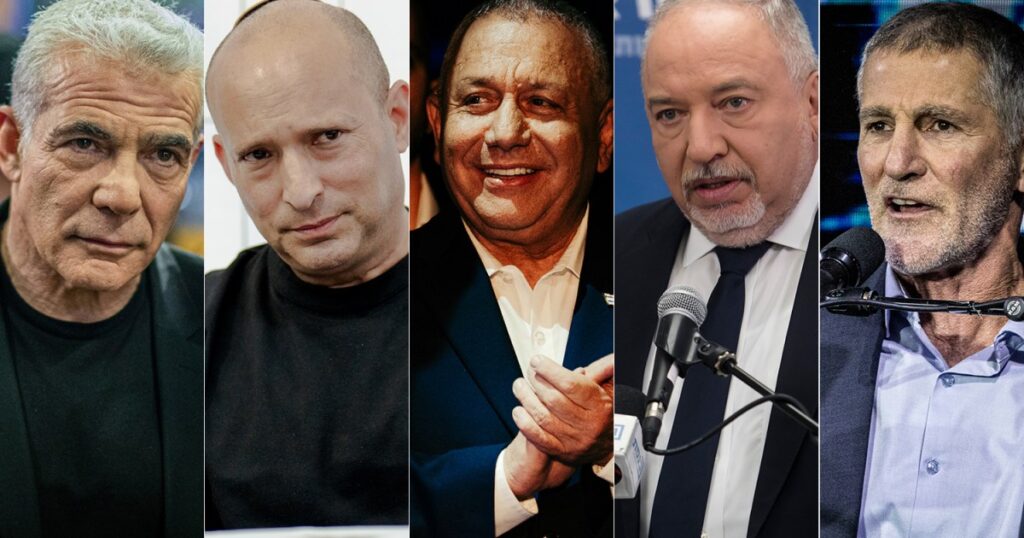
On Iran, Israel’s opposition is even more hawkish than Netanyahu
When Israel and the United States launched a broad military strike against Iran in February, the move was met with strong backing from the Israeli public and even the opposition parties. Mainstream Zionist groups shared a common hostility toward Tehran, and they praised the government’s bold action.
The campaign stalled in June after U.S. President Donald Trump announced that Iran and Israel had agreed to cease hostilities. Netanyahu’s decision to honor the truce was unpopular; a survey by the Israel Democracy Institute found that 65 to 70 percent of Jewish Israelis believed ending the war did not protect Israel’s security interests.
As the nation prepares for the October 27 parliamentary election, Iran remains a central campaign issue. Opposition leaders portray Tehran as a symbol of Netanyahu’s perceived failures and promise a reset of security and foreign policy if they win. Gadi Eisenkot, the leading candidate, argues that the conflict is far from over. While acknowledging that regime change in Iran is unrealistic, he accuses Netanyahu of doing little to halt Iran’s nuclear program. Speaking at the launch of his new party, Yashar, in September, Eisenkot told supporters, “Ultimately, it must end in the destruction or dismantling of the Iranian nuclear programme, a goal not yet achieved with 440kg [970lb] of highly enriched uranium already there, which could quickly be turned into several nuclear devices.”
Former prime minister Yair Lapid, now head of the opposition in the Knesset, labels the situation a strategic failure. Speaking to the Atlantic Council, he argued that removing Tehran’s administration is a realistic aim that would require a military escalation: “What Israel should do or the alliance should do is bomb all the energy facilities, especially on Kharg Island, but other places as well in order to make sure that the Iranian economy is demolished. And the reason is that it’s the only thing that will overturn the regime.” Such bombing proposals had previously been floated by Netanyahu himself, but concerns about potential war‑crime accusations and Trump’s refusal to back the plan halted them.
Former prime minister Naftali Bennett insists Israel must maintain military dominance across the region. For him, toppling the Iranian government and crushing it are essential, yet insufficient. He also brands Qatar an “enemy” and describes Turkey as “the new Iran,” warning that a confrontation with the NATO member is inevitable. “We will build an alliance of moderate forces in the region against the Islamist forces, against Iran, against Qatar, Turkiye and all the radical forces. We will take proactive actions to shape the region,” Bennett told supporters.
Eisenkot and other opposition figures do not rule out future clashes with Tehran. They express confidence in Israel’s military and security institutions to assess threats and respond appropriately. However, they have warned that Netanyahu might seek a pre‑election military escalation to sway voters or disrupt the election process, even though the prime minister recently said he does not plan to attack Iran before the vote.
Those concerns grew after Netanyahu posted a video from Tel Nof Airbase warning that Israel’s enemies could strike before the elections. Media reports also indicated that he had shared new Iranian threat intelligence with the U.S. president. Opposition leaders quickly rebuked the prime minister, accusing him of political fear‑mongering. Lapid openly questioned Netanyahu’s motives and charged that the leader was using the Israeli military and bases as backdrops for campaign videos.
In sum, most Israeli opposition parties and leaders are not opposed to confronting Iran; many adopt an even more aggressive stance toward Tehran than Netanyahu does. Their primary reservation is a desire to avoid a fresh military escalation before the upcoming elections.