
Karachi Building Collapse Near Baloch Colony Kills 3: Illegal Floors and a Stay Order Are Now the Real Questions
Three people were killed and 14 injured on Wednesday when an under-construction building collapsed near Baloch Colony in Karachi, in a disaster that was preventable on paper long before the concrete fell. The building in Block 4 of the Karachi Administration Employees Cooperative Housing Society had permission for two floors. It stood at seven when it came down.
Rescue 1122 recovered three bodies and 14 injured people from the rubble, using around a dozen rescue vehicles, and all were taken to Jinnah Postgraduate Medical Centre. More than 20 workers were on site when the structure collapsed.
Approved for two floors, built to seven
The Sindh Building Control Authority had approved only a ground-plus-one-storey building on the 600-square-yard plot, East Deputy Commissioner Nasrullah Abbasi told Dawn, yet the owner raised a ground-plus-five-storey structure with a penthouse on top, five extra floors loaded onto a frame never cleared for them.
The authority did notice. It ordered construction to stop. But the owner went to court and obtained a stay order, and the regulator was frozen while the building kept rising. A senior civil judge of District South issued an injunction on 4 August restraining the SBCA from tampering with the property. Karachi Mayor Murtaza Wahab said at the site that the SBCA had planned to demolish the building but could not proceed because of the stay order.
The stay order is now the central question
Stay orders are routine in property disputes, and courts grant them to protect owners from irreversible action while a case is heard. The Baloch Colony collapse forces an uncomfortable question about what happens when the property in dispute is itself a danger to life. An interim order meant to preserve the status quo ended up preserving an illegal structure while workers laboured inside it, and the regulator charged with public safety had no lawful way to intervene.
That does not settle who is legally at fault, and the courts will decide that. But it shows a gap between two systems that are supposed to protect the public: building control, which can spot a violation and order it stopped, and the courts, which can suspend that order on an application.
Arrests, and what accountability should mean
Police have arrested three suspects, including a contractor and a family member of the building owner, according to East SSP Zubair Nazir Shaikh. Arrests are a start, but they answer only part of the question. A building does not grow five illegal floors in secret. Somebody supplied the material, somebody supervised the work, and somebody inside the system either looked away or was stopped from acting.
A serious inquiry would trace that whole chain, from the first extra floor to the stay order, and ask what happens to the victims’ families now: medical care for the injured and support for the families of the dead.
Karachi cannot keep learning this lesson one collapse at a time
Karachi has seen this pattern before: extra floors added without approval, enforcement that arrives late or is blocked, and a collapse that turns a planning violation into a funeral. The Baloch Colony case is unusually well documented, with the approved plan, the stop order and the stay order all on the record.
The real measure of this tragedy will not be the rescue operation, which worked under terrible conditions, but what changes before the next building goes up. If a stay order can still freeze demolition of a structure the regulator has already declared unsafe, then the next collapse is a matter of when, not if.
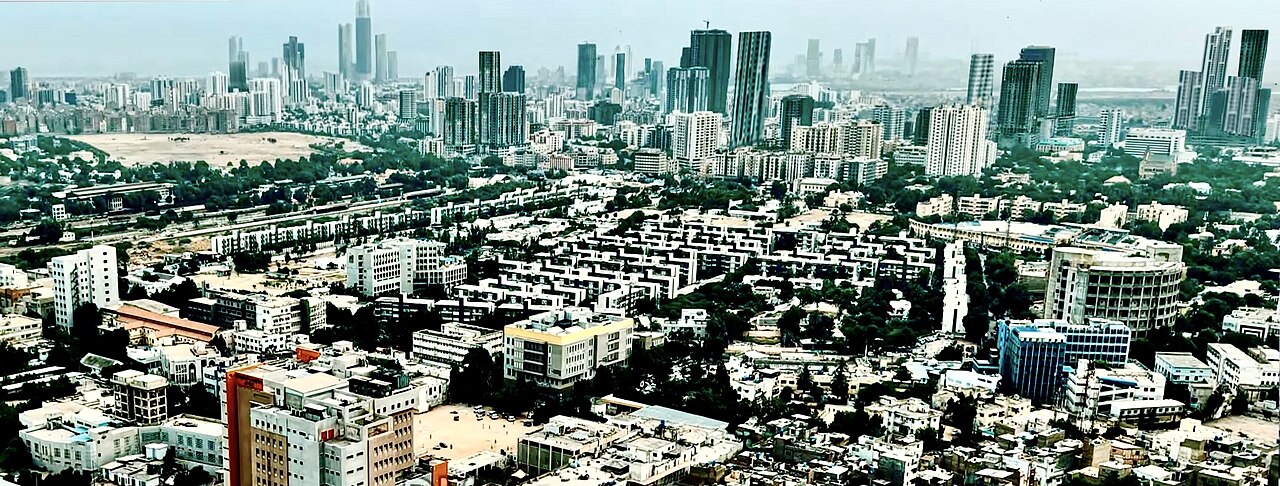
Photo: Karachi skyline. Credit: Ktownboy103, via Wikimedia Commons (CC0).
Sources: Dawn, The Express Tribune, Arab News, Dunya News, 25-26 November 2026.