US Destroys Five Iranian Tankers Overnight as Iran Hits Back, and Pakistan Looks to Its Ports
WASHINGTON/ISLAMABAD: The United States destroyed five Iranian oil tankers overnight and Iran struck back at American targets in Jordan, in the sharpest escalation yet of a war now in its seventh month. For Pakistan, the fighting is no longer distant: it is disrupting the shipping lanes the country trades through, pushing oil toward $100 a barrel, and forcing Islamabad to look hard at its own ports.
US Central Command said late on Tuesday that Iran’s Revolutionary Guards had tried twice in two days to hit an American warship with ballistic missiles. The warship evaded both attempts, and the US responded by striking the tankers M/T Kaviz, M/T Charminar, M/T Horizon 1 and M/T Riesco in the Gulf of Oman, and the M/T Derya near Kharg Island, Iran’s main oil export terminal. The Revolutionary Guards confirmed all five tankers were targeted.
Iran’s reply came within hours. Tehran said it attacked ten ships near the Strait of Hormuz and fired missiles at US forces at the Al-Azraq base in Jordan. Jordan’s armed forces said their air defences intercepted 18 of 20 incoming missiles and the other two fell in unpopulated areas, with no casualties reported.
A wider fight across the Gulf
The exchange did not stay between the two sides. Iran announced a maritime restricted area stretching from Chabahar into the Gulf of Oman and the Arabian Sea, and its navy warned crews on tankers near ports in Kuwait and Bahrain to leave their vessels. American forces also struck a missile launch site on Iran’s Qeshm Island and Kuwait’s air defences intercepted hostile drones. In Yemen, Iranian-backed Houthis attacked four cities in southern Saudi Arabia, wounding 73 people and setting oil installations on fire. Three more Iranian tankers were destroyed at the weekend, bringing the total to eight in a few days.

Oil near $100, and what it costs Pakistan
Oil prices moved closer to $100 a barrel on Wednesday, rising more than 1 percent for a fourth straight session, with Brent crude reaching $99.49 in early trading. That matters directly for Pakistan, which imports almost all of its oil. Dear oil feeds into petrol and diesel prices, widens the import bill and adds pressure on the rupee. The same morning brought a counterweight: Pakistan’s LNG import bill has fallen 36 percent as solar power curbs demand from the power sector. Washington has warned it will keep striking Iranian oil tankers if Tehran attacks its warships again.
Pakistan’s answer: its own ports and ships
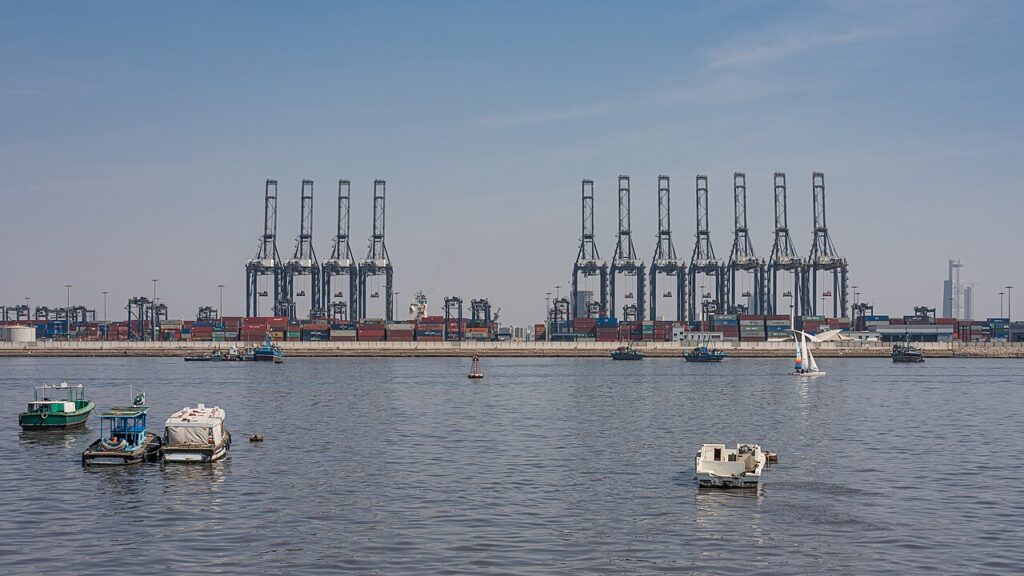
Prime Minister Shehbaz Sharif moved on Tuesday to turn the disruption into an opportunity. Chairing a meeting on ports and the Pakistan National Shipping Corporation, he called for expanding port capacity, modernising cargo movement and clearance, and a workable plan to expand the national shipping fleet. The aim is to make Pakistan a regional trade and transshipment hub, with sea cargo capacity brought up to world standards by 2030. Transshipment activity at Pakistani ports has already risen since the US-Iran war broke out. Pakistan is also still trying to stop the war: Foreign Minister Ishaq Dar has said Islamabad has not given up efforts to restart talks between the US and Iran, and the Economic Cooperation Organisation communique issued in Islamabad this week endorsed Pakistan’s mediation initiative.
What to watch next
What happens next turns on three things: whether the US keeps sinking tankers and Iran answers with more missiles; whether Iran’s restricted area disrupts the tankers carrying Pakistan’s fuel; and whether Pakistan’s mediation gets any hearing in Washington and Tehran. For now, Islamabad’s message is practical: build the ports, grow the fleet, and keep the diplomacy alive.
Featured image: Karachi container port. Photo: A. Savin, Wikimedia Commons (Free Art License).
Sources: Al Jazeera, Arab News Pakistan, Business Recorder, The Nation (18 November 2026).