
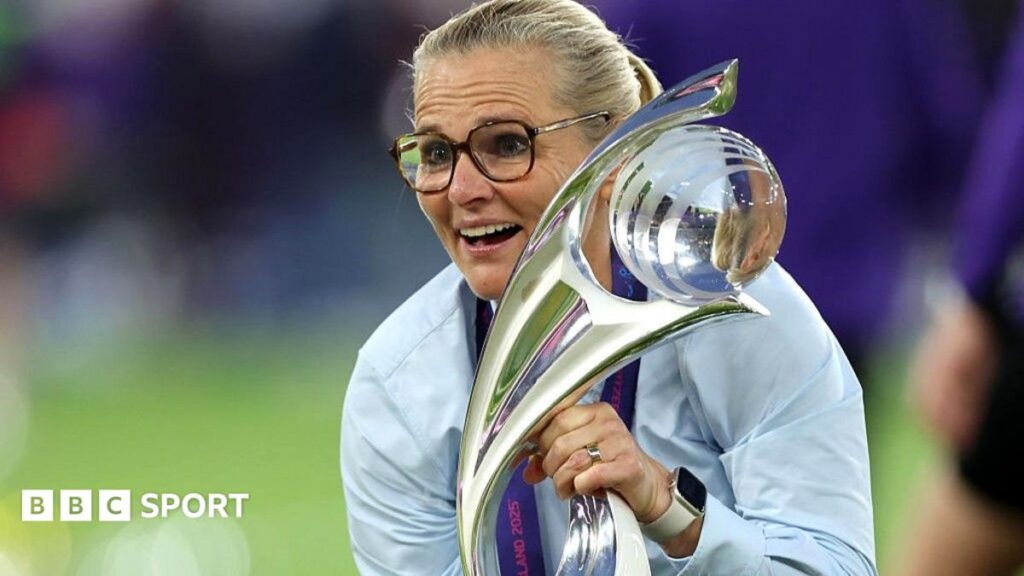
Wiegman’s Next Test: Shaping Lionesses 2.0
When Sarina Wiegman took over as England manager in September 2021, she promised to “bring the next level”. The Dutch coach had already lifted the 2017 Women’s European Championship with the Netherlands and guided them to the World Cup final in 2019, so the expectations were high. Five years later she has added two more European titles – in 2022 and 2025 – and another silver medal on the world stage, while turning the Lionesses into a household name across Britain.
On 19 October 2026 Wiegman signed a new contract that runs beyond the 2029 European Championship, but the renewal also signals a fresh set of challenges. England’s recent success has relied heavily on a core group that has now begun to show its age. Seven of the starters who faced world champions Spain in June also featured in the Euro 2022 final against Germany, and a 4‑0 defeat in Mallorca underlined the gap that still exists with the very best teams. That loss forced England into a two‑round play‑off to qualify for next summer’s World Cup. A victory over Greece this month cleared the first hurdle, and matches against Ukraine – already beaten twice this year – are slated before Christmas.
Replacing the veterans will not be simple. Defensive pillars Lucy Bronze and Alex Greenwood will be 37 and 36 respectively by Euro 2029, while Leah Williamson and Keira Walsh will be 32. Alessia Russo and Georgia Stanway will turn 30, still in their prime but a factor to consider. Record scorer Ellen White told the Women’s Football Weekly podcast, “We have to continue the evolution of the Lionesses, we can’t stay stagnant or keep trying to win in the same ways all the time.” Former England goalkeeper Rachel Brown‑Finnis praised Wiegman’s willingness to give uncapped players a chance, saying, “She’s not afraid of bringing in players who have never been capped before… Wiegman is looking right across the spectrum and asking who’s on form, who can add to my squad, who can fill a position or a couple of different positions.” Former captain Steph Houghton added on BBC Radio 5 Live’s Monday Night Club, “You can see Wiegman is trying to change a few things. The last camp she brought on Lexi Potter for her debut and she is now starting regularly for Chelsea. As a young player you need that to thrive in this environment.”
Wiegman has already handed debuts to 24 players, but only Lauren James, Hannah Hampton and Lucia Kendall have become regular starters. The recent Greece fixtures hinted at her next wave of talent. In Crete, Manchester City’s Laura Blindkilde Brown, 23, displayed confident ball‑playing, while 20‑year‑old Chelsea academy graduate Lexi Potter impressed in midfield during the second leg. London City’s Freya Godfrey, 21, and 18‑year‑old Erica Meg Parkinson also earned their first caps as Wiegman evaluated her options.
Across the Women’s Super League, the proportion of home‑grown starters has been falling for four seasons, as the league’s growing prestige draws more overseas stars. FA chief football officer Dan Ashworth credited Wiegman with ushering in “a golden age for women’s football in this country”. To sustain that era, she will need to keep extracting talent from increasingly limited domestic pools.
Before Wiegman’s arrival England had already posted respectable tournament finishes – third at the 2015 World Cup and fourth in 2019 – but the Euro 2022 triumph was a breakthrough. It sparked a surge in WSL attendances, media coverage and club investment in women’s sides. Four years on, however, the momentum appears to be leveling off. Early figures for the 2026‑27 season show lower crowds, and only 18,587 spectators watched England’s 5‑0 win over Greece at King Power Stadium, almost 10,000 fewer than the crowds at Nottingham Forest’s City Ground and Everton’s Hill Dickinson Stadium earlier in the year. With competition from nations such as Spain, Japan and host Brazil intensifying, the Lionesses’ continued success is vital for keeping the sport’s growth on track.
Only four of the top ten nations in FIFA’s women’s rankings are led by female managers – Spain, the United States and Canada among them – and Wiegman is the longest‑serving. If she remains in charge until the end of her contract, only Hope Powell (1998‑2013) and Martin Reagan (1979‑1990) will have held the England job longer. As she signed her new contract, she said she "".