
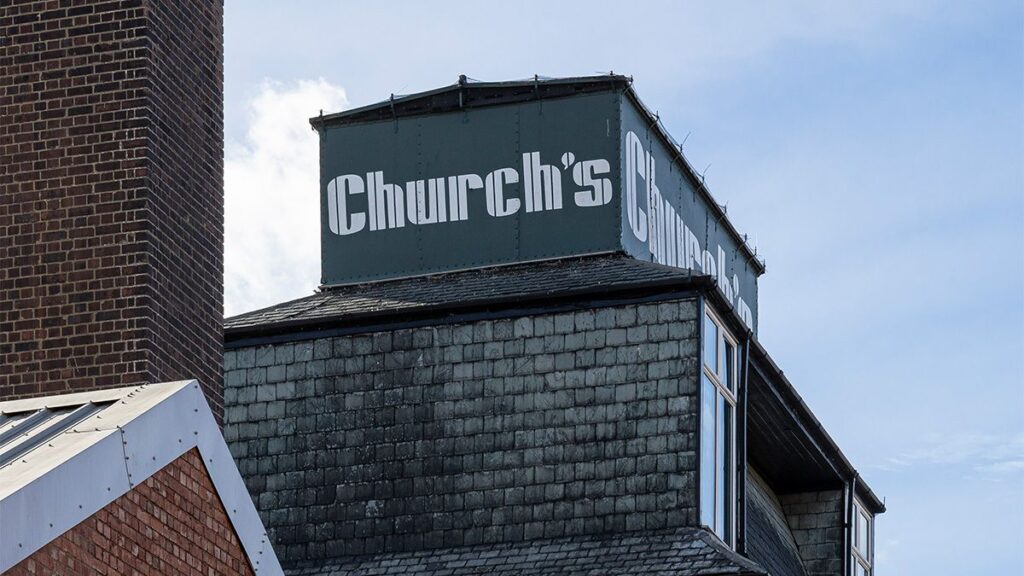
Why Church’s CEO Denni Manzatto Is Banking on Made in the UK
Held in the subdued ambience of the closed‑down Chiltern Firehouse during London’s Frieze Week, last Tuesday’s gathering at The Hart could have passed as another fashion‑meets‑art soirée. Yet among the bustling freelancers, plates of tartare and the presence of Alexa Chung, a handful of genuine British shoe icons appeared—pieces that have not been seen on the runway in years. The display featured the Stanhope Chelsea boot, the Skipton Oxford, the Sidley lace‑up, and a women’s Sloane line highlighted by the polished‑calf Susan ankle boot. All of these are produced by Church’s, the Northampton shoemaker founded in 1873 and bought by the Prada Group in 1999.
The event was overseen by Denni Manzatto, who became Church’s CEO in 2022 and was later promoted to president while also taking on the role of chief integration and transformation officer at Versace earlier this year. Before joining Prada in 2013, Manzatto, a former Goldman Sachs analyst, first encountered Church’s while working in private equity in London; the brand’s Jermyn Street shop, opened in 1921, was just down the road from his office.
“Church’s holds a significance for the Prada Group that exceeds its size,” Manzatto explains. Prada Group’s first‑half earnings show that Church’s accounts for roughly 1 % of the group’s revenue, about £32 million a year. “It is a jewel we must preserve, restore and elevate.” After years of discreet management, Manzatto and the Prada Group are now moving into a new phase that includes greater investment in Northampton and a renewed effort to attract a fresh audience of shoe enthusiasts.
A legacy of innovation
Like many heritage labels, Church’s was once at the forefront of technology. As archivist Simon Hill noted during a recent factory tour in Northampton, the 1881 “Adapted” boot was the first mass‑produced model to offer distinct left‑ and right‑foot shoes. The company was founded by Thomas Church, and his sons Alfred and William later industrialised the town’s cottage‑industry system, bringing specialist craftsmen under one roof while preserving the sequence of skilled steps that still defines production today.
That system grew out of a Northampton shoemaking tradition dating back to the Middle Ages. By the post‑war peak of 1955, Church’s and neighboring factories were turning out around 160 million pairs annually. The decline of the British empire and the rise of global manufacturing—from high‑end producers in Italy to lower‑cost operations in India and Southeast Asia—triggered a long downturn in Northampton’s output. Nevertheless, Church’s and peers such as Tricker’s, Cheaney and Edward Green survived by turning their traditional methods into a valued point of difference.
Prada’s entry
Prada entered the picture in 1999 with a £106 million acquisition of the publicly listed Church & Co, offering 950 pence per share and fending off interest from Diego Della Valle of Tod’s. At that time, Patrizio Bertelli pledged to preserve and possibly strengthen Church’s British identity and its manufacturing base in Northampton. Manzatto believes there was a romantic element to the purchase. Bertelli and Miuccia Prada grew up when Church’s represented, in their view, “the pinnacle of English shoemaking and shoemaking in general,” and they were fascinated by the brand from the start.
A British‑focused future
When Manzatto assumed leadership in 2022, he found the situation less romantic than expected. “Business‑wise, the challenges were greater than I had anticipated,” he says. Church’s operated as a separate legal entity, and a key part of his brief has been to integrate the company more closely with the Prada Group, giving the English label access to the parent’s corporate, industrial, technological and commercial resources.
Today, Church’s core Goodyear‑welted shoes are still made in Northampton, while other models such as the Shanghai shoe and certain sneakers are produced in Prada’s own factories in Italy. Manzatto reveals that the plan for the coming years is to bring all production back to the UK, even categories that have not traditionally been made there. “Our vision over the next few years is to bring everything back to the UK,” he states.
Achieving that goal requires substantial investment in both the factory and its workforce. “We are investing heavily,” Manzatto notes. He adds that Church’s is collaborating with local institutions to train a new generation of craftspeople as veteran shoemakers retire, and that the manufacturing operation will need to acquire the capabilities to produce a wider range of products. Manzatto believes the resources of the Prada Group make this possible: “If we were on our own, it would probably not be possible.”
The push comes despite a challenging environment for British manufacturing and retail. Post‑Brexit duties, higher employment costs and the loss of tax‑free shopping for overseas visitors have all weighed on the business. “That has impacted both our…’’ (article continues).