
What It Will Take to Strengthen Fashion’s Supply Chain
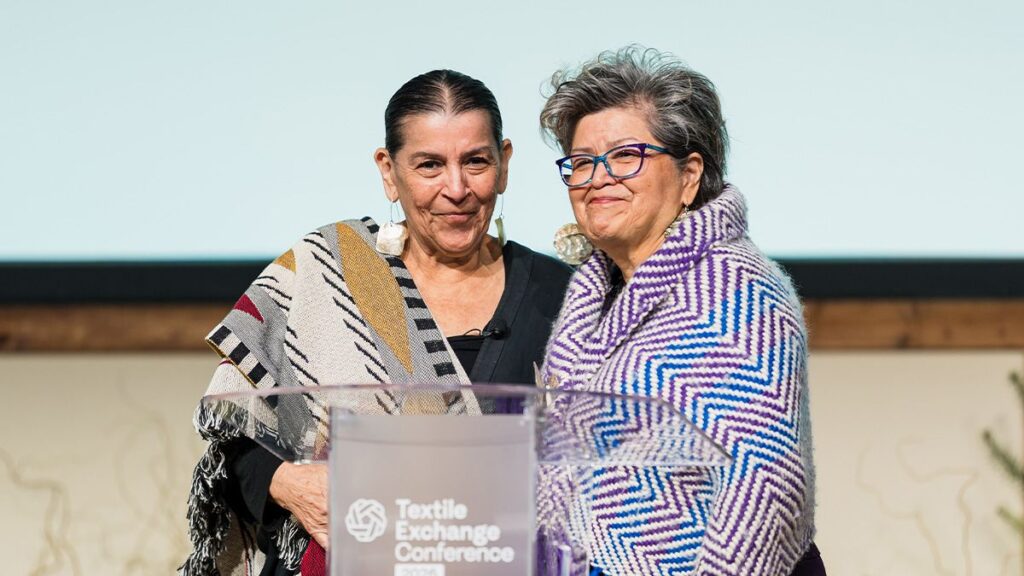
“We’ve done a lot of talking. Now, it’s time for implementation,” opened Samata Pattinson, host of the Textile Exchange conference last week, setting the tone for three days of sessions that revealed both the current state of sustainable fashion and the frustrations simmering beneath the surface.
In recent years, sustainable‑fashion gatherings have been haunted by a familiar sense of disappointment. Attendees often spend thousands to attend, only to complain about the lack of authentic representation on stage and the slow progress beyond it. The same voices seem to repeat the same messages that have been heard for a decade, with only slight variations reflecting the political climate.
Organizers have tried to channel that frustration into momentum, choosing themes such as Ambition to Action at the Global Fashion Summit in 2023 and The Implementation Era for the Textile Exchange event in 2026. Yet sentiment changes slowly, and systems evolve even more slowly.
Noel Kinder, Lululemon’s senior vice president of sustainability, noted in his day‑two keynote that corporate sustainability has been through a roller coaster. The early 2000s were marked by a reactionary focus on workers’ rights, driven by high‑profile investigations and crises such as the Rana Plaza collapse. The late 2010s saw a boom in sustainability, with values‑driven brands like Reformation, Everlane and Allbirds (now an AI company) attracting massive investment, while greenwashing surged as companies tried to profit from growing consumer awareness.
Kinder argued that fashion now needs to “roll up its sleeves” and highlight the co‑benefits of sustainability that align with other teams’ goals.
With political backlash against sustainability and widespread deregulation sapping momentum for corporate green initiatives, the conversation is shifting again. At this year’s Textile Exchange conference, the new buzzword was resilience.
“The reality of the world around us today warrants more discussions about risk and prevention,” said Patrik Frisk, CEO of textile‑to‑textile recycler Reju, the event’s title sponsor. “It’s all about regulation and geopolitical and environmental risks.”
What resilience looks like in fashion supply chains remains contested. The conference program centered on two primary solutions: regenerative agriculture for natural fibers and textile‑to‑textile recycling for synthetics. Both approaches promise to make supply chains more robust against climate change and geopolitical turmoil, yet they confront significant scaling challenges. Many of the decision‑makers who could drive progress were missing, noted Inka Apter, senior director of materials and circularity at Eileen Fisher: “There was a rather glaring absence of sourcing team leaders and CFOs in this space.”
Professor Gail Whiteman, Hoffmann Impact Professor for Accelerating Action on Nature and Climate at the University of Exeter and founder of the non‑profit Arctic Basecamp, delivered a stark reality check. She reminded the audience that seven of the nine planetary boundaries have already crossed safe limits, climate‑related disasters rose 83 percent between 2000 and 2019, and wildlife populations have declined 73 percent over the past 50 years. Sea and land ice, which she called “the biggest insurance system our climate has,” are melting at record rates. “The scale of change is astronomical,” she said. “The only words that are important right now are implementation and action.”
A Business Case Built on Resilience
Against the backdrop Whiteman described, it was unsurprising that the discussion quickly turned to resilience. Brands worldwide are feeling the effects of the climate crisis, from raw‑material sourcing to shipping and brick‑and‑mortar retail.
In a session on sourcing strategies amid geopolitical unrest, Jordan Lea, vice president of sustainable fibers at cotton supplier Olam Agri Americas, highlighted the severe impact of climate change on natural fibers. He cited a forecast from Cotton Australia predicting a 40 percent drop in the nation’s cotton harvest this year due to drought, echoing the flooding that devastated Pakistani cotton in 2022. Such losses are becoming more frequent, while shipping disruptions make it harder to move commodity crops like cotton globally.
In the same session, Sean Cady, vice president of global product stewardship, sustainability and government affairs at VF Corp., explained how ongoing turmoil in the Middle East has rippled through the fashion industry. The resulting oil crisis, layered on top of shortages caused by Russia’s war in Ukraine and sanctions on Russian oil, has driven energy and synthetic‑material prices to record highs. Factories equipped with solar panels and brands using recycled synthetics are somewhat insulated, he said. Regenerative agriculture, which reduces reliance on costly synthetic fertilizers and pesticides, can also help growers keep costs down.
“We are facing levels of uncertainty we have never seen in this industry,” Cady said. “We have to control what we can, and operate our business strategically instead of managing uncertainty in a reactionary way.”
Cady is part of a growing cohort that is repositioning sustainability from a purely moral argument to a resilience‑focused business case, using translation and integration skills to make the concept resonate with executives and help colleagues see how it ties into their competing KPIs.