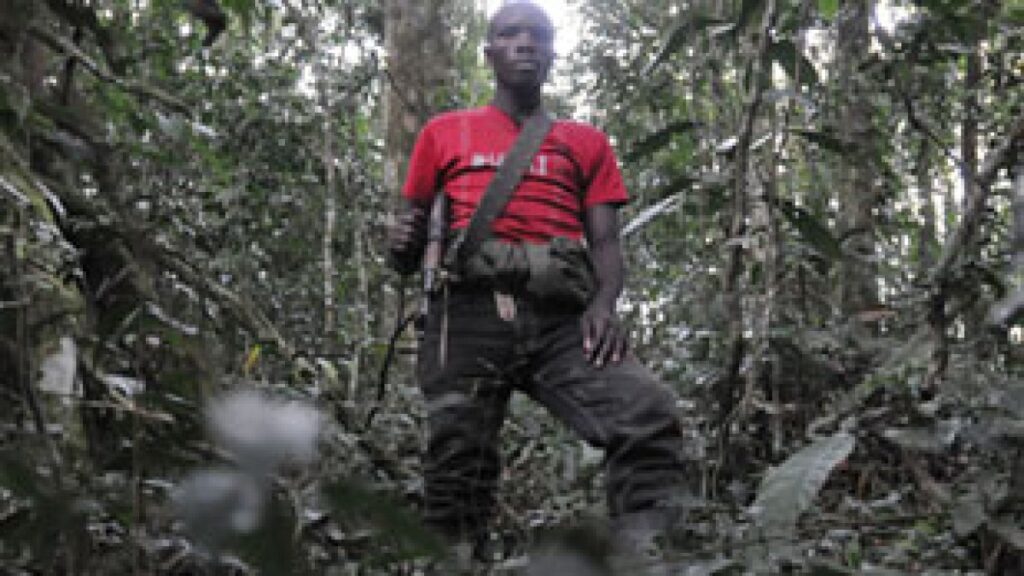
What drives the FDLR’s enduring anti‑Tutsi stance?
By Layth Mushtaq – 22 October 2026
Musanze, Rwanda – Four former senior officers of the Democratic Forces for the Liberation of Rwanda (FDLR) say the group was founded on a doctrine that portrayed Tutsis as enemies, a belief they were taught long before the 1994 genocide against the Tutsi population.
“In our history and ideology, Tutsis are referred to as ‘snakes’,” former FDLR major‑general Anastase Munyaneza explained. “The analogy is that if a snake bites you, it injects poison and you die. Therefore, it is better to kill the snake before it bites you.”
According to the ex‑officers, such ideas were reinforced by Rwanda’s political and military institutions before the genocide and persisted among those who fled to neighboring Zaire, now the Democratic Republic of the Congo (DRC), after the Rwandan Patriotic Front (RPF) seized power in July 1994. More than three decades later, the FDLR still poses a regional security challenge, and its presence in eastern DRC remains a major point of friction between Kigali and Kinshasa.
Al Jazeera interviewed the four former officers, who defected from the FDLR, returned to Rwanda and underwent rehabilitation at the Mutobo demobilisation centre. Their testimonies shed light on the origins of the group’s ideology, its evolution in exile, and the networks that have helped it endure.
**Origins of the anti‑Tutsi ideology**
The anti‑Tutsi sentiment described by the former officers stretches back decades, to a period when ethnic identities became increasingly politicised in Rwanda. In November 1959, a Hutu uprising helped topple the Rwandan monarchy and was accompanied by violent attacks on Tutsis, resulting in hundreds of deaths and the forced exile of thousands to neighbouring states.
Before colonial rule, Hutu and Tutsi identities were shaped by social, political and economic relationships. Under Belgian administration, these distinctions were formalised. In the early 1930s, the colonial government introduced compulsory identity cards that classified Rwandans as Hutu, Tutsi or Twa, cementing divisions that grew ever more rigid.
By the time Rwanda gained independence in 1962, roughly 120,000 people, mostly Tutsi, had fled the country. Exiles in Tanzania and Zaire who sought to return staged attacks between 1962 and 1967. The United Nations reports that each incident was followed by retaliatory killings of large numbers of Tutsi civilians in Rwanda, prompting further waves of refugees. By the late 1980s, about 480,000 Rwandans were living abroad. President Juvenal Habyarimana argued that population pressures and limited economic opportunities made it difficult to accommodate large numbers of returning Tutsi refugees.
In 1988, exiles in Uganda founded the RPF to secure their repatriation, according to the UN. Lieutenant‑Colonel Idrissa Bizimana recalled that the exiles who launched attacks against Rwanda were labelled “Inyenzi”, meaning cockroaches. “When the RPF attacked in 1990, we were told that the same Inyenzi had attacked the country. We grew up being taught to hate them,” he said. Bizimana added that school lessons claimed Tutsis had come from Ethiopia and had “ruled through hatred for 400 years”.
The former officers say these narratives were carried into the military, shaping how soldiers were taught to view Tutsis and their place in Rwandan society. Munyaneza noted that Tutsis were rarely found in the army because they were not welcome. “In the army, we were taught that the Tutsi were our enemy,” he said. He recalled that soldiers had to seek permission to marry and present their fiancées for approval; a Tutsi woman would automatically be rejected. The justification, he explained, was that a soldier’s in‑laws might visit their daughter in the barracks, potentially gaining access to sensitive military information and passing it to the enemy.
**The army’s role in 1994**
The ex‑officers say the ideology they encountered in the military was put into practice during the 1994 genocide against the Tutsis. Munyaneza said soldiers trained members of the Interahamwe militia, which included men who had retired from, deserted, or been dismissed from the army. The Interahamwe, the youth militia of the then‑ruling National Revolutionary Movement for Development (MRND) party, participated in the massacres alongside the Presidential Guard and the army, according to the UN tribunal for Rwanda.
Bizimana said members of his battalion hated the Tutsis and took part in the killings. “During the genocide against the Tutsi, the battalion was actively involved in the genocide in the area where it was deployed,” he said. The killings began after a plane carrying Rwandan President Habyarimana and Burundian President Cyprien Ntaryamira was shot down over Kigali on 6 April 1994, an event that triggered roughly 100 days of systematic mass murder, according to the UN. Radio Télévision Libre des Mille Collines (RTLM) broadcast messages inciting violence against the Tutsis, including calls to eliminate those described as “cockroaches”.
**How the FDLR took root in Congo**
When the RPF took control of Rwanda in July 1994, ending the genocide, former government officials, soldiers and militiamen who had participated in the killings fled into Zaire. In eastern Zaire, the UN refugee agency reported that former members of the Rwandan Armed Forces (ex‑FAR) took effective control of refugee camps, especially around Goma. “That was where we resumed our military activities,” Munyaneza said.