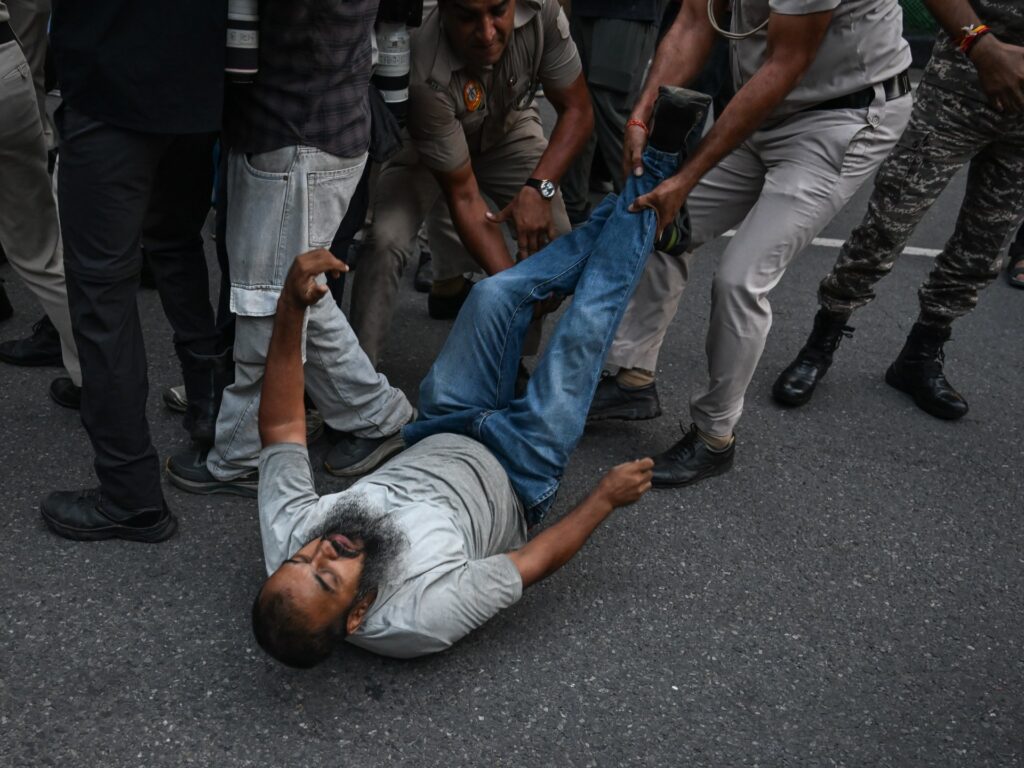
UN experts urge India to halt “excessive force” against demonstrators
The United Nations’ panel of independent experts has asked the Indian government to end what they describe as “excessive force” used against recent opposition and student protests. In a statement released on Tuesday, the two dozen specialists called for an impartial inquiry into the conduct of Indian authorities, noting that many demonstrators have been injured and some have reported ill‑treatment.
The experts said they were especially worried about allegations of sexual violence and other gender‑based abuse linked to the protests and subsequent detentions. They stressed that the panel, appointed by the UN Human Rights Council to monitor specific human‑rights crises, operates independently of the UN system.
The protests this month have been organized by the Cockroach Janta Party (CJP) together with other opposition groups and student bodies. Demonstrators are demanding the resignation of Chief Election Commissioner Gyanesh Kumar after roughly 130 million names were removed from voter rolls. The protesters claim the purge has hit poor and homeless citizens hardest, as well as ethnic minorities such as Muslims, who are less likely to support Prime Minister Narendra Modi’s Hindu‑nationalist Bharatiya Janata Party (BJP). Both the BJP and the Election Commission have rejected these accusations, saying the deletions target duplicate, deceased, relocated or otherwise ineligible voters and that anyone mistakenly removed can appeal the decision.
According to the UN panel, law‑enforcement agencies have used force against unarmed students despite the largely peaceful nature of the gatherings. They cited the deployment of police “lathi charges,” coordinated baton assaults intended to disperse crowds, which have reportedly barred thousands from joining the demonstrations.
The experts urged Indian authorities to stop using excessive force immediately, lift blanket bans on assemblies, and refrain from misusing digital surveillance tools, including biometric systems and internet disruptions. India has repeatedly brushed off such criticism, labeling it interference in domestic affairs, a stance echoed after the UN human‑rights office raised concerns earlier this month about mass detentions linked to the latest protests.