The right to enforce civil rights is under attack in the US
By Christopher Rhodes, lecturer in Government at Harvard University and lecturer in Social Sciences at Boston University. Published 21 Oct 2026.
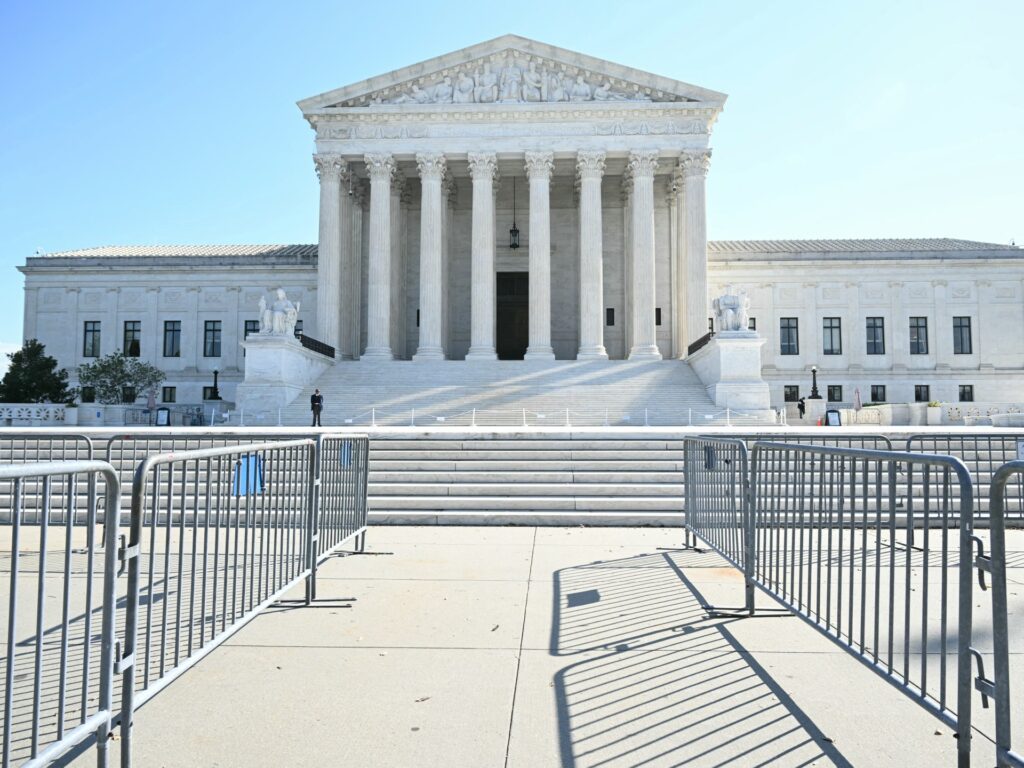
This autumn the Supreme Court will hear a case that could reshape civil‑rights enforcement in the United States. On 30 November the justices will consider whether employees of federally funded universities may sue under Title IX for alleged workplace sex discrimination. The Trump administration has urged the Court to rule that such private lawsuits are not permitted, arguing that Congress never granted university staff a private right of action.
The dispute is the latest front in a broader legal effort to limit the ability of individuals and advocacy groups to bring rights‑violation claims to court. In June the Supreme Court declined to review a challenge to a federal appeals‑court decision that barred Arkansas United, an immigrant‑rights organization, from suing to enforce voting‑assistance protections. Across a growing number of cases, Republican‑led states and the Trump administration are advancing the same principle: unless Congress explicitly authorizes private lawsuits, enforcement should remain with the government.
The argument may sound technical, but its consequences are far‑reaching. If individuals and civil‑rights groups cannot turn to the courts when laws protecting them are ignored, the power to decide which rights are actually enforced increasingly rests with the very government that may be violating, ignoring, or refusing to enforce them.
A private right of action allows a person or a group acting on its behalf to file a lawsuit to enforce a statutory right. Such suits can demand compliance or seek compensation for past violations. Private rights of action are not automatic under federal or state law; Congress and state legislatures sometimes grant them expressly. Where they are silent, courts must decide whether a law implicitly permits private lawsuits or leaves enforcement solely to government agencies.
In practice, private litigation has long been a cornerstone of civil‑rights enforcement. George Rutherglen, a professor at the University of Virginia School of Law, wrote in a 2015 law‑review article that civil‑rights history, dating back to Reconstruction, makes these rights essentially private, relying on the initiative of the individuals who hold them. He acknowledged that public enforcement remains important but cannot fully replace individual control.
Supporters of private rights of action, such as AARP, view them as vital tools for vulnerable people and groups when government agencies are unwilling or unable to act. Critics, including the U.S. Chamber of Commerce Institute for Legal Reform, argue that private lawsuits can encourage frivolous litigation. These critics, often from the political right, have sought to limit private litigation through legal arguments. A notable example is the 2001 Supreme Court decision in Alexander v. Sandoval, where a majority led by Justice Antonin Scalia held that Title VI did not create a private right of action to enforce regulations against policies with a disparate impact on protected groups.
The push against private rights of action has intensified. Republican‑led states have increasingly challenged the doctrine of implied private rights, urging courts to reject private suits to enforce a range of rights. The Trump administration has adopted the same stance. In a 2021 voting‑rights case, Justice Neil Gorsuch filed a brief concurrence, joined by Justice Clarence Thomas, questioning whether the Voting Rights Act of 1965 provides an implied cause of action, even though the issue was not raised in the case.
The conservative effort to curtail private rights of action extends to other areas. In June the Supreme Court ruled against Falun Gong practitioners who sued Cisco Systems, concluding they could not pursue aiding‑and‑abetting claims under the federal statutes they invoked.
One of the most significant implications of limiting private rights of action is the threat to voting rights. In the Arkansas United case, the Eighth Circuit held that the immigrant‑advocacy group lacked standing to sue on behalf of non‑native English speakers seeking language assistance at the polls, interpreting Section 208 of the Voting Rights Act. The decision also reflected a broader Eighth Circuit view that private parties cannot enforce key provisions of the Voting Rights Act. The Supreme Court’s refusal to hear the case in June left that ruling intact.
Similar arguments have appeared in two redistricting and vote‑dilution cases brought by Republican‑controlled governments: Board of Election Commissioners v. NAACP in Mississippi and Turtle Mountain Band of Chippewa Indians v. Howe in North Dakota. In May the Supreme Court vacated judgments in both cases and sent them back for further proceedings, underscoring the ongoing battle over who may enforce civil‑rights protections in the United States.