
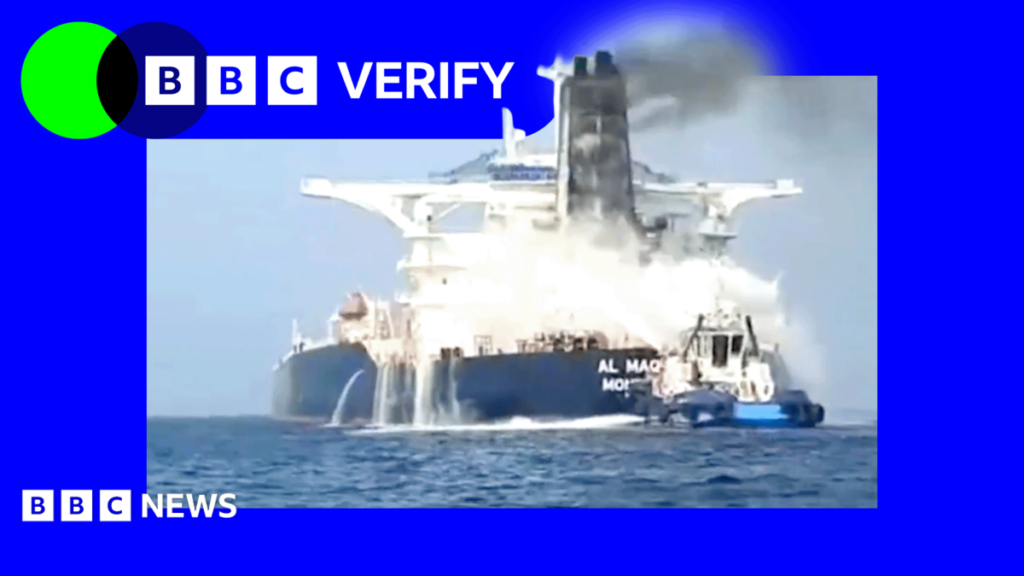
Ship attack reports near Hormuz reach record high as oil exports slow
The number of vessels reporting attacks in and around the Strait of Hormuz has reached a weekly high, according to BBC Verify’s analysis of data from the UK Maritime Trade Operations agency. Twelve ships were struck between 5 and 11 October, the most in a single week since the US‑Israeli conflict with Iran began. The previous week saw ten vessels report attacks. Six of those hits occurred on Sunday, marking a one‑day peak, and four more incidents have been logged so far this week.
As the frequency of strikes has risen, the rebound in oil shipments through the strait observed last month has begun to slow, industry figures indicate. BBC Verify compiled the incident reports posted on the UKMTO website and built a timeline using the first date mentioned in each entry; the timing is approximate because some reports cite the attack date while others note the date of reporting.
Analysts say Iran is using the attacks to press for greater control of the waterway, especially as the US military has increased the number of tankers it escorts through the southern part of the strait to avoid Iranian fire. Tehran has also expanded its campaign to target vessels farther from the Strait of Hormuz.
The US Central Command posted on social media that, despite the attacks, commercial traffic continues to move through the strait under coordinated protection from American forces and regional partners.
Two crew members remain missing after one of Sunday’s six attacks. Verified footage shows the Nicaragua‑flagged tanker Petro Dolphin ablaze, filmed by sailors on a nearby small boat. The vessel was hit by a drone close to the Sohar Anchorage in Oman, more than 250 kilometres (150 miles) from the strait, according to the maritime intelligence firm Vanguard. Eleven Indian seafarers were rescued, but two are still unaccounted for, the Forward Seamen’s Union of India said.
Attacks persisted into the week. On Tuesday the container ship GFS Pride sank after being struck by an unknown projectile in the strait; all twenty‑one crew members were evacuated safely. Iran’s Islamic Revolutionary Guard Corps released footage that appears to show the same ship going down, claiming it was carrying “2,500 containers of contraband” and had taken an “unauthorised route”.
Oil exports from the Middle East have faltered as the strike count climbs. Roughly 12.6 million barrels per day passed through the strait on 13 October, down from 15 million recorded at the end of September, per data from Kpler. The pre‑war baseline is estimated at about 17 million barrels per day.
The uptick in attacks coincides with US Navy figures showing that the number of vessels receiving assistance to navigate the Strait of Hormuz during the first ten days of October rose 85% compared with the same period in August. Much of the oil leaving Gulf Arab states now