Rising costs and tight budgets strain Americans ahead of midterm elections
Stacy Eichel, a Florida resident whose children have all left home, spent years juggling two jobs. One was a position in healthcare, and the other was a small business she started that produced custom‑branded merchandise—coffee mugs, T‑shirts and other items that companies hand out at conferences and holiday events. The venture was more than a paycheck; it fed her restless energy and love of new opportunities. It thrived when firms had a little extra money to spend on memorable giveaways.
In September 2025, a merger cost Eichel her marketing job at a healthcare company. Suddenly, her side business had to shoulder a larger share of her household income, just as demand for her products began to shrink. Trade‑policy uncertainty, new tariffs and the growing use of artificial intelligence have prompted many companies to tighten spending, making custom swag one of the first expenses to be cut.
“The economy is such that fewer people are buying custom‑branded swag because it’s more of a luxury item. When they have extra money in the budget, that’s what they’ll use it for, but now their budgets are very tight,” Eichel told Al Jazeera, adding that she has also reduced her own expenses.
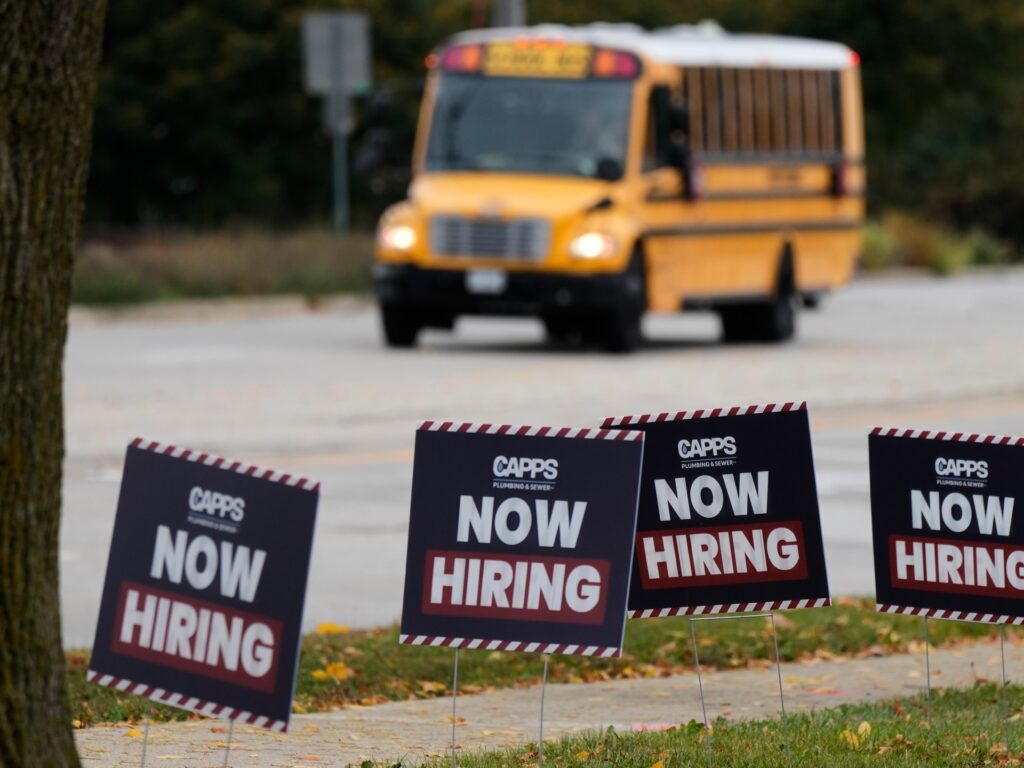
Eichel’s situation mirrors a broader strain in the U.S. labor market. The headline unemployment rate only counts people actively looking for work, but it does not capture those who are underemployed. The Department of Labor’s broader U‑6 measure, which includes part‑time workers who want full‑time jobs and those who have stopped looking, stands at 7.6 percent, down from 8.1 percent a year earlier. The figure shows that having a job does not guarantee financial security.
About 4.5 million Americans are working part‑time because full‑time positions are unavailable, and nine million hold multiple jobs, representing 5.5 percent of all employed workers, according to the latest jobs report. Workforce strategist Tara Furiani explained, “Underemployment is one of the most misunderstood economic problems in America because it doesn’t always look like unemployment. It looks like a college graduate working retail despite having a degree, a former executive accepting a position paying half their previous salary, or a parent working two jobs because neither provides enough hours, benefits or income to support their family.”
The latest Consumer Price Index released by the Labor Department shows average hourly wages rose 3 percent over the past year, while consumer prices increased 3.7 percent. On a month‑to‑month basis, prices rose 0.6 percent while wages grew just 0.1 percent, squeezing household budgets further. Eichel has cut back on dining out, takeout and even cancelled her cable service. “I never used to think before ordering in, and now we cook everything,” she said.
As the midterm elections near, the cost of living is becoming a top concern for voters. A Reuters/Ipsos poll found that 47 percent of respondents named the cost of living as the most important issue, more than double the 22 percent who cited “democratic norms and values.” A separate Washington Post–ABC News–Ipsos poll showed that 40 percent of voters trust Democrats to handle the economy, compared with 33 percent for Republicans, marking the first Democratic advantage on the issue in 12 years.
Pew Research Center data released earlier this month indicated that 44 percent of Americans said they had struggled to pay for at least one basic necessity—such as transportation, rent or mortgage, medical care or food—over the past year. Twenty percent reported receiving food from a food bank or pantry during that period.
Joshua Teicher, a video producer in New York City’s advertising sector, described how work dried up after the COVID‑19 pandemic and has continued to decline as companies cut budgets. The slowdown has been severe enough that he now relies on Medicaid for health coverage and struggles to afford prescriptions and food. “I’m hav…,” Teicher told Al Jazeera, underscoring how the tightening economy is affecting individuals across the country.