Paris small shops struggle after protest violence
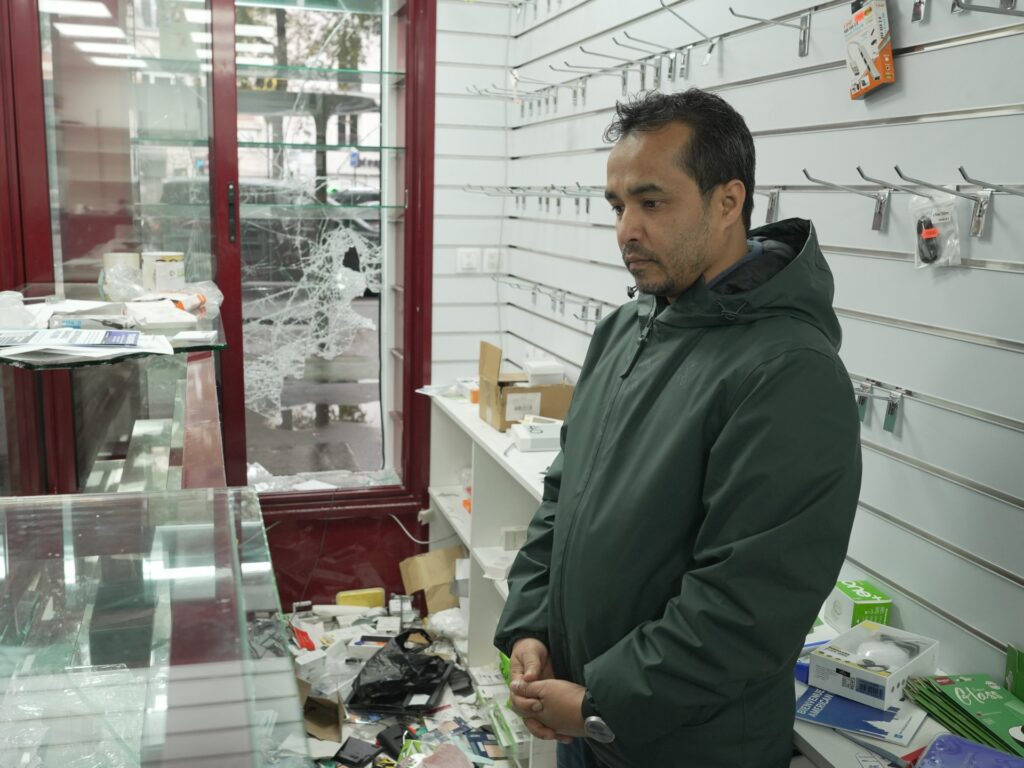
Jagged shards of glass line the hole punched through the window of Hassan Rashdul’s mobile phone store near Place de la République, the focal point of looting and rioting that hit that part of Paris on Saturday. “I was crying,” Rashdul says while watching a CCTV livestream on his phone.
The glass countertop is broken, the floor littered with fragments, and the display cases that once held new and refurbished phones, iPads and computers are now empty. Walls that displayed headphones, cables, phone cases and other accessories have been stripped clean.
“It’s really terrible,” the 32‑year‑old explains. “It was very, very hard for us… It’s already hard for small business owners like us. We’re not operating to keep the business going, but just to survive, really.”
Rashdul estimates the loss at at least 70,000 euros (about $78,600). His insurance does not cover theft, as that risk was excluded from his policy. Prime Minister Sébastien Lecornu has announced that the government will fund employee salaries for roughly 3,000 businesses across France affected by the unrest, and a dedicated support fund will be set up to help merchants restock. Lecornu has also deployed more than 200 investigators to track down those responsible for the riots and looting.
The thieves moved quickly: some shop owners reported seeing their stolen stock appear for sale online within hours. “Stolen items from this weekend are being offered for sale on certain platforms,” digital minister Anne Le Henanff wrote on X. “We expect these platforms to remove the listings in question without delay.”
Le Henanff met with representatives of six platforms, accompanied by officials from the Interior and Justice ministries. The French commerce ministry said that representatives from Vinted, Amazon, eBay, Leboncoin, Meta and TikTok, together with the French online retail association Fevad, were present. “They will also be required to cooperate closely with state authorities so that those reselling stolen goods can be prosecuted,” she added.
Around Rashdul’s shop, mini‑markets, opticians, phone stores and cafés bear the marks of last weekend’s violence. Some have been boarded up, while others that have nothing left to steal remain open, exposed to the damp October weather.
Despite the damage, Rashdul sees a hopeful side. “There’s another side to it, a positive – local customers, people from the neighbourhood,” he says. Residents have launched appeals on social media to raise aid for shopkeepers. “They really make you want to try again,” Rashdul adds. “People are helping us to rebuild our shop, to get back to work and serve this neighbourhood once again.”
Rebuilding will not be easy. It took Rashdul, who arrived in France from Bangladesh ten years ago, a decade to establish his business. He now describes himself as a proud French citizen, respectful of the right to protest but concerned about the impact of violence on enterprises like his and on France’s reputation. “Even though I want to rebuild, next Saturday they’ve announced another protest,” he says. “I know we’re in a democracy and there’s a right to protest, but if that ends up in more looting, then that’s hard on France and damaging for its international reputation.”