Paramilitary Hitman Tied to UK Right‑Wing Group Turning Point UK
Al Jazeera’s investigative team has uncovered a connection between a convicted Ulster Volunteer Force (UVF) member and the British student organization Turning Point UK (TPUK). The probe, titled “Contract Killers and the Far Right,” began in 2021 when an undercover reporter infiltrated TPUK, an offshoot of the American activist group Turning Point USA. TPUK maintains links with senior figures in the Conservative Party and with leaders of Reform UK.
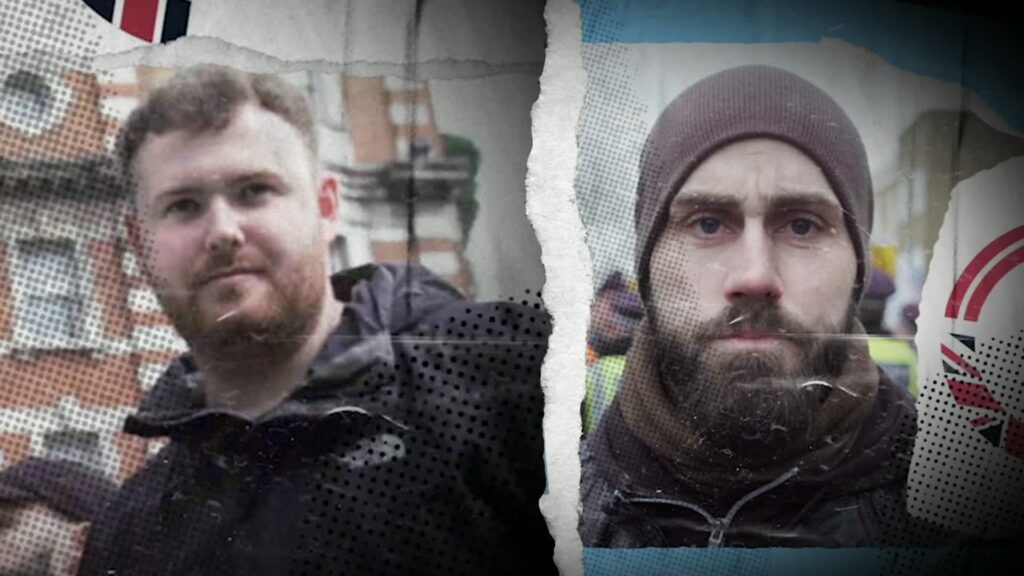
Jack Ross, the chief executive of TPUK and a Conservative Party candidate in the 2023 elections, introduced the Al Jazeera reporter to Allan Nesbitt, a Glasgow‑born UVF operative who has previously been convicted of violent offences. In recorded conversations Ross said he could pay Nesbitt thousands of pounds to stage a mock political rally supporting the removal of UK sanctions on Zimbabwe. He also told the reporter that, for “a certain amount,” Nesbitt and his contacts could carry out physical attacks, adding, “They can kick the f*** out of someone. They can start cutting people’s faces up. They can stab someone. They can shoot someone. They could kill someone.”
To test the claim, the undercover reporter fabricated a business dispute and asked Nesbitt to “deal with” a fictional rival. In a private meeting at a London hotel, Nesbitt replied that he could arrange whatever was needed, but it would cost money. He suggested that the target could be eliminated with the help of his UVF connections, saying, “He can have a bad accident,” and confirming that the person would be “finished.” He described his associates as “terrorists” and “f***ing trained killers.”
Nesbitt also claimed personal experience with lethal violence, stating, “Things have happened in the past where it was too risky to do that, and I’ve just pulled out a knife and stabbed the c*** to death.” In a later video call he displayed a shotgun, a pistol and live ammunition to prove he possessed the means to carry out the threat.
According to Nesbitt, any money paid for a murder would be funneled to arm the UVF in Northern Ireland. “All the money gets raised in Scotland and the things get bought in Scotland and we smuggle them into Ireland,” he said, adding that he had been involved in weapons smuggling for many years. “It’s us that smuggled the stuff into Ireland for them to fight the war in there,” he told the reporter, referring to the conflict known as The Troubles.
The Troubles, which began in the late 1960s, pitted predominantly Protestant unionists who wanted Northern Ireland to remain part of the United Kingdom against predominantly Catholic nationalists who sought a united Ireland. The UVF fought on the loyalist side and was responsible for some of the deadliest attacks of the period. Patricia Devlin, a journalist who has tracked the group for years, told Al Jazeera that the UVF killed more than 500 people between 1966 and 1999, including the 1971 McGurk’s Bar bombing that claimed 15 lives and the 1974 Dublin and Monaghan bombings that killed 33.
Following the 1998 Good Friday Agreement, which largely ended the conflict, the UVF has largely morphed into a criminal enterprise, according to Devlin, with drug dealing and other illicit activities continuing under the UVF name. Roy McComb, former deputy director of the UK National Crime Agency, said Nesbitt’s statements were unsurprising, noting a long‑standing relationship between loyalist groups in Northern Ireland and criminal networks in Scotland. He added that firearms, intelligence and activists have historically moved between the two regions, and that such weapons could be sold to far‑right actors.
The investigation also identified links between Turning Point UK and other far‑right groups in Britain that have led protests against migrants and LGBTQ+ rights. Ciaran O’Connor, senior analyst at the Institute for Strategic Dialogue, told Al Jazeera that Turning Point UK aligns itself with these more militant factions, using “wedge issues” to mobilise support and to demonise asylum seekers.
The findings highlight a troubling overlap between a proscribed paramilitary organization and a UK student group that positions itself within mainstream politics.