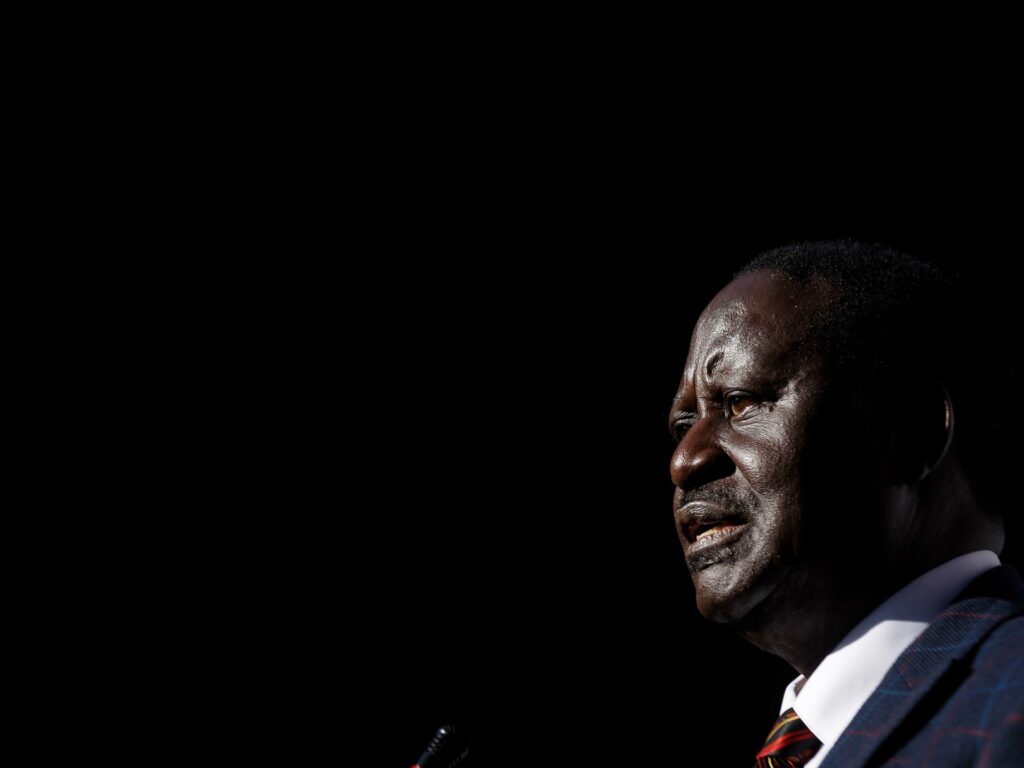
One year on: Has Kenya’s opposition lost its way without Raila Odinga?
One year after Raila Odianga’s death, the political movement he led for decades is still searching for a clear path forward. Within the Orange Democratic Movement (ODM), a sharp dispute over how to relate to President William Ruto has highlighted deeper splits over the party’s identity and autonomy. The conflict raises a broader question: can Kenya’s opposition remain a credible force without the leader who helped shape it?
Odianga’s passing sparked tributes that celebrated a career built on the fight for multiparty democracy, constitutional reform, free expression and social justice. Yet the divisions now confronting his party underscore how hard it is to sustain a movement that revolved around a single dominant figure. His legacy continues to inspire, but it also fuels debate about what ODM should stand for and how it should wield power.
At the heart of the dispute is ODM’s relationship with Ruto’s administration. The removal of Secretary‑General Edwin Sifuna, who opposed closer ties with the president, has become a flashpoint in a wider struggle over the party’s direction. The disagreement goes beyond personal rivalries; it forces a reckoning over whether ODM can cooperate with the government while preserving the independence needed to hold it to account.
For decades, Odianga occupied a central role in Kenya’s reform movements, challenging successive governments and championing political change. To his supporters, he symbolised resistance and the promise of a more accountable system. His influence also meant that the opposition’s ability to unite often depended on his personal authority, networks and knack for balancing competing interests.
Political analyst Professor Herman Manyora argues that Odianga’s absence has left a vacuum the opposition has struggled to fill. “One year after his death, he is larger than life. People seemed to think he would never die. We had immortalised him,” Manyora said. He added that the opposition now appears disorganized because there is no longer a figure around which people can rally. This assessment points to a challenge that existed before Odianga’s death but has become more visible since: a movement can inherit a leader’s legacy without inheriting the authority that held it together. Whether the vacuum becomes a lasting weakness will depend on whether new leaders can build trust, craft a common agenda and organise beyond personal loyalties.
The alliance that divided his legacy
Odianga’s decision to work with Ruto in 2024, amid nationwide protests against the Finance Bill, remains one of the most contested moments of his career. The protests, driven largely by young Kenyans, grew into a broader expression of anger about taxation, governance and political accountability. As pressure mounted, Odianga’s move toward cooperation raised doubts about whether dialogue could deliver real change or whether it risked pulling the opposition closer to the establishment it had long opposed.
Manyora views the intervention as a turning point for Ruto’s government. “What happened then was that Odianga came to the rescue of President William Ruto because, had he not come to rescue Ruto, I think the government would have collapsed,” he said. While some may dispute the political consequences of the alliance, his interpretation captures its significance: a politician long associated with opposition politics had become a partner in an arrangement with the president against whom many Kenyans were protesting.
For some young Kenyans, the partnership felt like a betrayal of the struggle that made Odianga a symbol of resistance. The Gen Z‑led protests emerged largely outside traditional political structures, driven by demands for accountability and frustration with established elites. Many protesters rejected the idea that their movement should be absorbed into negotiations among familiar political figures.
Joshua Okayo, a lawyer and human‑rights activist who identifies with Gen Z, said Odianga’s decision left him feeling betrayed. “As a Gen Z, I recognise the kind of politics he fought for. I recognise the years he put into fighting for social justice, democracy, rule of law, constitutionalism, and many good things. But I also have a spot in my heart where I feel he betrayed the generation,” Okayo said. This criticism captures the tension at the core of the debate about Odianga’s legacy: whether political compromise was a pragmatic attempt to stabilise the country and pursue reform, or a retreat from the principles that defined his career.
Supporters of cooperation argued that dialogue offered a way to address national challenges without prolonged confrontation, while critics saw the partnership as evidence that opposition politics risked being absorbed into the very establishment it was meant to hold accountable. The question is not simply whether Odianga compromised, but whether the arrangement delivered enough to justify the political cost.
ODM’s struggle to define its future
That debate now confronts ODM as it tries to set its course without Odianga’s authority. His skill at negotiating alliances and managing competing factions has been hard to replace. The party’s internal fight over Sifuna’s removal reflects broader uncertainty about whether to pursue a strategy of engagement with Ruto’s government or to adopt a more confrontational stance. As the opposition grapples with these choices, its ability to present a united front will determine whether it can remain a credible counterweight in Kenyan politics or fade into irrelevance.