
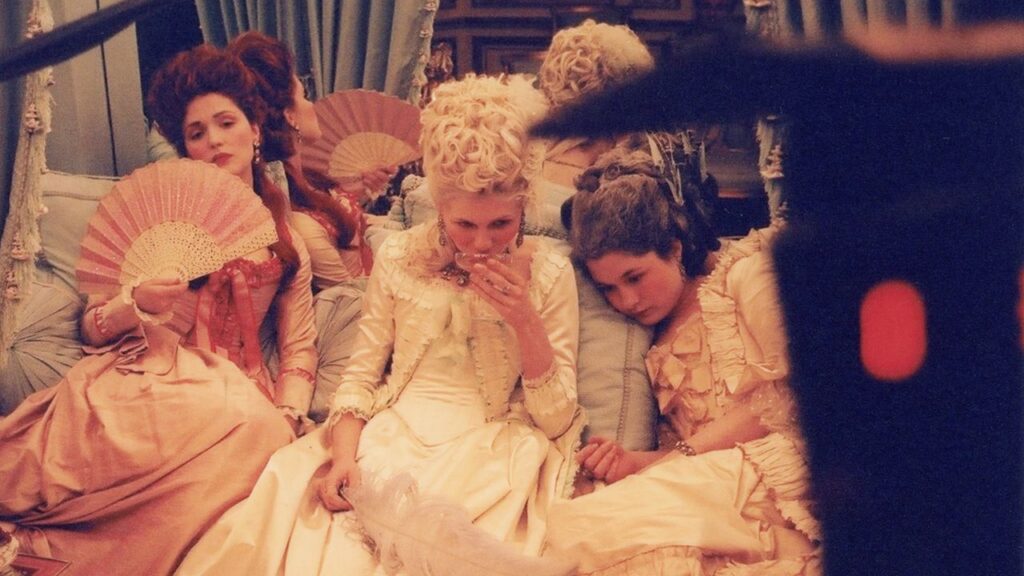
‘Making Marie Antoinette’ Offers an Intimate Look at Sofia Coppola’s Iconic Period Drama
The documentary “Hearts of Darkness: A Filmmaker’s Apocalypse,” which follows Francis Ford Coppola’s turbulent trek to finish “Apocalypse Now,” remains a benchmark for behind‑the‑scenes cinema. Its creator, Eleanor Coppola—artist, screenwriter and director in her own right—has long chronicled her family’s film projects, from her son Roman’s 2001 comedy‑drama “CQ” to her daughter Sofia’s 1999 debut “The Virgin Suicides.” More than two years after Eleanor’s passing, her final work is set to appear: “Making Marie Antoinette,” a privileged glimpse into the making of Sofia’s candy‑colored, Versailles‑set portrait of the ill‑fated queen, twenty years after the film’s original release.
Rather than a harrowing tale of spiraling madness, the new documentary takes a quieter, more reflective tone, focusing on a master at work while celebrating the female gaze. It delves into the minutiae of production—logistical hurdles, countless costume changes, set decoration, choreography—and clearly aims at the most devoted admirers of “Marie Antoinette.” Those who have never been drawn to the film’s glitter may not be converted, but for viewers who have examined every frame over the past two decades, the documentary is a rare treasure, an intimate portrait of a revolutionary work that reshaped the period‑drama genre and paved the way for series such as “Bridgerton” and “The Great,” as well as films like “The Favourite” and “Wuthering Heights.”
The story behind “Making Marie Antoinette” begins in 2005, when Eleanor Coppola spent more than 80 hours on set capturing candid footage. Fifteen years later, during the early months of the pandemic, she and Sofia found themselves sharing a COVID bubble and revisited the material. Eleanor began assembling the footage, and after her death in 2024 at age 87, Sofia ensured the project reached completion. The result is an authorized, yet revealing, look at the film’s 57‑day shoot, tracking a shy, softly spoken, then‑34‑year‑old Sofia as she launches the production and later races to finish on schedule and on budget.
Fans who have already scoured the internet for behind‑the‑scenes photos will not discover many groundbreaking revelations, but the sheer pleasure of inhabiting that world shines through. Viewers can spot Ugg boots hidden beneath lavish ballgowns, catch extras in powdered wigs dozing between 11‑hour shooting days, and watch an off‑duty Jason Schwartzman, dressed as Louis XVI, unleash a spirited piano performance while department heads try to discuss serious matters.
A few moments stand out as pure gold. In one scene Sofia introduces her mother, behind the camera, to her then‑new boyfriend—now husband—Thomas Mars, frontman of Phoenix, as he and his bandmates arrive to play cameo court musicians at the Petit Trianon. In another, Asia Argento, costumed as the flamboyant Madame du Barry, reads the palms of her fellow actors during a break. When Sofia asks for a reading, Argento predicts she will have two children; Romy and Cosima Mars were indeed born in 2006 and 2010.
The documentary’s strongest thread is its portrait of Sofia’s evolution. It traces her shift from a quiet, relatively inexperienced director to a more assertive voice. Early footage shows her struggling to be heard over the din of the crew, but as days pass she makes daily decisions—insisting on costume alterations, calling for additional extras, defending artistic choices she believes in. She remains courteous, yet her growing confidence is unmistakable.
That confidence is crystallized in the sequence of the Parisian masked ball, where Kirsten Dunst’s vivacious Marie Antoinette meets Jamie Dornan’s dashing Count Fersen. After Sofia captures the initial chemistry from Marie’s perspective, male colleagues demand a shot from Fersen’s point of view, arguing it makes narrative sense. Sofia gently pushes back, insisting the focus must remain on Marie. After deliberation, she secures the shot she wants, a striking illustration of a slight, sometimes self‑doubting figure navigating a largely male team to realize her vision while staying true to herself.
Sofia’s rapport with Dunst adds another layer of charm. The two had already collaborated on “The Virgin Suicides,” and their unspoken shorthand is evident on set. Dunst, then 22, appears shy and giggly when interviewed by Eleanor’s perceptive camera, yet she transforms into a poised performer once Sofia calls “action.” When preparing to film Marie’s eighteenth birthday party, Sofia tells Kirsten, “You know when girls see their friends at a party and they’re like…,” then lets out a girlish scream. Dunst instantly understands and delivers it with perfect timing, producing a moment that is both silly and hilarious.
“Making Marie Antoinette” therefore serves as both a love letter to a beloved film and a nuanced study of a director finding her own voice amid a sea of opinions. It offers fans a chance to linger in the opulent world they adore, while also revealing the quiet determination that guided Sofia Coppola’s landmark work.