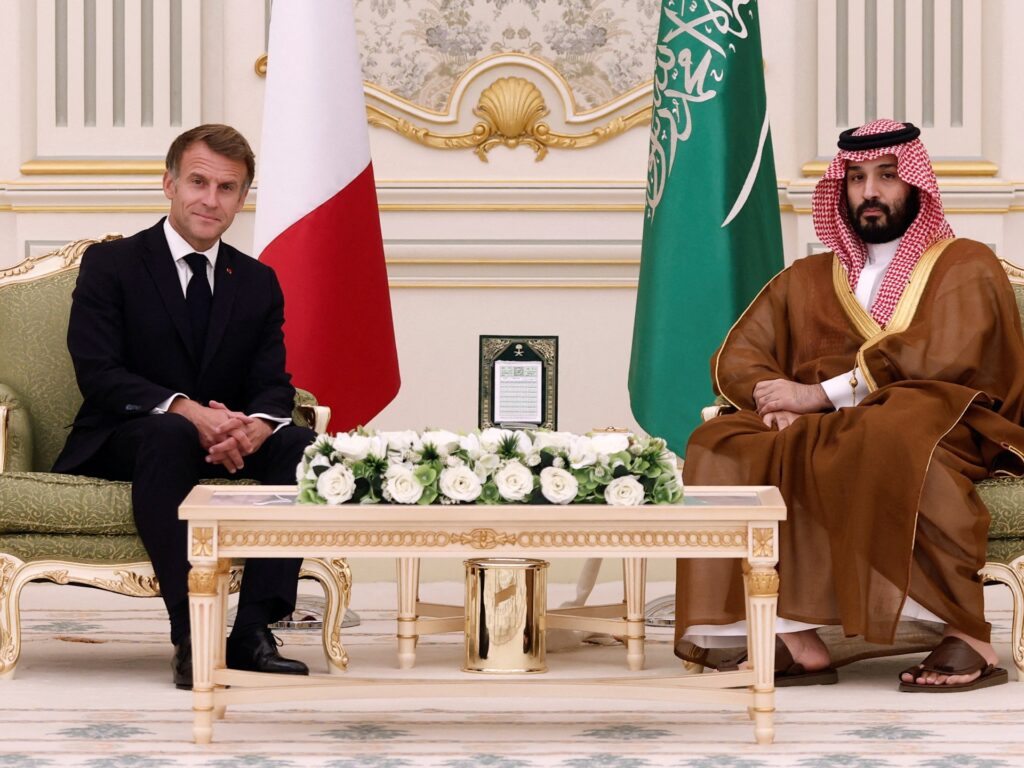
Macron makes surprise Saudi visit as France secures extra diesel supplies
French President Emmanuel Macron arrived in Riyadh on an unannounced “solidarity” trip, becoming the first Western head of state to set foot in Saudi Arabia since the Houthis stepped up their attacks earlier this month. At the al‑Yamamah Palace he met Crown Prince Mohammed bin Salman, and the two leaders discussed regional and global developments while coordinating efforts to improve security and stability, the Saudi Press Agency said on Wednesday.
The surprise visit coincides with Saudi Arabia’s agreement to provide France with additional diesel “for as many months as necessary,” the Élysée Palace told AFP. French officials said the trip is meant to show France’s support for the kingdom in the face of Houthi strikes and to continue work on securing and diversifying hydrocarbon supplies.
The diplomatic outreach comes as France grapples with street unrest driven by the cost of living, a situation worsened by the ongoing US‑Iran conflict and Iran’s blockade of the Strait of Hormuz, which have kept energy prices high. Earlier in Doha, Macron told reporters he was simply “doing his job” to help calm fuel‑price tensions, adding, “There must be no sign of febrility. I am fulfilling my role. I am at my post.”
Macron’s Gulf tour has already yielded fuel commitments. The United Arab Emirates pledged about 100,000 tonnes of diesel per month, and a similar amount is expected from Bahrain. Together with the Saudi deliveries, France now has contracts for roughly 295,000 tonnes each month, a little over ten percent of its total consumption.
In addition to the fuel deals, France is sending military assets to Saudi Arabia under a prior agreement to help protect the Red Sea port of Yanbu, which has been targeted by the Iran‑backed Houthis, also known as Ansar Allah. The United Kingdom announced on Tuesday that it would deploy fighter jets to assist in defending the kingdom. Both nations say their involvement is strictly defensive.
Analysts note that the moves safeguard Saudi oil exports that are vital to European energy markets and reinforce the Gulf alliance at a time when the United States appears reluctant to provide direct military assistance. They also warn that the actions could pull the two European powers deeper into the protracted Saudi‑Houthi conflict.