
Israeli raids and arrests in southern Syria push residents to breaking point
In a modest living room in Qatana, Syria, Ahmed speaks in a hushed tone about the beating and torture he endured after Israeli forces stopped him at a checkpoint set up in his village. “They stopped me, they asked for my name, asked where I’m from,” he recounts. “I gave my name and village. They said, ‘You need to come with us for five minutes, and we’ll bring you back.’”
Ahmed spent more than a year in Israeli custody. For three months he was handcuffed, thrown to the floor of his cell and beaten with sticks while his hands were bound behind his back. “They tighten the cuffs by stamping on them with their feet, until the cuffs bite into the flesh of your wrists and also your buttocks. Sometimes they leave them tightened like this for one or two days until your hands are extremely swollen. Your hands go green, and you can’t feel them at all,” he says.
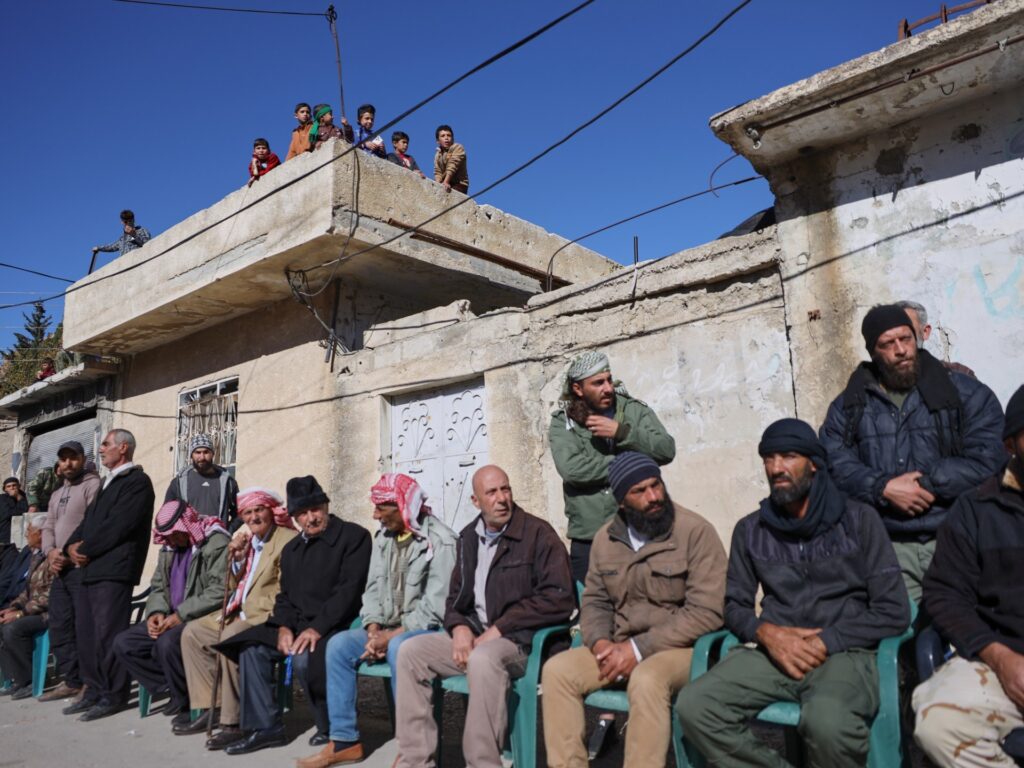
He was released this month, and dozens of neighbours gathered outside his home to welcome him and to ask about relatives who remain missing. Al Jazeera has identified at least 51 Syrians still held in Israel. Many were first taken to the notorious Sde Teiman military prison before being moved to Israel Prison Service facilities in Ofer, al‑Jalama (Kishon) and Megiddo, with a small number already freed.
The strain on the community continues. Mahmoud, a pseudonym, had been home for nine days when Al Jazeera spoke with him. “Until now I feel unstable; I’m not normal. I feel crazy sometimes in the night. I go to look at my kids because I can’t believe I’m really home,” he says, pausing as his six‑year‑old son carries a tray of wobbling tea glasses across the carpet. The sound of artillery rattles the windows, and children turn toward the distant explosions.
Since early August, Israeli forces have shelled fields almost daily, keeping farmers and shepherds from working, occasionally killing livestock and constantly frightening residents. In September, the Syrian monitoring group Sijil Center recorded 280 violations of the 1974 Israel‑Syria agreement, including incursions, raids, arrests, artillery and machine‑gun fire.
UN peacekeepers have patrolled the demilitarised zone between the Israeli‑occupied Golan Heights and the rest of Syria since the 1974 cease‑fire, but Israel expanded its control of Syrian territory in the weeks after the fall of Bashar al‑Assad’s regime in December 2024. Their capacity to curb Israeli activity remains limited.
In late August, two Israeli tanks and five other armoured vehicles rolled down from a hilltop base and blocked the only road to United Nations Disengagement Observer Force (UNDOF) base 37 near the village of Jubata al‑Khashab. A local council employee called the UN base to ask if they needed assistance. “I think they were offended,” he laughed, recalling the reply: “No, stay where you are; don’t you or anybody else come down here. We’ll call for help from another base if we need it.”
UNDOF told Al Jazeera that Israeli roadblocks and checkpoints sometimes restrict the movement of its personnel and prevent the mission from carrying out its mandated patrols. Residents sometimes turn to the peacekeepers when relatives are detained at checkpoints, but they have little influence over midnight raids.
Mahmoud was seized at 3:30 a.m. when Israeli troops surrounded his home, called his name and showed a photo of him from social media. Nine days after his release he kneels on the floor, pressing his forehead to the ground with his hands behind his head. “They make us sit like this for hours,” he says, noting infected wounds on his knees from the hard floor and scars on his wrists and ankles from restraints. “They cuff you so you can’t move and then release the dogs. They have muzzles on, but they ran into us, like a body slam.” He describes the “disco room,” a space filled with loud speakers where detainees are held while music blares, causing Syrian, Palestinian and Lebanese prisoners to vomit when finally allowed out.
Mahmoud was never charged and does not know why he was released. He was denied access to a lawyer throughout his detention. The International Committee of the Red Cross has been barred from visiting Israeli detention facilities since 7 October 2023, the day of the Hamas attack on Israel and the start of the ensuing war in Gaza.
“They make sure you understand the moment you enter that you are stripped of all your rights; they tell you this explicitly,” Mahmoud adds. Al Jazeera has reached out to the Israeli military for comment but has not yet received a response.