
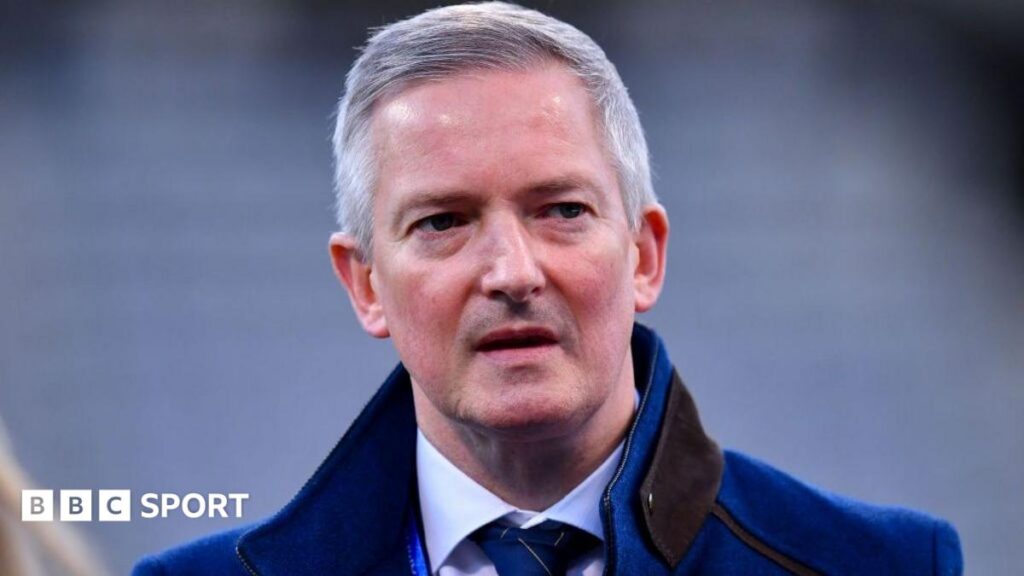
‘I had so many medals under the bed’ – Green on Chelsea success
Paul Green’s departure from Chelsea after 13 years left him reflecting on a trophy haul that was largely hidden away in a box beneath his bed. Only once he was gone did he fully grasp the scale of what he had helped achieve. As the former head of women’s football at Chelsea, Green worked closely with ex‑manager Emma Hayes to guide the Blues to 19 major pieces of silverware before his sudden exit in February, amid reports of turmoil within the club’s hierarchy.
When asked about his departure, Green told BBC Sport, “Look, football clubs move on and a lot of people have changed at that club in recent years. I think ultimately they chose to go in a different direction but I feel very proud of the job that I did there and I left the club in a lot better position than when I first went in there.” Under his stewardship, Chelsea captured six consecutive Women’s Super League titles, the most recent under current boss Sonia Bompastor in 2025, and reached the Women’s Champions League final in 2021.
“It was an incredible time. There was a lot of potential that Emma Hayes sold to me and that came to fruition,” Green said. “What the players went on to achieve, in my eyes, will never be beaten and it will be difficult for any team to replicate that type of dominance. It was some of the best times of my life. It’s probably not until you’re out of it that you actually appreciate what the success was. I had so many medals that were just chucked under the bed in a box. I’ve had time to get them framed. Now I’ve got a new chapter here at Bay FC.”
After a seven‑month break from the game, Green was appointed chief football officer of San Francisco’s Bay FC in September. He described the reaction to his Chelsea exit as “overwhelming” and said he needed time with his family to adjust. “It was people just in the general women’s football world who really appreciated the work and success that we had there,” he explained. “Of course, that touched me and it took me forever to get back to everybody who had reached out because there was that many. I guess all things have to come to an end at some stage and I’ve gone in a different direction now.”
Adjusting to a new environment proved challenging after 13 years of routine, Green admitted. The Bay FC project is led by former FA director Kay Cossington and sits under the multi‑club ownership of Bay Collective. Green hopes to apply his transfer‑market expertise to attract top talent and build a strong organisation.
“They sold me the vision for the club. It became too good an opportunity to turn down,” he said. “The potential there of building something really special is what I’m looking forward to. I think it’s got some similarities to the early days at Chelsea.” Bay FC plans to move into new training facilities next year, and Green has pledged to be active in the upcoming transfer window to lift the side’s league standing. The club currently sits third from bottom with three games remaining in the 2026 National Women’s Soccer League season.
“The team hasn’t done as well as everybody would like it to do. We are where we are in the league so we need to try and improve the roster immediately,” Green noted. “With the connections and network that I’ve built up over 20 years, I’m confident that I can bring in a few players to help the good nucleus of talent we’ve got. You have to have the infrastructure right off the pitch in terms of staffing and facilities and that’s something we are working on.”
During his Chelsea tenure, Green oversaw the development of English prospects such as Aggie Beever‑Jones and Lexi Potter. Potter made her England debut in a 5‑0 victory over Greece last week, while Beever‑Jones was part of the squad that won Euro 2025. Concerns remain about reduced game time for home‑grown players in recent years.
“Players still need exposure and the way we tried to do it at Chelsea was by having a good loan programme,” Green suggested. “You need to find the right partner club to develop the player. But if you haven’t got that resource, maybe young players have to go abroad to play.” He also mentioned the idea of a ‘B team’ system, common in Germany and Spain, as a possible solution, acknowledging its controversial nature.
FA director of women’s football Sue Day and England manager Sarina Wiegman have both highlighted the need to address the shortage of playing opportunities for young English talent. Day said, “Not enough of our young players are playing enough football and I think we’d all agree with that.” Wiegman echoed the concern, emphasizing the importance of finding ways to give emerging players more match experience.