
How a grass fire at a Canadian military base killed four soldiers
On a Saturday morning in Alberta, officials at a Canadian Forces base believed a grass fire was under control and allowed soldiers to continue a live‑fire combat exercise. Within minutes a sudden wind shift turned the blaze into a fast‑moving inferno, engulfing the training area. Major‑General Wade Rutland told a press conference in Edmonton that the fire, which was a kilometre away, covered that distance in about thirty‑six seconds – a speed he said is “not normal for a fire to move a kilometre in 36 seconds.” The incident claimed the lives of four soldiers and left 39 others injured, 19 of them in critical condition.
The exact cause of the grass fire has not been determined. Prime Minister Mark Carney called the tragedy one of the worst peacetime incidents the Canadian military has faced on home soil. Grass fires, unlike forest fires, spread quickly through dry grasses, weeds and low‑lying vegetation. They ignite easily, and strong winds can push flames across open terrain, change direction abruptly and carry burning embers ahead of the main front, making the fire hard to predict and contain, especially in dry conditions.
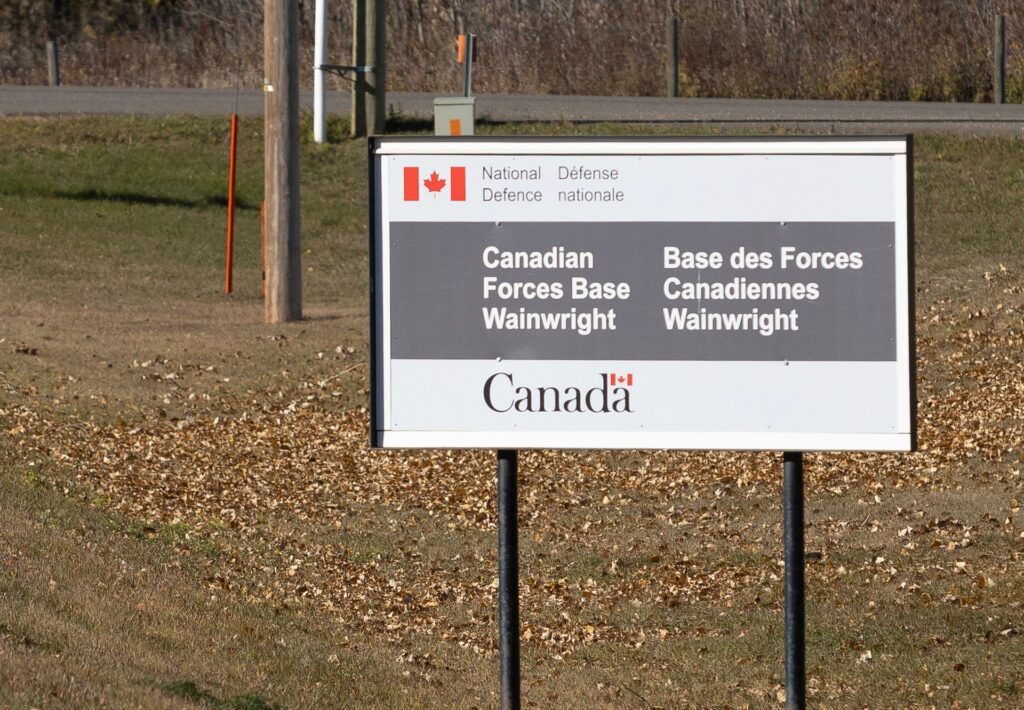
The blaze erupted on Saturday afternoon during a high‑intensity training drill involving Charlie Company of the 3rd Battalion, Princess Patricia’s Canadian Light Infantry, at Canadian Forces Base Wainwright. The base, located about 210 km (130 miles) southeast of Edmonton, sits on the prairies, an area of expansive grasslands and rolling plains. It is one of the Canadian Army’s largest training centres and a key site for preparing troops for deployment.
Around 84 soldiers were divided between a grenade range and a simulated enemy‑position exercise when the fire swept into the second area. Investigators will determine whether the wind drove the flames toward the soldiers or if the fire moved unseen through vegetation before overtaking them. A windstorm across much of Alberta produced gusts up to 100 km/h (62 mph), toppling trees, sending signs flying and pushing flames beyond the base into nearby rural communities.
The fire also disrupted advance voting for a forthcoming referendum on whether Alberta should begin a process that could lead to independence from Canada. Early reports suggested that a gas facility might have been hit during the live‑fire exercise, potentially worsening the blaze. Military officials later clarified that investigators do not believe any explosions resulted from oil or gas infrastructure.
A memo obtained by Global News indicated that the armed forces had assessed the fire risk for the live‑ammunition exercise as low, allowing the training to proceed. However, Environment Canada had issued a strong‑wind warning earlier that day, forecasting gusts up to 100 km/h in parts of the province. The memo noted that the fire jumped a fire guard, spread outside the base and forced the evacuation of a nearby family home. It described the situation as “fluid” and warned that casualty figures could change as assessments continued.
Wainwright base covers 609 sq km (235 sq miles) and contains 25 weapons ranges, making it one of the country’s most heavily used military facilities. Historically, the site served as an internment centre for German prisoners of war during the final months of World War II and for several months in 1946.