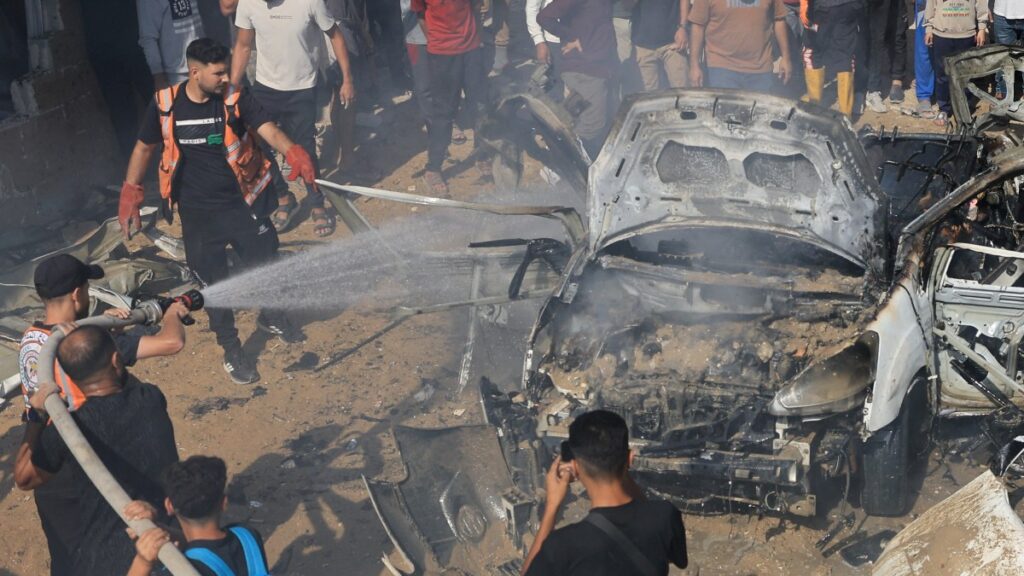
Four Palestinians killed, including a young girl, as Gaza faces heightened famine risk
Israeli strikes across the Gaza Strip have claimed the lives of four Palestinians in the last 24 hours, among them a child, while the Israeli army continues to expand its footprint inside the enclave. The deaths were reported on Thursday, October 22, 2026, as humanitarian agencies warned that the territory could slip into another famine due to strict limits on incoming supplies.
According to the Palestinian news agency Wafa, a young girl was shot by Israeli gunfire near the Jabalia refugee camp in northern Gaza. Al Jazeera correspondent Hani Mahmoud, reporting from Gaza City, said a missile hit a vehicle in the Tal al‑Hawa neighbourhood, killing one passenger and badly wounding another. A separate strike in Khan Younis killed a man riding a bicycle, and the Gaza Health Ministry added that a fourth person died from injuries sustained in an earlier Israeli attack.
The Israeli military is also seizing additional land inside Gaza. Mahmoud noted that troops have been taking more territory since the cease‑fire began, moving from the north toward the centre and west. “People cannot return to their homes, and most buildings in the areas Israel controls have been left in ruins,” he said. Al Jazeera’s maps indicate that nearly two‑thirds of the Strip is now under Israeli military control or subject to access restrictions.
Since the cease‑fire was declared in October of the previous year, the Gaza Health Ministry reports that at least 1,538 Palestinians have been killed and 5,498 injured. Israel’s overall death toll in Gaza since October 2023 exceeds 74,400.
The lethal attacks come as the population grapples with a deepening food crisis. The Geneva‑based Euro‑Med Human Rights Monitor observed increasingly empty markets and soaring food prices, warning that Gaza could face another famine. The group accused Israel of “deliberately depriving” Palestinians of adequate nutrition as part of an ongoing genocide. After Israel halted commercial deliveries on October 13, it announced a limited resumption on October 19, but the monitor said the relief was minimal and fresh produce remained barred.
The World Food Programme disclosed this week that severe funding shortfalls have forced it to cut food assistance by one‑third, leaving roughly 500,000 vulnerable residents without essential monthly support as winter approaches. The United Nations says that fresh food and basic staples have rapidly vanished due to Israeli restrictions on commercial entry points and aid crossings.
Al Jazeera’s Maram Humaid, reporting from Gaza City, described markets that have been stripped of vegetables, fruit, meat, eggs and bread, with prices soaring. “Food disappeared suddenly, no vegetables, no fruit, no meat, no eggs, no bread, prices skyrocketing,” she said. “Today we did not have breakfast until noon, after my husband spent hours looking for bread and any fresh vegetables. He returned with only a few loaves. We are back to canned beans.”
With electricity outages and non‑functional refrigeration throughout the devastated enclave, families cannot store fresh supplies even when they manage to obtain them. “Stockpiling seems more limited this time,” Humaid added. “The shortages began with flour and fresh produce, which people cannot keep for long without refrigerators or power. Prices of other items have risen, but many cannot afford to stock up. Others are simply exhausted and have lost hope. I am one of them.”
Beyond the physical hardship, the psychological strain of navigating overcrowded shops with dwindling shelves has reached a breaking point. “It is the whole experience – the panic and fear that come with shopping to stock up. You look at every food item as if it might be the last time you will ever see it, saying goodbye to it. Everyone around you is gripped by the same panic, and the shops are unbelievably crowded,” Humaid said, adding that many feel they cannot endure the ordeal again.