
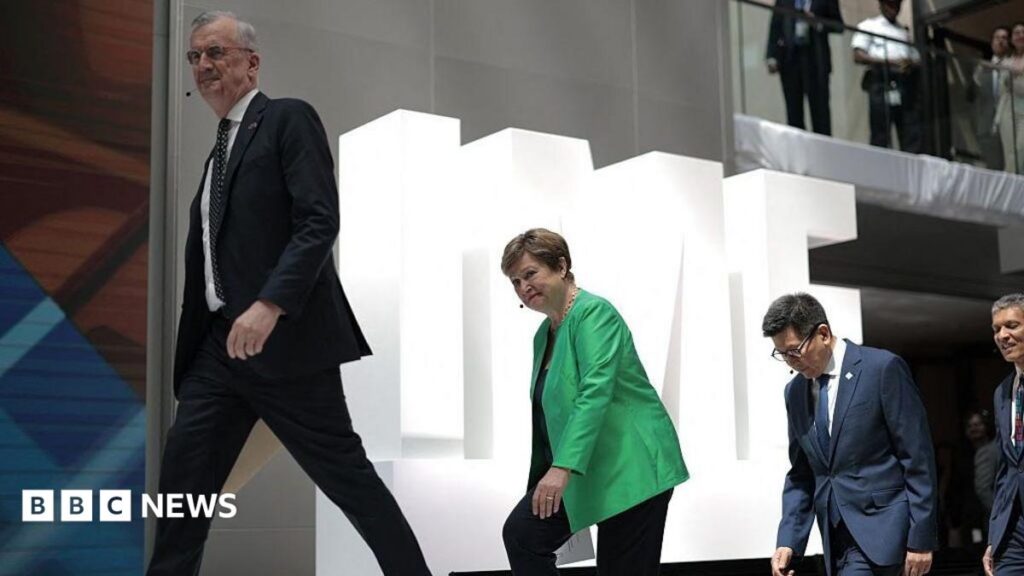
Faisal Islam explains why China and AI concern global finance leaders
When thinking about where the world economy is headed there is a clear pull in two directions. On one side growth is being held back by familiar problems – energy shocks, trade disputes and actual fighting. This shows up most clearly in the steep rise in borrowing costs for the world’s advanced economies. On the other side there is a push from huge spending on artificial intelligence and from the surprising strength of many smaller economies, which have found new trade routes for oil and gas out of necessity.
These themes dominated the IMF meetings in Bangkok this week, coming up again and again even among the officials at the very top table. Yet nobody there can say with certainty which way the balance will tip. In the meantime it feels like a gambler’s guess about where the bond markets will turn their attention next. For now the focus seems to be on the United States and France.
French finance minister Roland Lescure has said he has faced no difficulty selling government debt, although the cost has risen, and he insists his budget will be fine. He also claimed he helped prevent the G7 group of advanced nations from falling apart a year ago when tensions linked to Donald Trump threatened to split the group. In many ways it is remarkable that a global recession has not yet happened and that no major emerging economy has fallen into a debt crisis. The Thai finance minister told me his country’s borrowing costs have barely increased, especially when compared with those of the United States.
Another surprise is that the United Kingdom has moved off the bond markets’ list of problem borrowers and is now being praised by the IMF as a model pupil