Catalonia’s emerging far right: anti‑Muslim sentiment reshapes regional politics
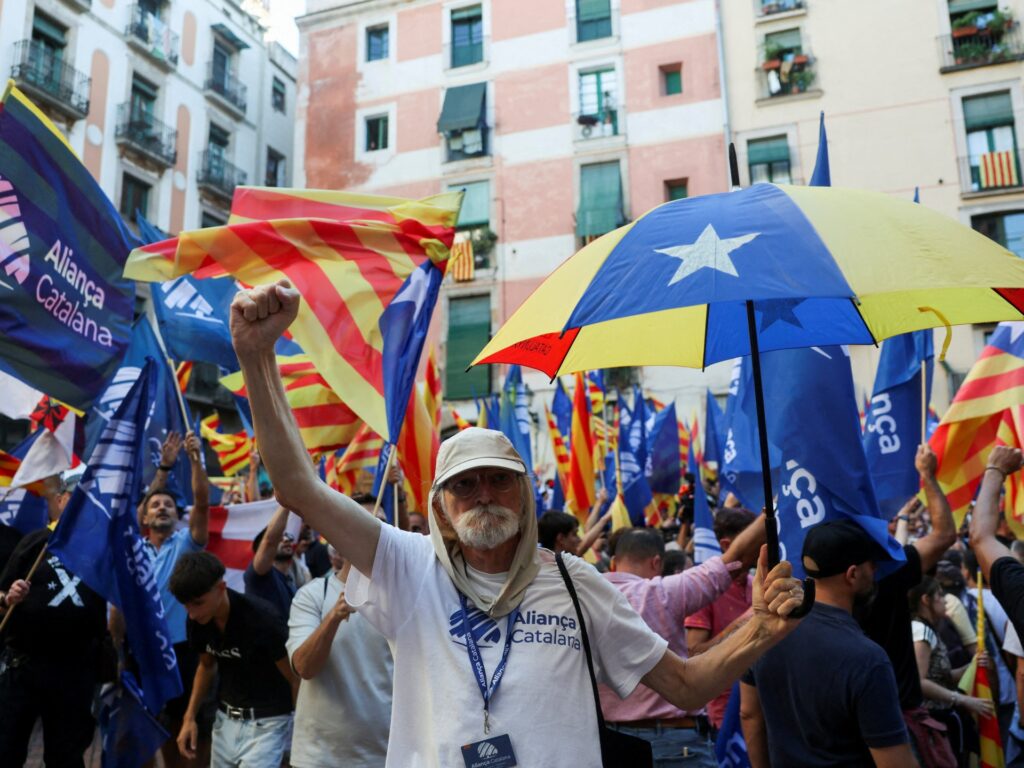
Barcelona – Nearly ten years after Catalonia’s failed bid for independence, voters in the affluent region are now driven more by anti‑migration and anti‑Muslim feelings than by secessionist ambitions. A new far‑right party, Alianca Catalana (Catalan Alliance, AC), which calls for stricter migration controls and portrays Islam as a societal threat, has jumped up in the polls in the part of Spain with the largest Muslim community.
Polls suggest the party could become the second‑largest force in Catalonia after the Socialists in the 2028 regional election. Its rise mirrors a broader anti‑immigrant wave that has helped far‑right groups win in Germany, Italy and France. The surge has alarmed Muslims, who fear a backlash in a country that has long seemed welcoming.
“This has surprised all of us,” said Soukayna El Abdi, president of the Young Moroccans of Ripoll, reacting to the party’s growth. “Most people come to integrate, to work and live among others. The rise of Catalan Alliance is about unfounded hate. They spread lots of things about our community which are not true.”
Spain is set to hold a snap election in November, with the conservative People’s Party and the far‑right Vox also gaining ground. The emergence of Catalan Alliance points to a shift to the right in the eurozone’s fourth‑largest economy.
The party supports Catalan independence and has drawn backing from other secessionist groups, including Together for Catalonia and the Catalan Republican Left, which were behind the 2017 attempt to break away from Spain.
“All my friends support Catalan Alliance. There are too many migrants around now and Islam is a threat,” said Eduard Lopez, a businessman from Molins de Rei near Barcelona. “These other independence parties are from the past. They failed to do what they said they would.”
According to the Spanish National Statistics Institute, about one‑fifth of Spain’s nearly 50 million residents were born abroad, with Colombians, Venezuelans and Moroccans forming the three largest foreign groups.
Catalan Alliance originated in Ripoll, a small town close to the French border, where a cell plotted the 2017 Barcelona attack that killed 16 people and was claimed by ISIL. Silvia Orriols, mayor of Ripoll and leader of the party, became fiercely anti‑Muslim after the attack.
“If there is no substantial change, the prospects for Catalonia are bleak,” Orriols told Al Jazeera. “The decline in the use of our own language, the depersonalisation of neighbourhoods, the rise in insecurity and crime, the fraudulent use of public services, the mass and invasive immigration, the demographic growth of those who advocate Islamic law, the fiscal plundering we suffer by Spain, threaten the welfare state and the rights and freedoms we have achieved up to now.” She said her party stands for “those who have not surrendered to globalisation and barbarism”.
Spain is home to about 2.4 million Muslims, with the largest concentration in Catalonia, according to the Union of Islamic Federations of Spain. El Abdi expressed personal fear: “I am very scared. I fear for my parents and my two brothers who still live there. This racism affects all Muslims. It started after the 2017 attack in Barcelona.” She noted that Orriols’ daughters once were friends with her cousins, but the relationship soured after the party entered politics.
Currently holding only two seats in the Catalan parliament, Catalan Alliance is projected to challenge the Socialists for control of a region that contributes roughly 20 percent of Spain’s economy. An El Mundo poll released in September estimated that the party could win 25‑28 seats with 16.7 percent of the vote, while the Socialists would drop to 23.3 percent and 19‑22 seats.
Juan Ignacio Castien Maestro, an expert on Islamic affairs at the Complutense University in Madrid, said anti‑Muslim sentiment is on the rise in Spain. “People are focusing on Islamophobia, which has existed for centuries but has increased in recent years. The Muslim migrant is seen as the symbol of many ills such as the housing crisis, unemployment and other problems. It plays on feelings of insecurity,” he told Al Jazeera. “Catalonia is a special case in that some Catalan nationalist parties were already Islamophobic.”
Jose Pablo Martínez, a migration specialist at the Real El Cano Institute in Madrid, noted that the left‑wing Spanish government pursues a more migration‑friendly policy than many European counterparts. “Certain sections of the population consider migrants to be competing for their jobs and housing,” he said.