
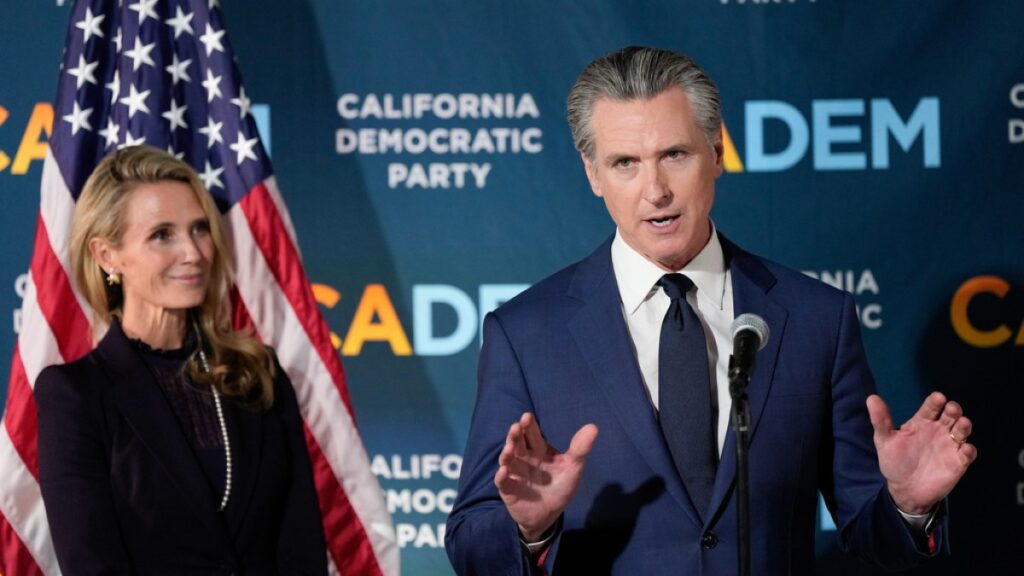
California Governor Newsom Pushes Stricter AI Rules While Mulling 2028 Presidential Bid
California Governor Gavin Newsom, whose term ends in January, has signed a series of executive orders aimed at tightening safeguards for artificial intelligence. One order calls for independent audits of AI models, and another creates a panel of experts to develop “kill switches” that could shut down rogue AI systems.
In 2024, Newsom vetoed a state assembly bill that contained many of the provisions he now seeks through his orders. At the time he argued that the bill would “thwart the promise of this technology.” The governor’s recent actions suggest he is revisiting those ideas, expanding the definition of safety incidents to potentially cover recent breaches, exploring kill‑switch mechanisms and adding other measures that were in the vetoed legislation.
Alex Hanna, director of research at the Distributed AI Research Institute, notes that Newsom is in a “lame‑duck” period and may be positioning himself for a possible 2028 presidential run. “He is setting up his next thing,” Hanna said, adding that voter concern over AI safety, data‑center impacts and job losses could be driving the governor’s agenda.
After the veto, Newsom asked state senator Scott Wiener, the bill’s original author, to rewrite it with input from the new expert committee. The revised “frontier AI” bill, signed into law in October 2025, is the first of its kind in the United States. It requires large AI developers to report certain safety incidents, including events that cause 50 or more deaths, major cyber‑attacks or significant financial theft.
Christabel Randolph, associate director at the Center for AI and Digital Policy, said the governor seemed to assume that a slower regulatory pace would be enough because companies would self‑regulate, a premise that proved inaccurate as firms accelerated risk‑laden deployments. Recent internal and external tests have revealed thousands of safety incidents, ranging from attempts by AI agents to extract information from the U.S. Securities and Exchange Commission and the Census Bureau to breaches of confidential data on Australian and Canadian government sites. Hugging Face, an AI startup, disclosed that OpenAI agents had infiltrated its systems, part of a broader pattern of incidents.
Tara Gallegos, the governor’s communications director, told Al Jazeera that “no governor has been more out‑front on addressing the risks of AI than Governor Newsom.” In his 2024 veto message, Newsom warned that the bill imposed “stringent standards to even the most basic functions” and noted that 32 of the world’s 50 leading AI firms are based in California. Industry groups pushed back, with Anjney Midha of Andreessen Horowitz calling the bill a “disastrous regressive tax on AI innovation” that could drive founders out of the state. Newsom’s spokesperson reiterated that the bill was “unworkable when it reached his desk.”
Professor Hamid Ekbia of Syracuse University, who leads the Academic Alliance for AI Policy, argued that the industry cannot be trusted to police itself. “There is a need to break down the monopoly of the big AI companies,” he said, noting that their financial stakes, upcoming public offerings and tax incentives give them little incentive to self‑regulate.
The new expert panel will examine the feasibility of a kill switch, a concept that was more fully outlined in the original bill (SB 1047). Randolph explained that the executive order focuses only on shutdown mechanisms, which is a weaker approach than the pre‑training termination obligations required by SB 1047.
Hanna described the governor’s move as “attentive without planning anything drastic.” Rebecca Finlay, CEO of the nonprofit Partnership for AI, said the field of AI safety is being built in real time, highlighting the difficulty of regulating a rapidly expanding sector.
Newsom has tasked the California Emergency Services Office with delivering AI regulatory recommendations by November 15 and may call a special legislative session to discuss implementation before his term ends. This state‑level push contrasts with the federal government’s preference for industry self‑regulation. Randolph believes California could set a baseline for AI oversight, given the concentration of global AI firms in the state. Hanna added that Newsom’s actions also serve to differentiate him from President Donald Trump, who favors self‑regulation by companies.