Bilawal’s New-Provinces Row Deepens as Ministers Hit Back and PPP Chief Stands His Ground
ISLAMABAD: The row over new provinces hardened into an open coalition spat on Wednesday as federal ministers lined up to answer PPP Chairman Bilawal Bhutto-Zardari, and the PPP chief answered back the same night, saying his allies had decided to pick a fight with him for speaking the truth. What began at the Karachi Press Club is now a public test of the coalition.
Bilawal had warned on Tuesday that any forced attempt to divide Sindh could lead to bloodshed, and called for a political and democratic reset. He also opposed a referendum on new administrative units, proposed by Interior Minister Mohsin Naqvi, and suggested returning reserved seats to the opposition.
A day of counterattacks
Defence Minister Khawaja Asif led the response, questioning Bilawal’s moral authority to lecture his allies after 18 years of PPP rule in Sindh and a coalition partnership with the PML-N since 2022. He defended the referendum idea, saying the public could not be deprived of its right to weigh in. Minister of State for Interior Tallal Chaudhry asked why Bilawal feared a public vote if he believed decisions should come through the ballot and not the bullet, and called his stance hypocritical, noting his support for a south Punjab province.
Health Minister Mustafa Kamal called the remarks regrettable and painful, and said smaller provinces were inevitable. Information Minister Attaullah Tarar defended the referendum as a constitutional way to ascertain public opinion. Adviser Rana Sanaullah went further, saying Bilawal’s remarks about the 27th Amendment being passed under pressure could provide grounds for his disqualification.

Bilawal’s answer
Speaking on Wednesday night, Bilawal refused to soften his position. He said the debate had begun without consulting the prime minister, any minister or other stakeholders, and nobody had raised it with the president or with him. He described his warning as neither a threat nor a call for protests, saying he was voicing people’s fears, given Sindh’s history since the 1980s.
He also clarified that returning reserved seats to the opposition was a suggestion, not a red line. Election Commission officials pushed back, saying he had ignored legal facts, since the PTI had failed to meet the constitutional requirements for the seats. He had earlier called the loss of the seats a joke.
Why Sindh’s division touches a nerve
New provinces are not a new debate in Pakistan. South Punjab, Hazara and a separate Karachi province have all been discussed for years. But in Sindh the question carries a weight it does not carry elsewhere. Talk of dividing the province revives memories of the ethnic violence that scarred Karachi in the 1980s and 1990s, which the PPP reads as an existential threat.
That is why the referendum proposal has become the flashpoint. The PPP says the Constitution already provides the mechanism for new provinces, through the provincial assembly and parliament, so a referendum bypasses the proper route. The government argues the opposite, that asking the public directly is the most democratic way to settle it.
What happens next
The question is whether the matter ever reaches the cabinet or parliament. If it stays a war of words, the coalition survives with bruises. If a formal proposal moves, the PPP must decide whether its opposition is absolute, and the PML-N how far to push an idea its ally calls undemocratic. The opposition has already spotted the opening. For now, the row has turned a constitutional debate into a coalition problem, and neither side looks ready to back down.
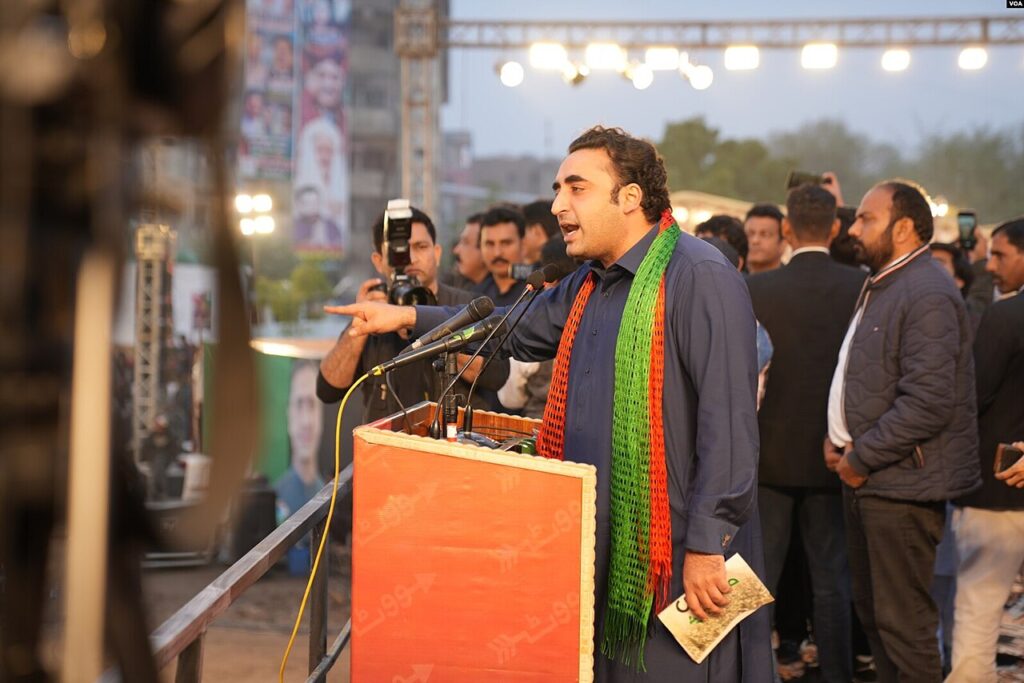
Featured image: Bilawal Bhutto-Zardari during the 2024 elections. Photo: Voice of America, Wikimedia Commons (public domain).
Sources: Dawn, Geo News, The Express Tribune, Dawn, 18-19 November 2026.